

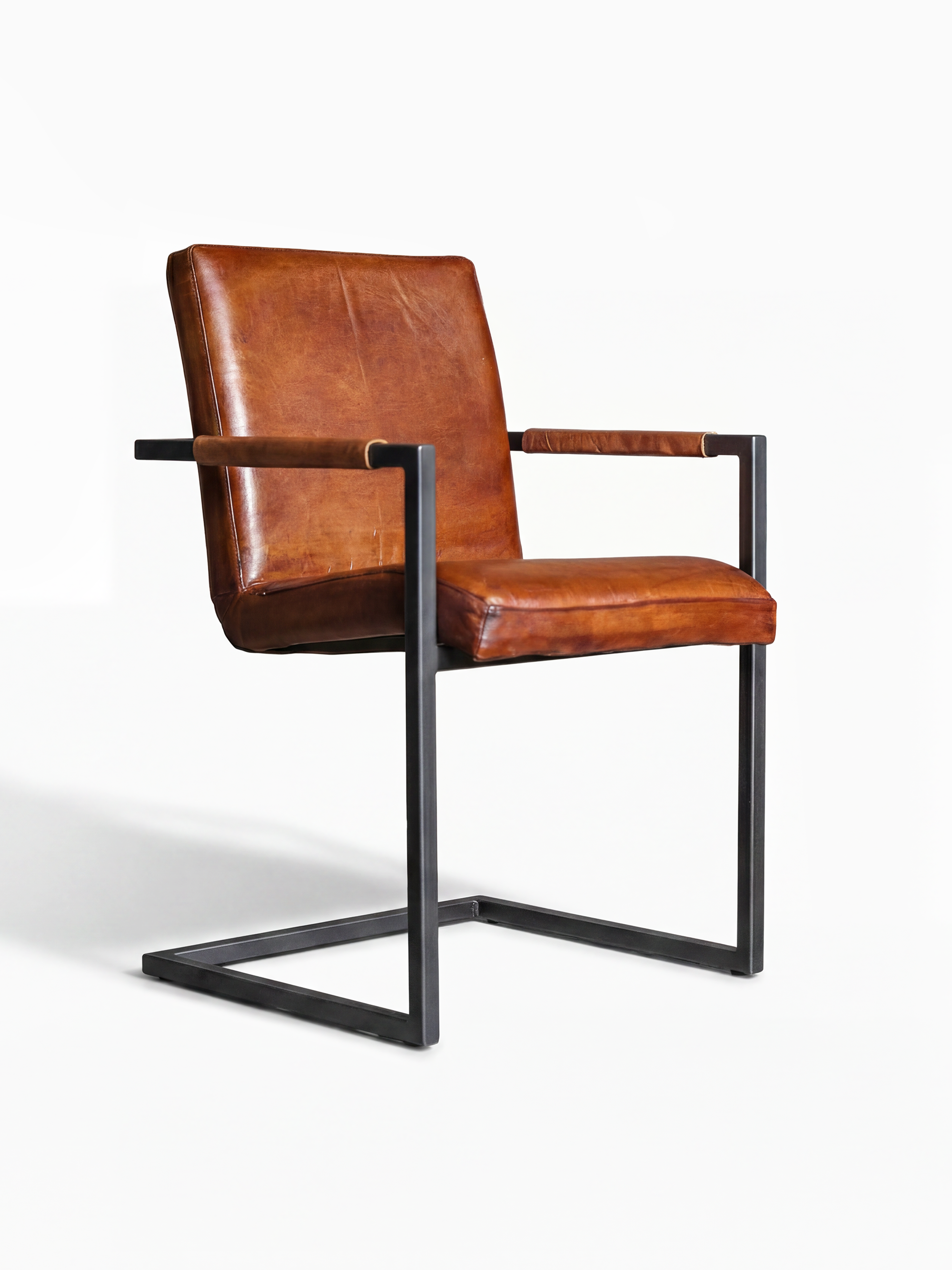
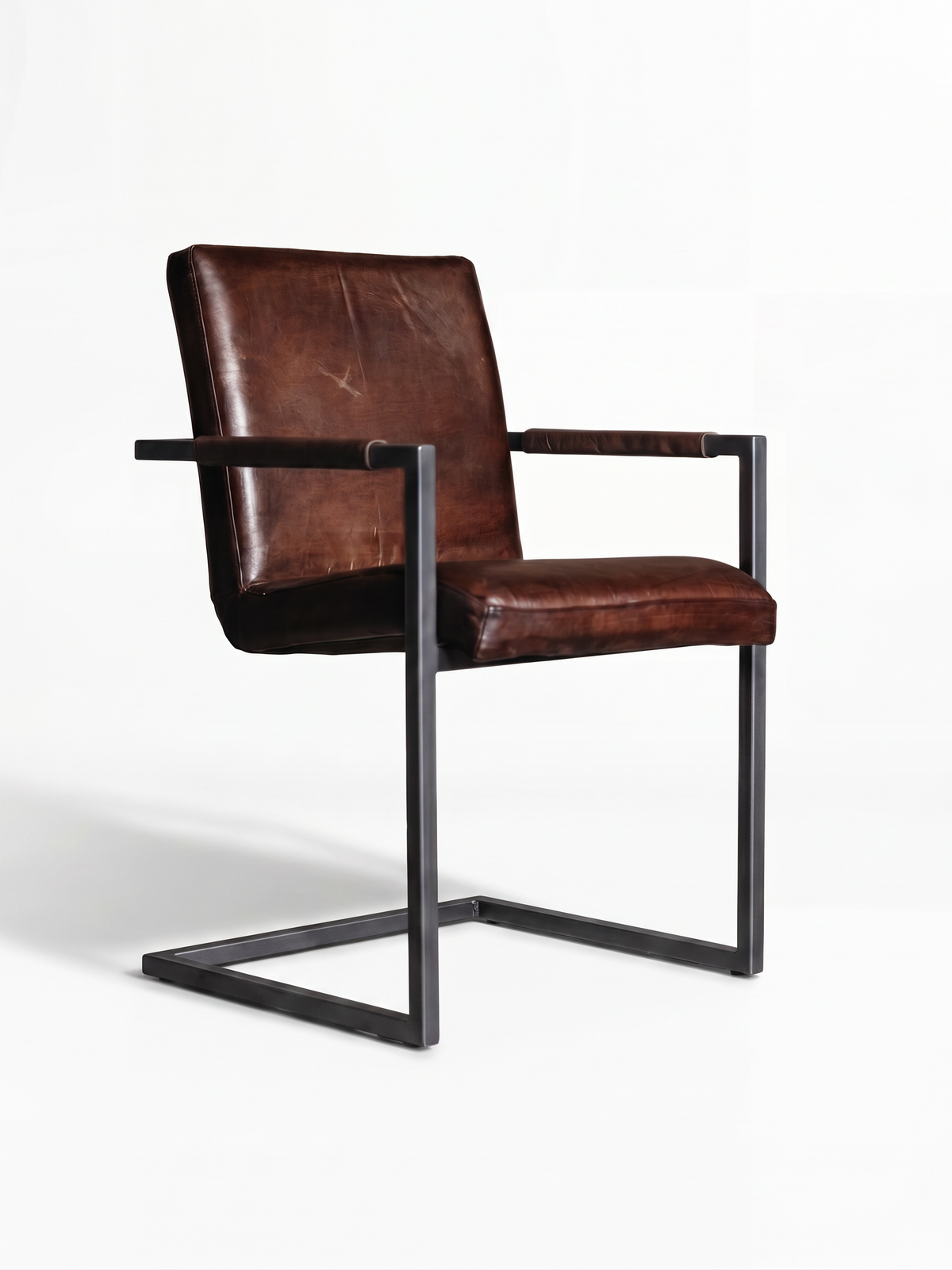
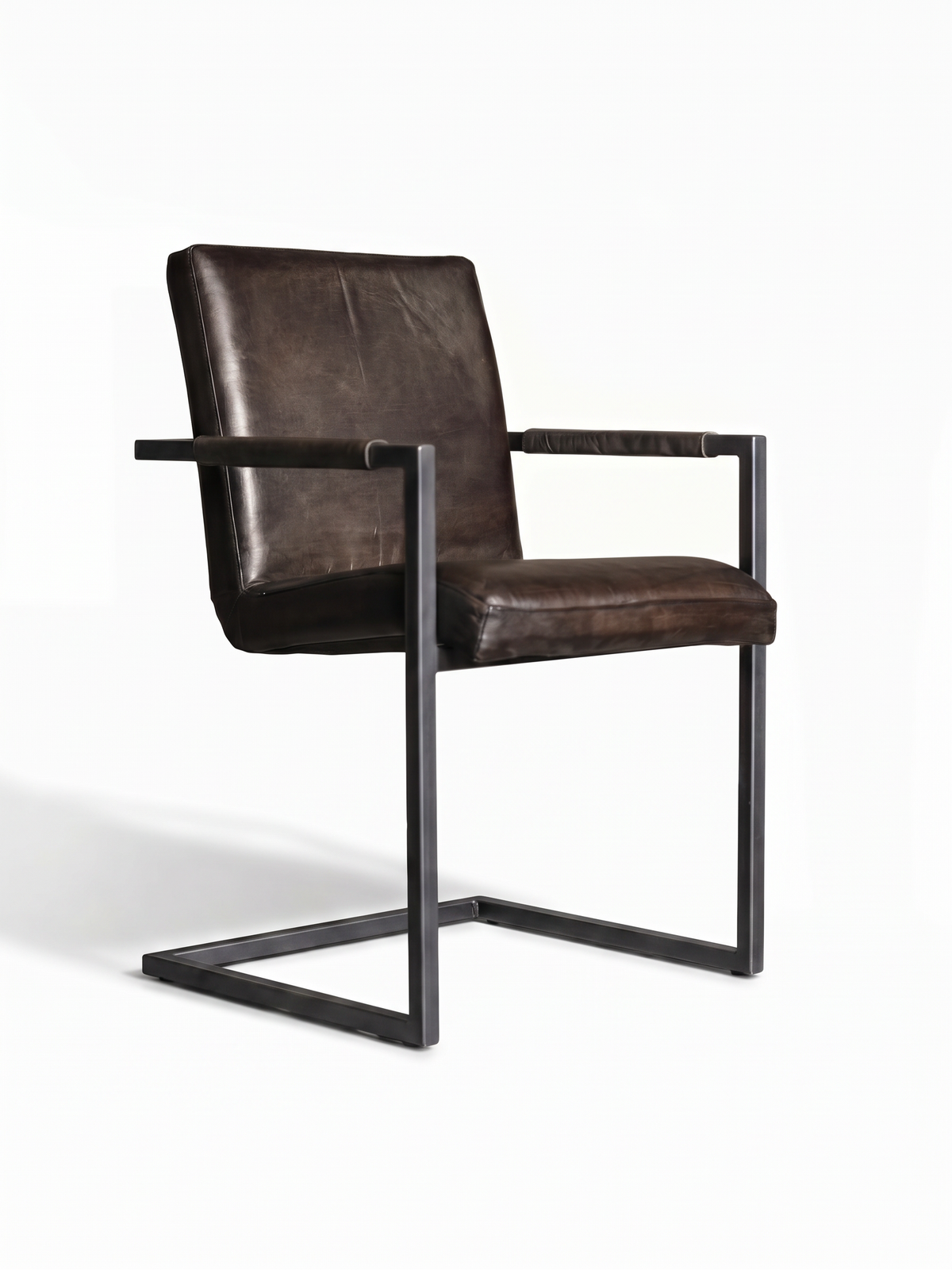
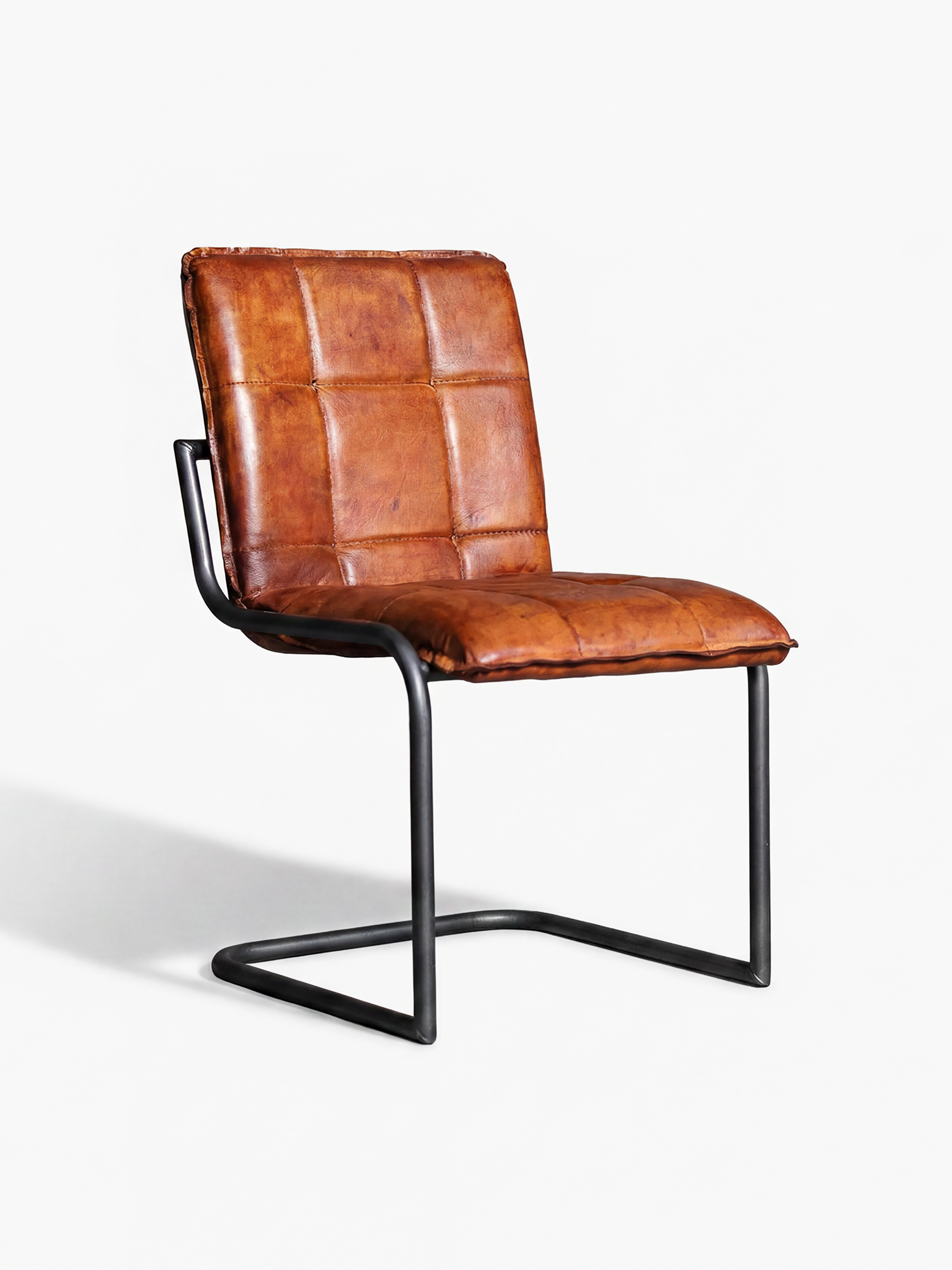
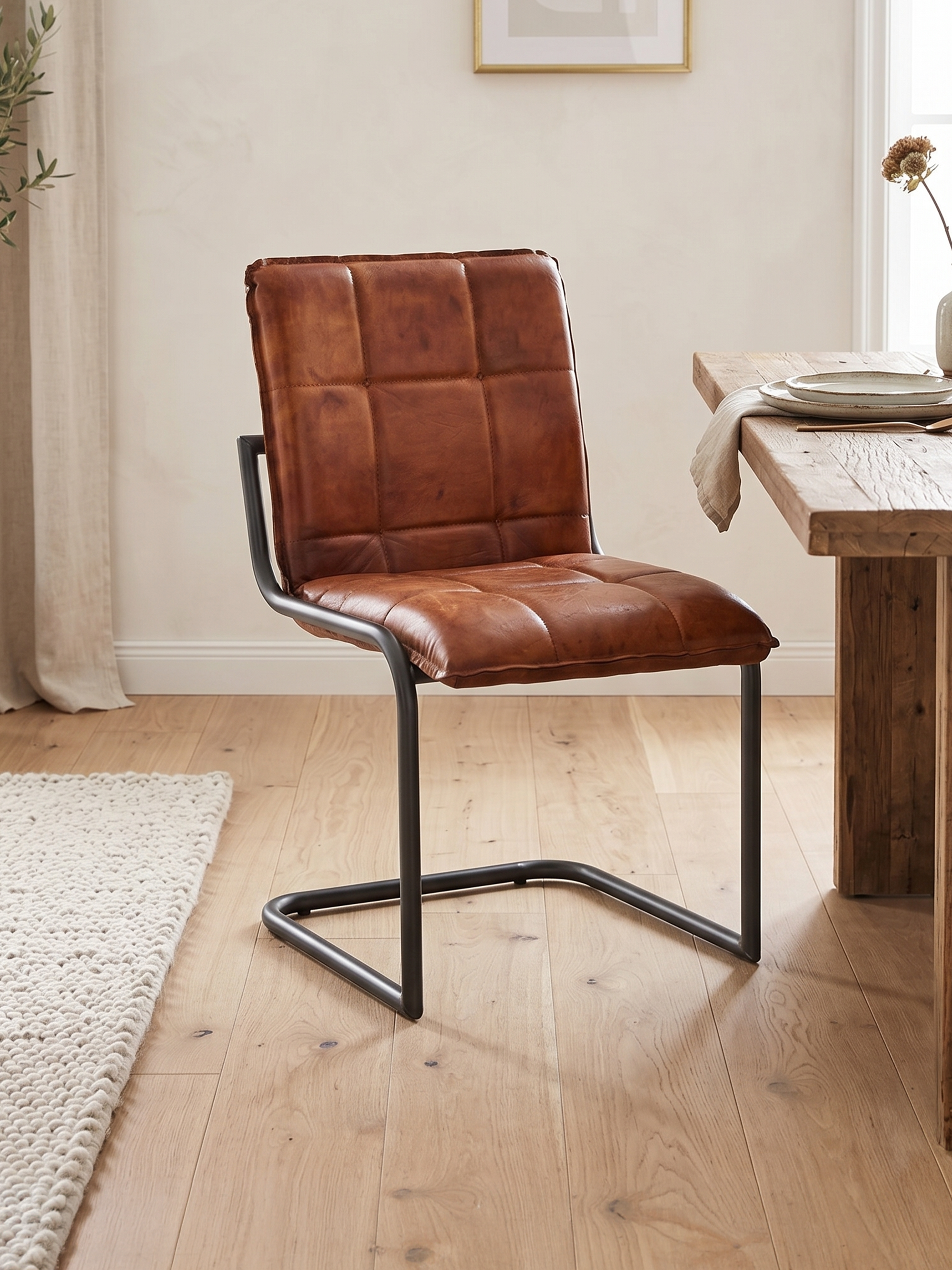
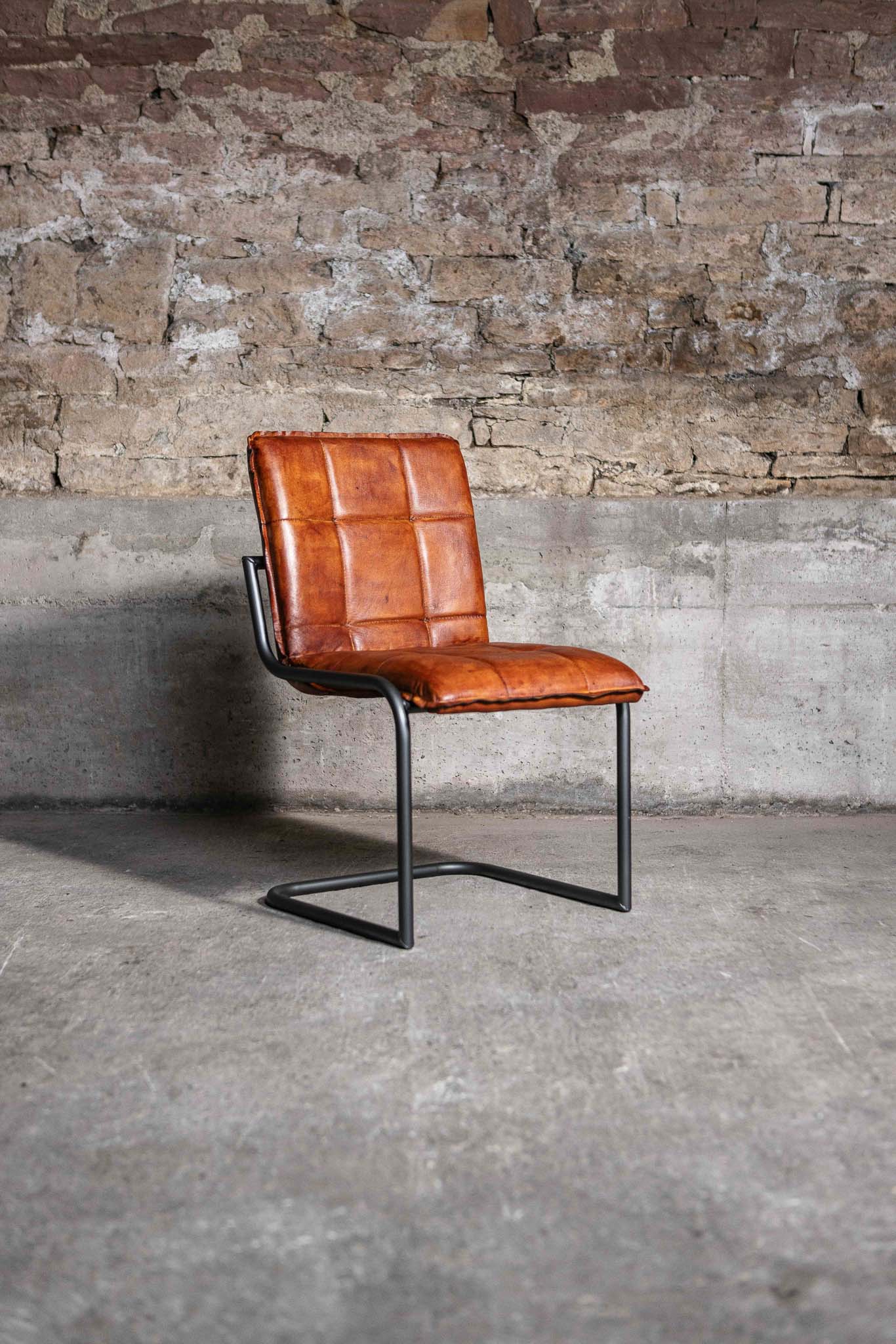
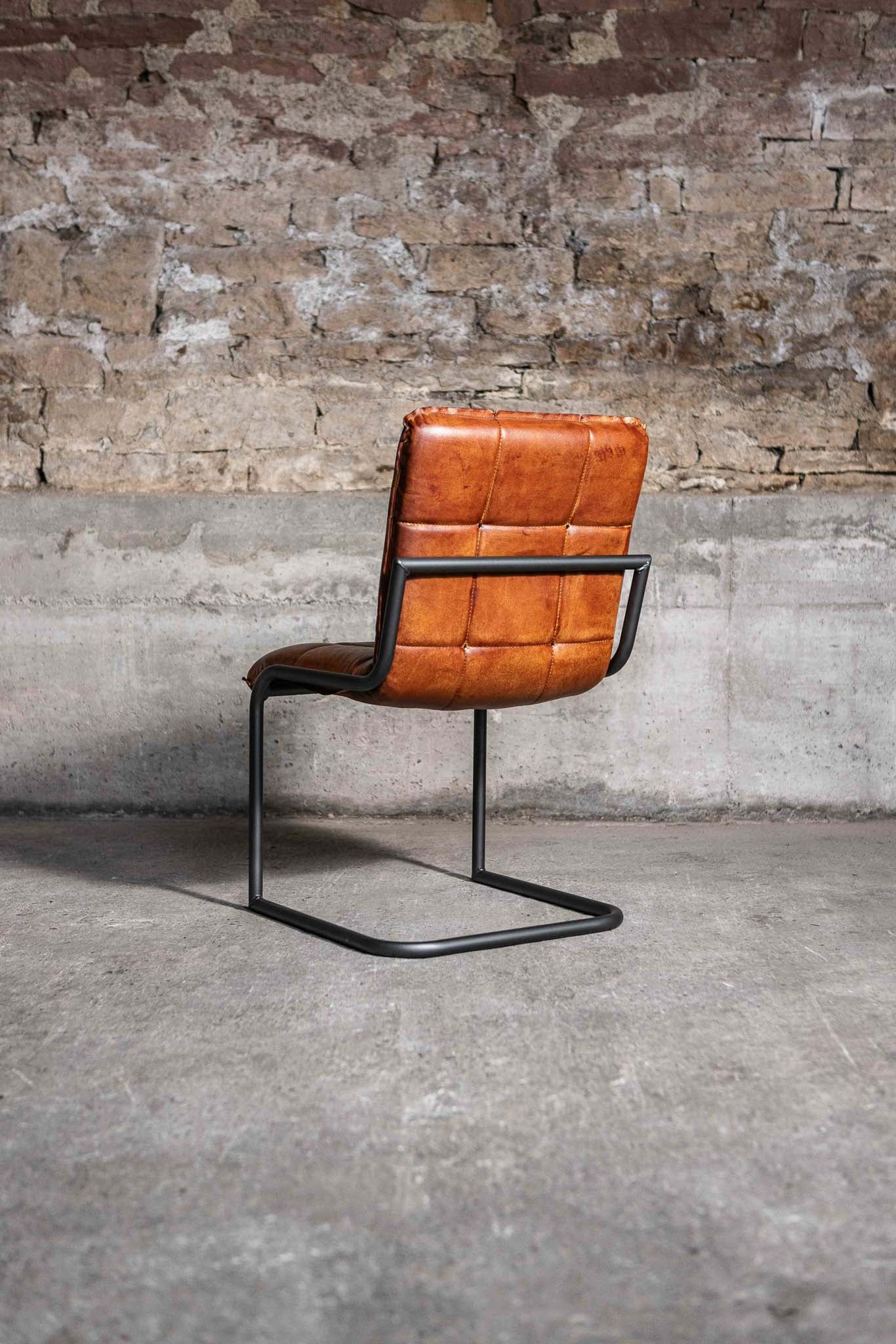
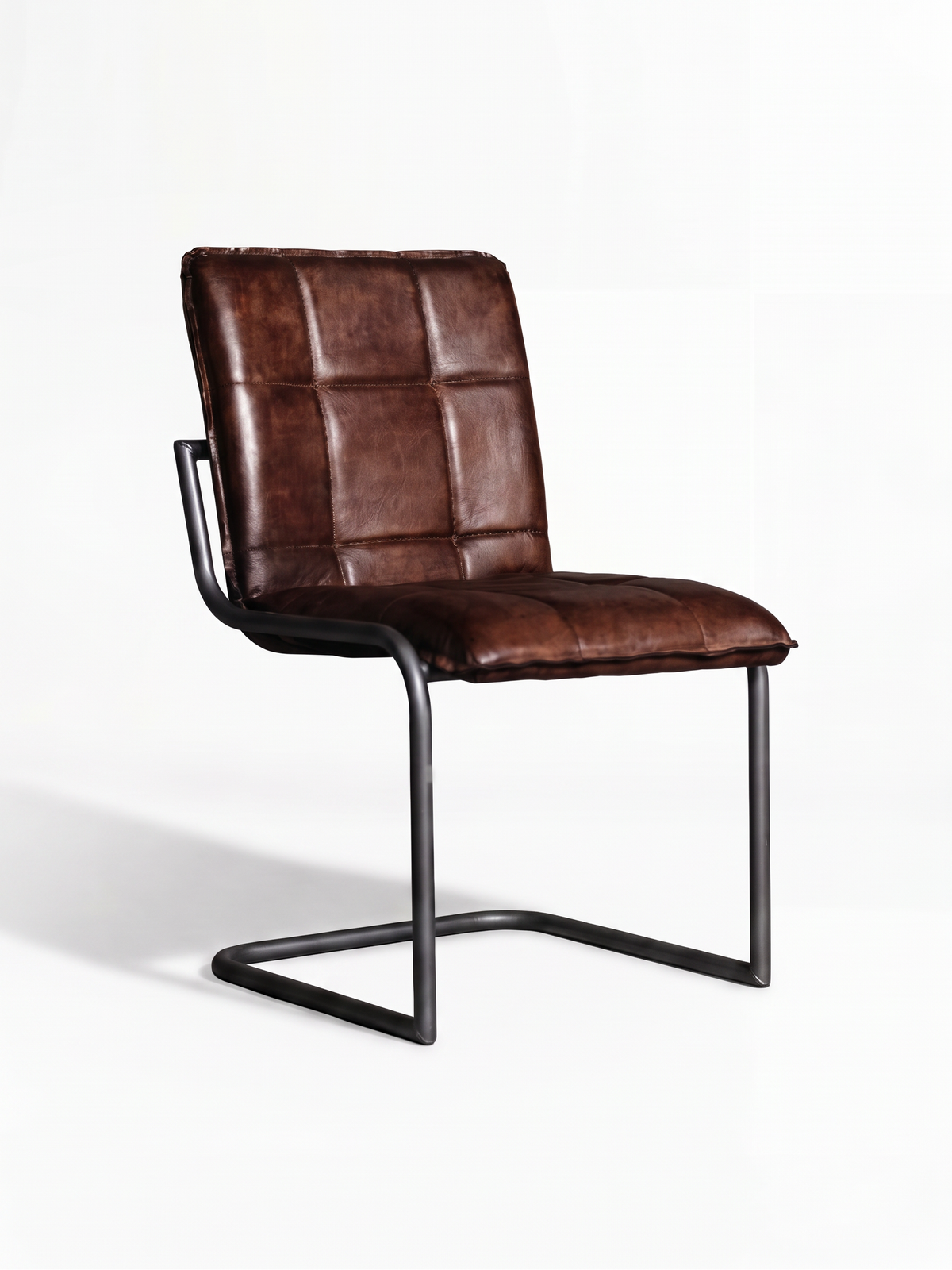
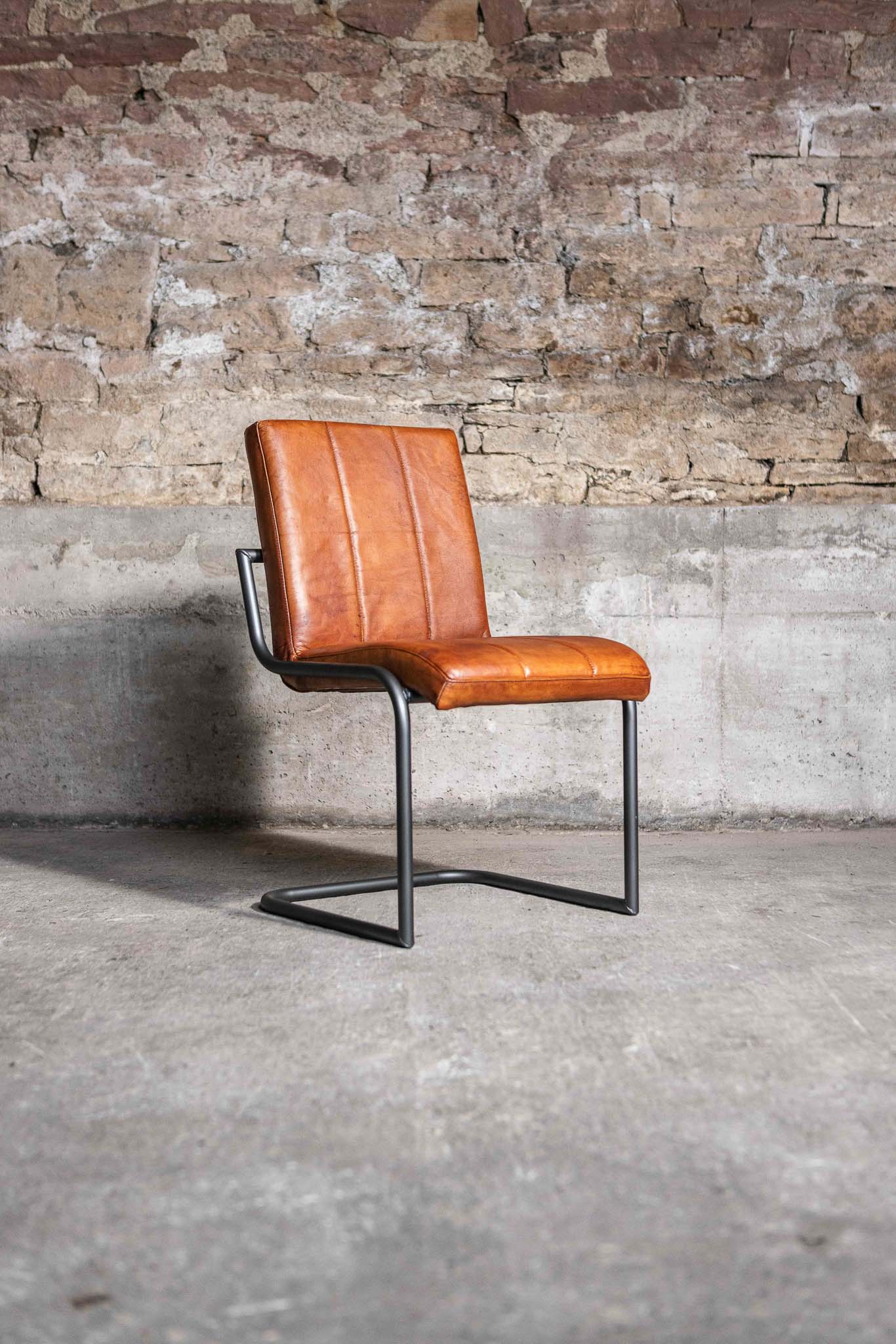
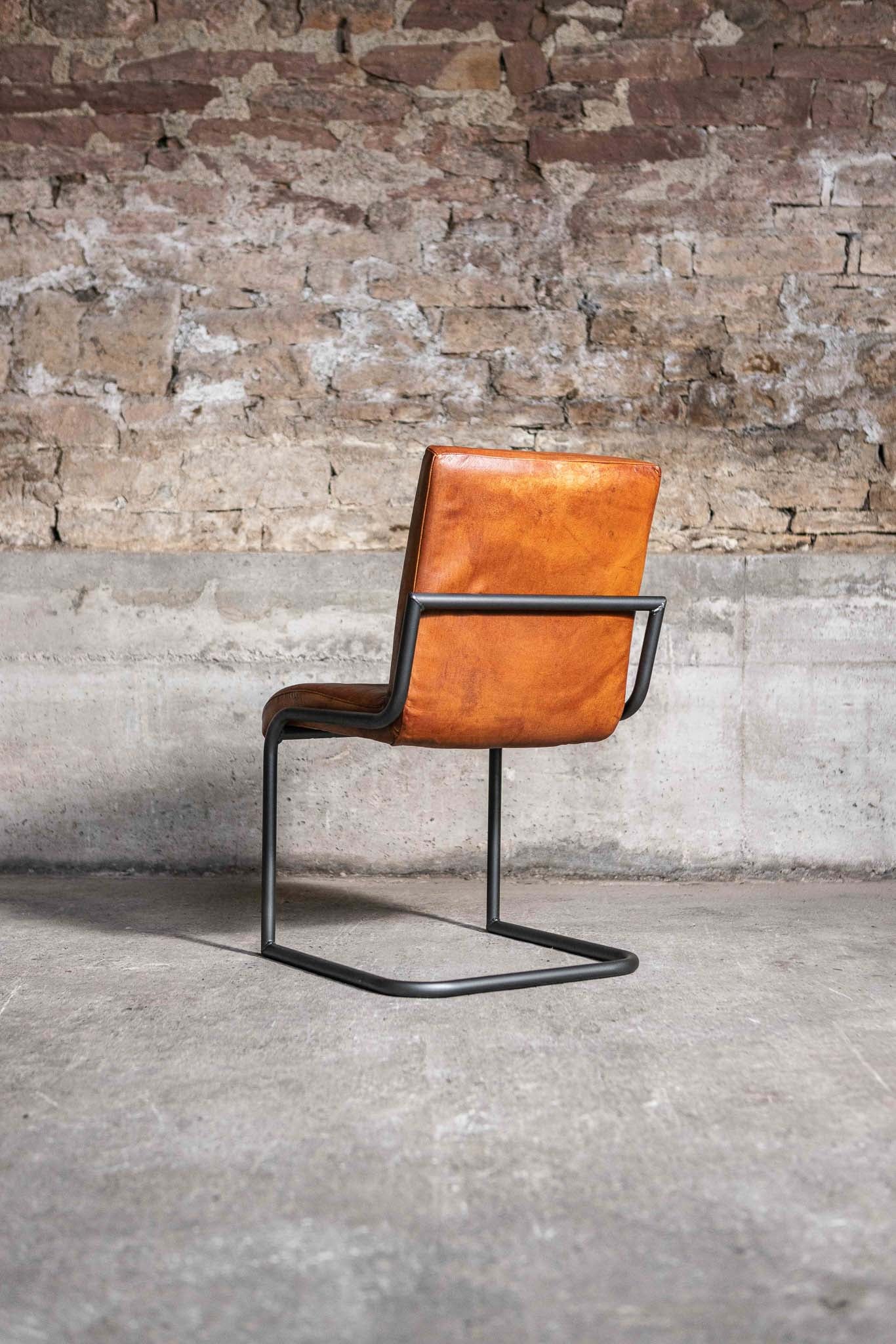
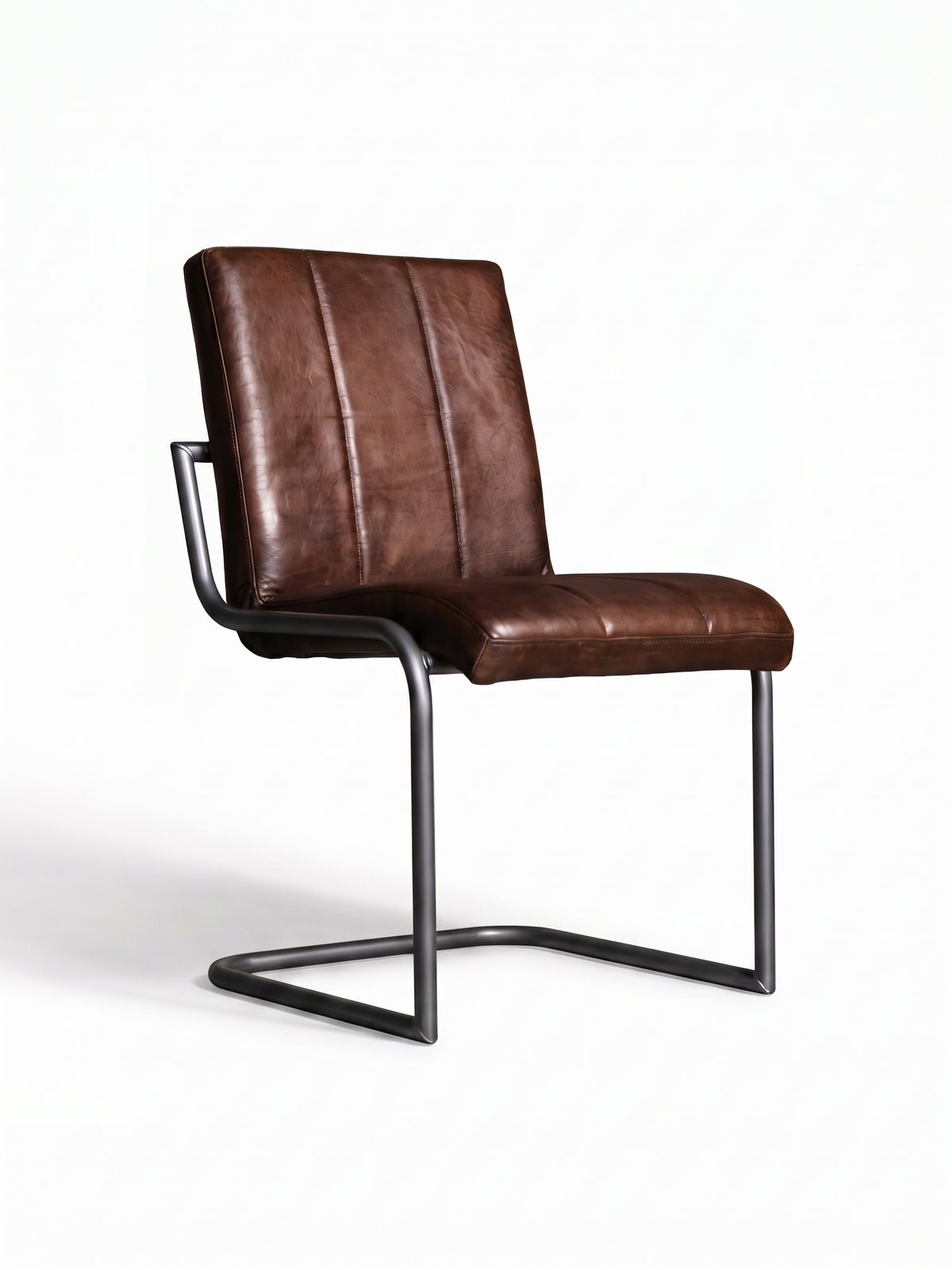
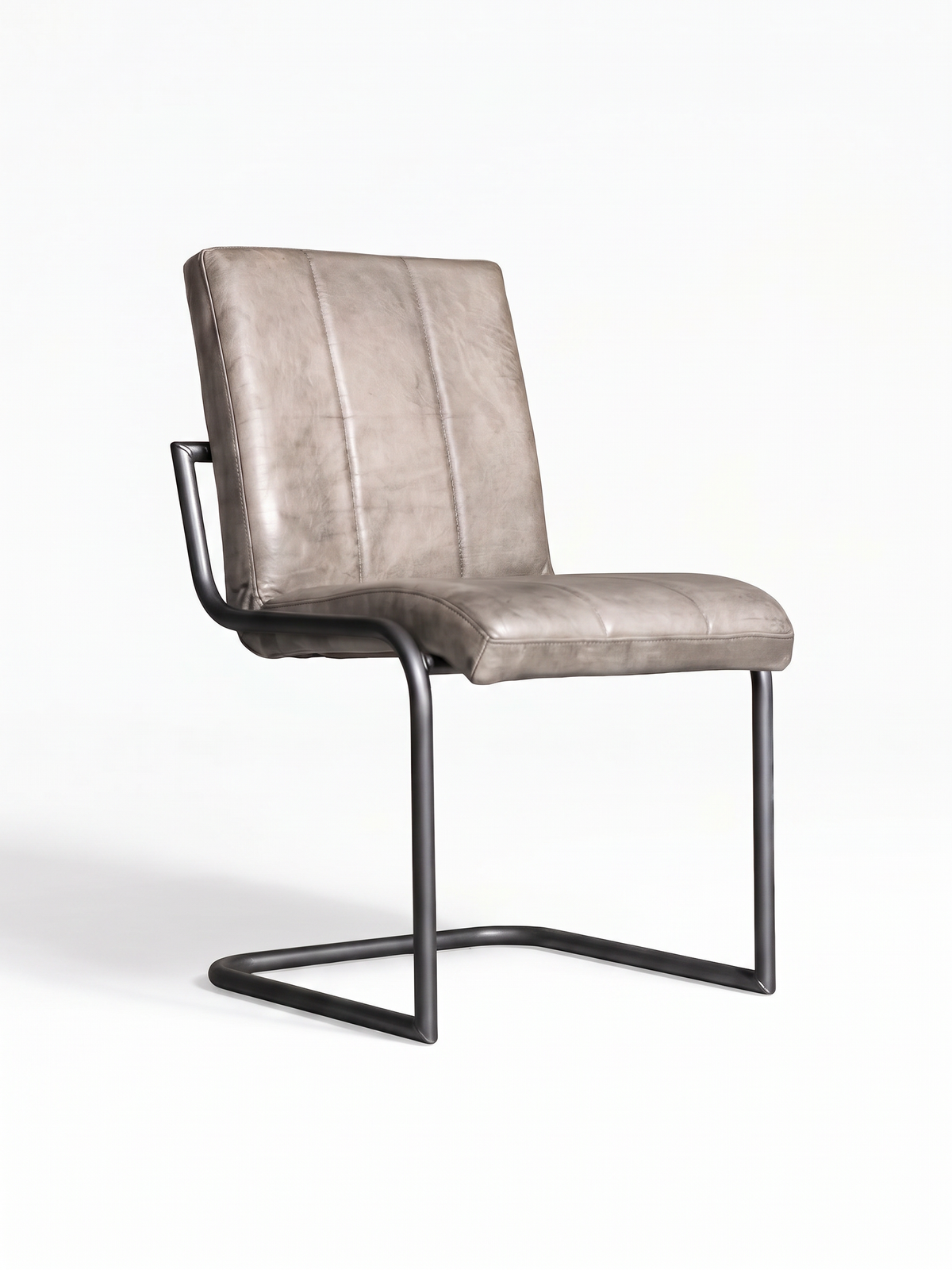
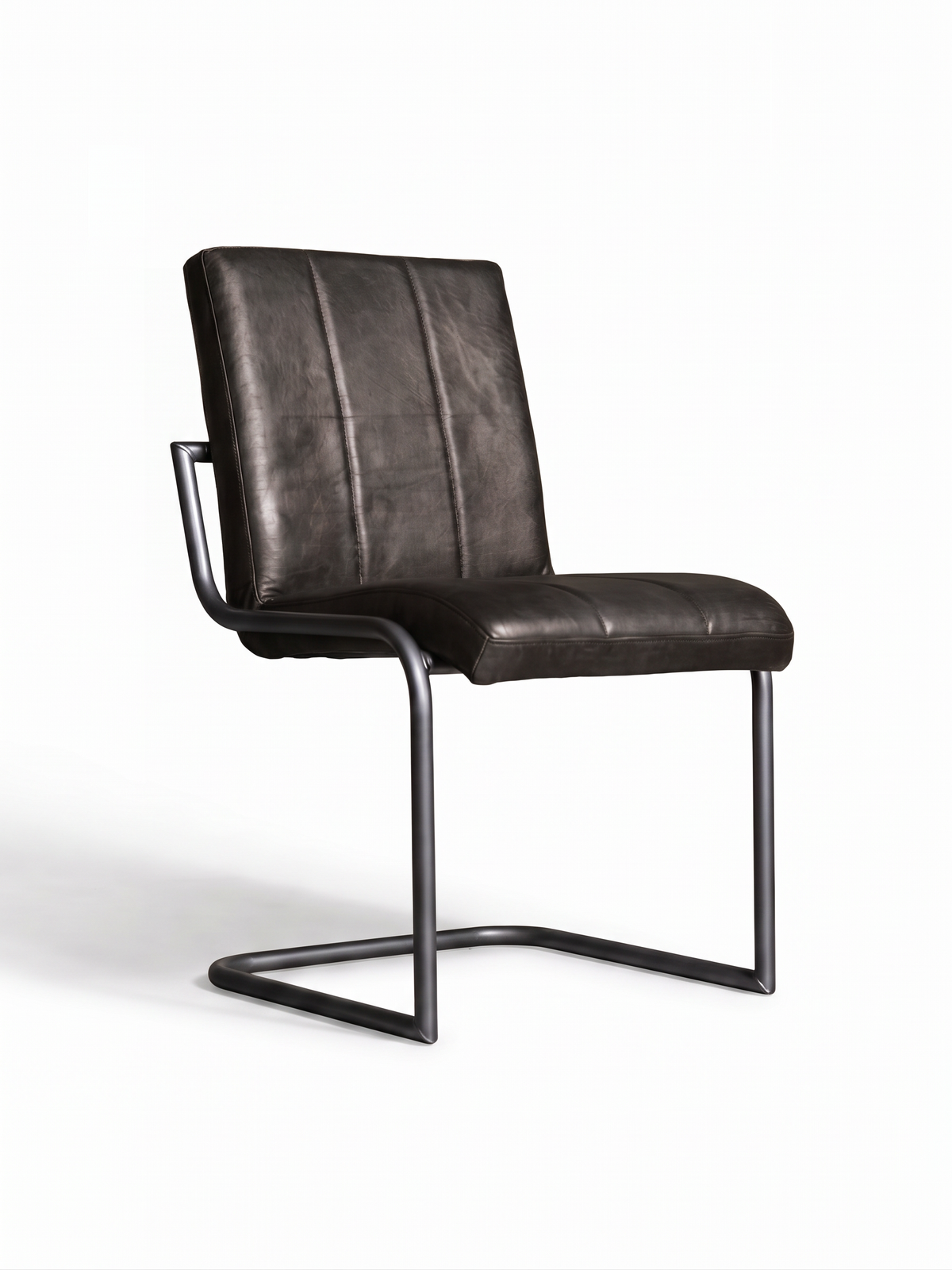
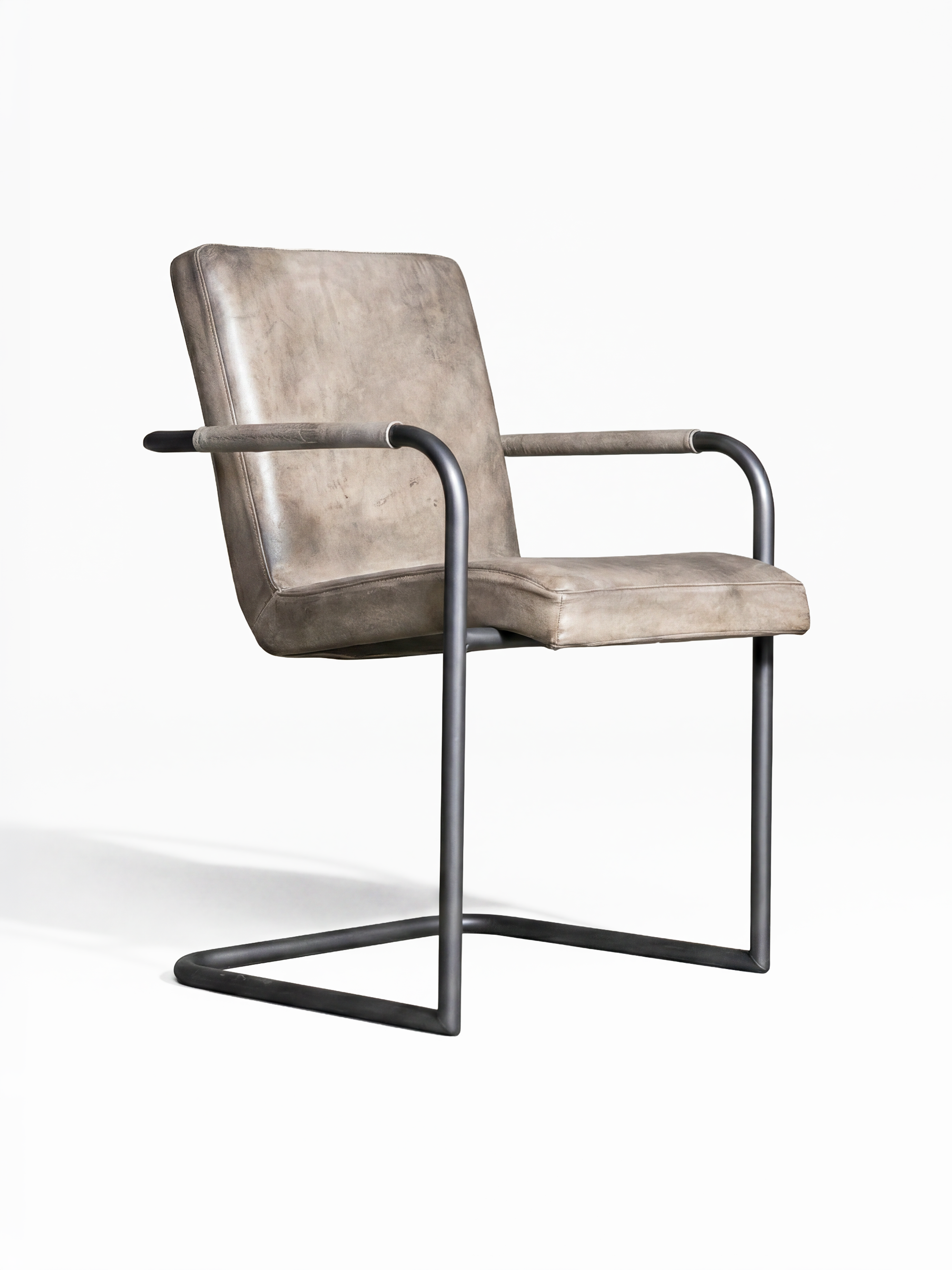
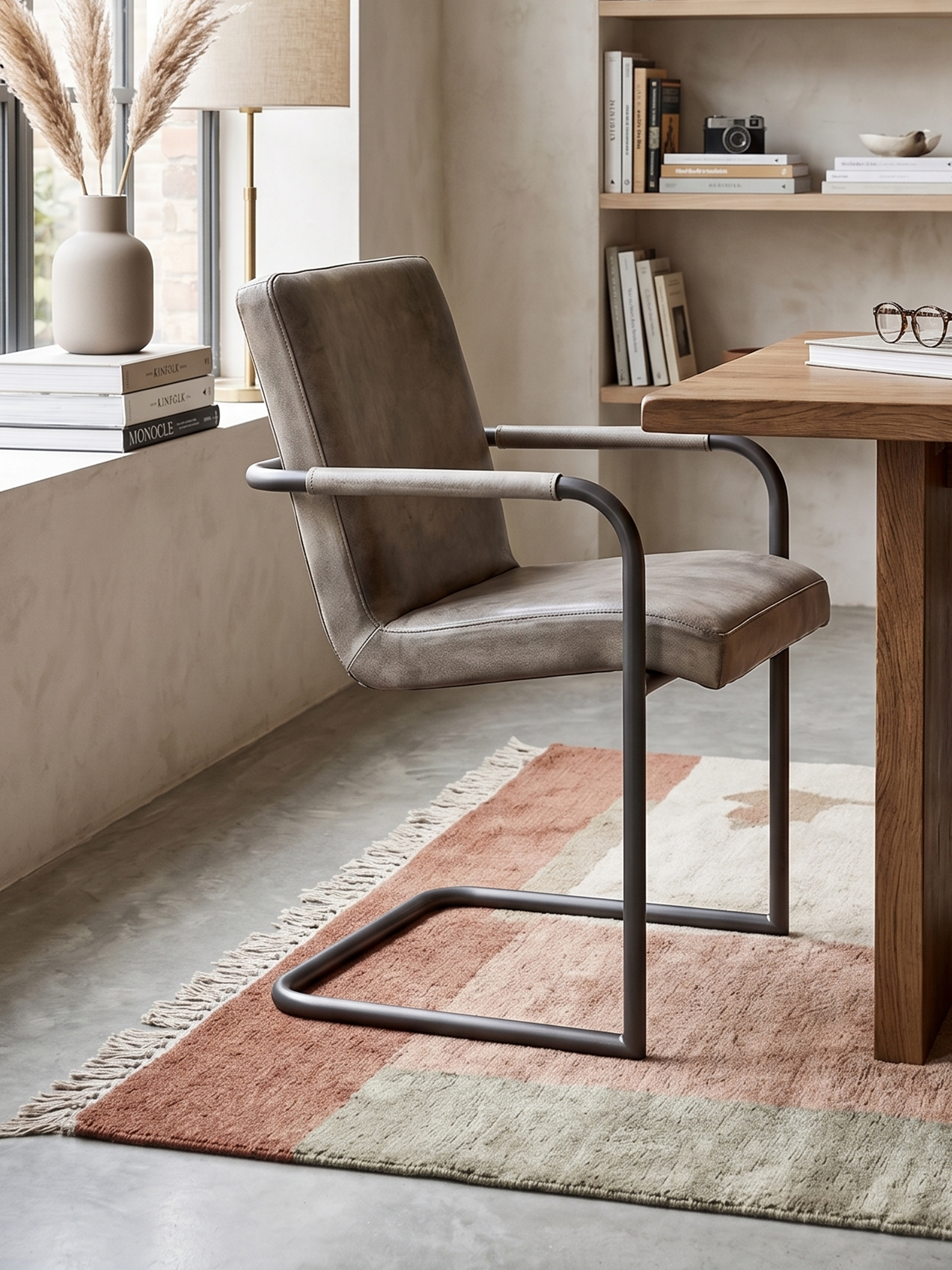
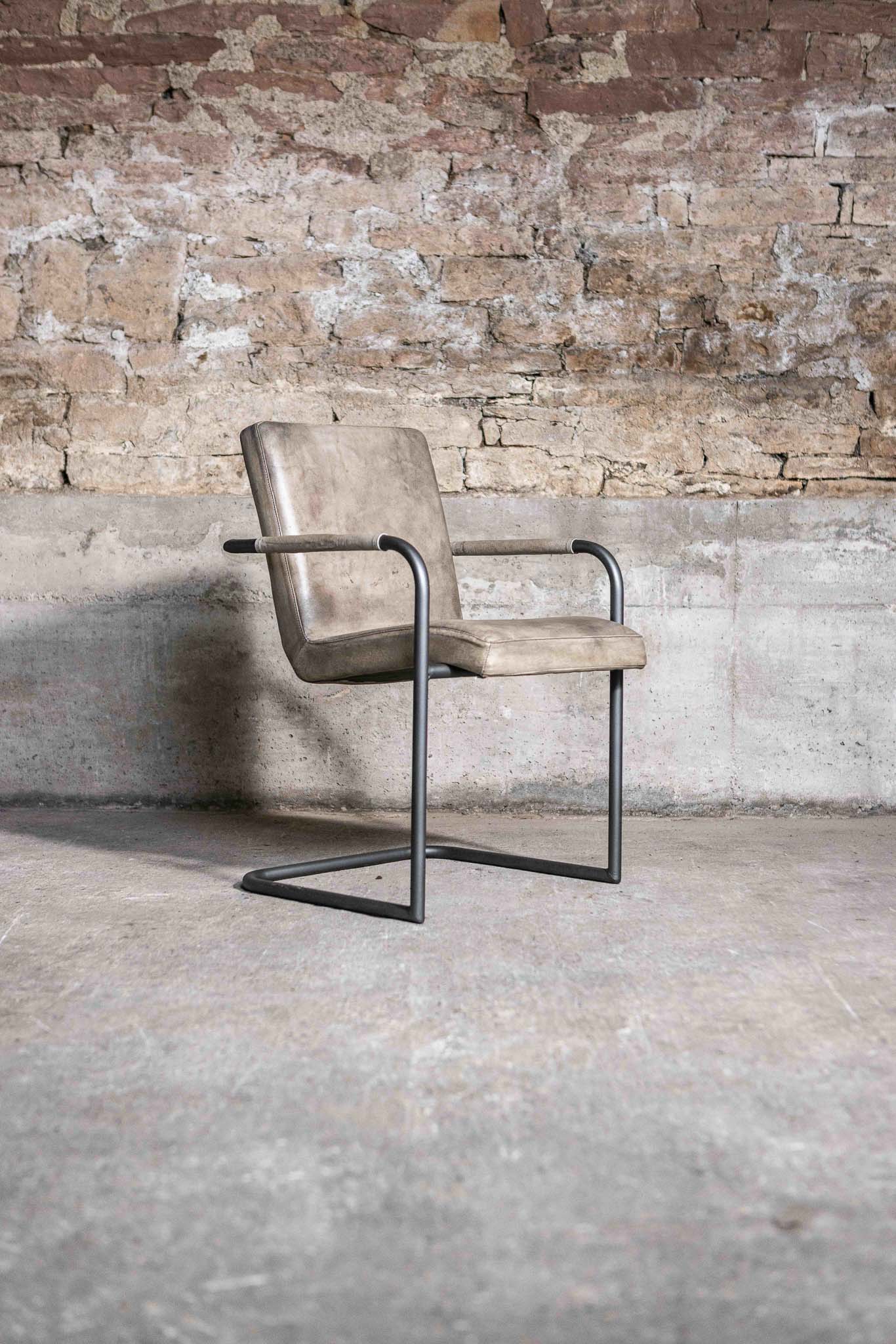
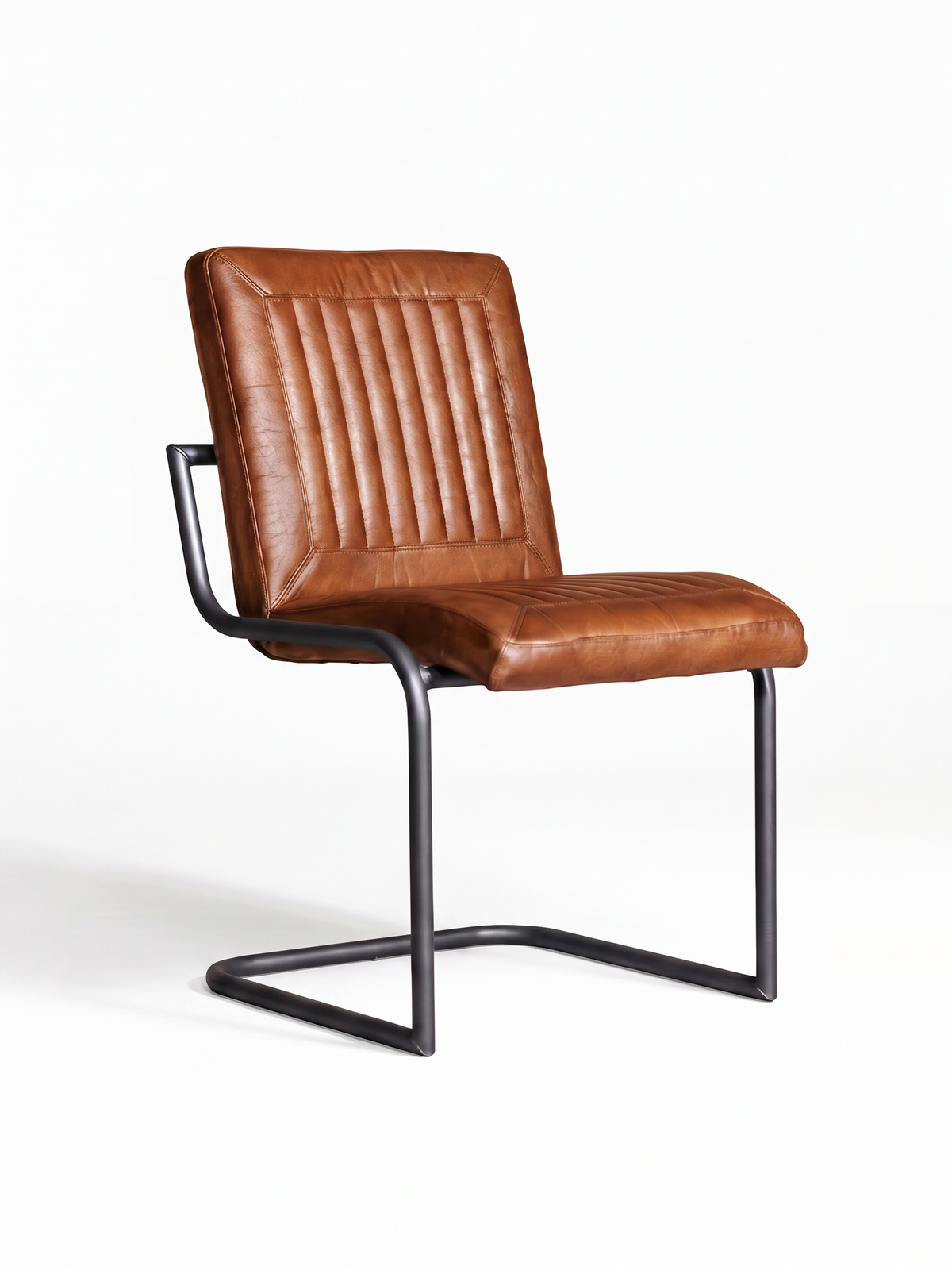
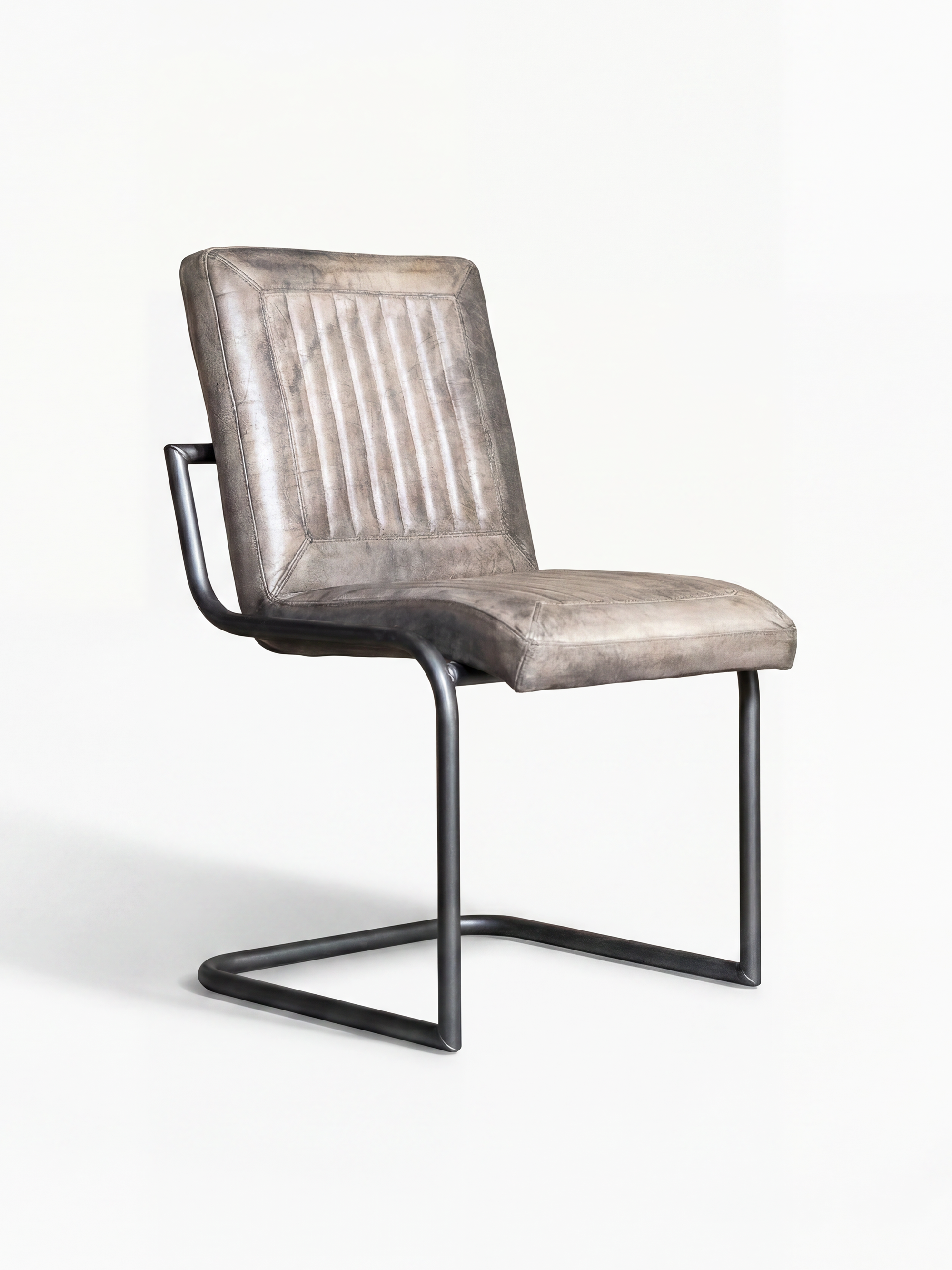
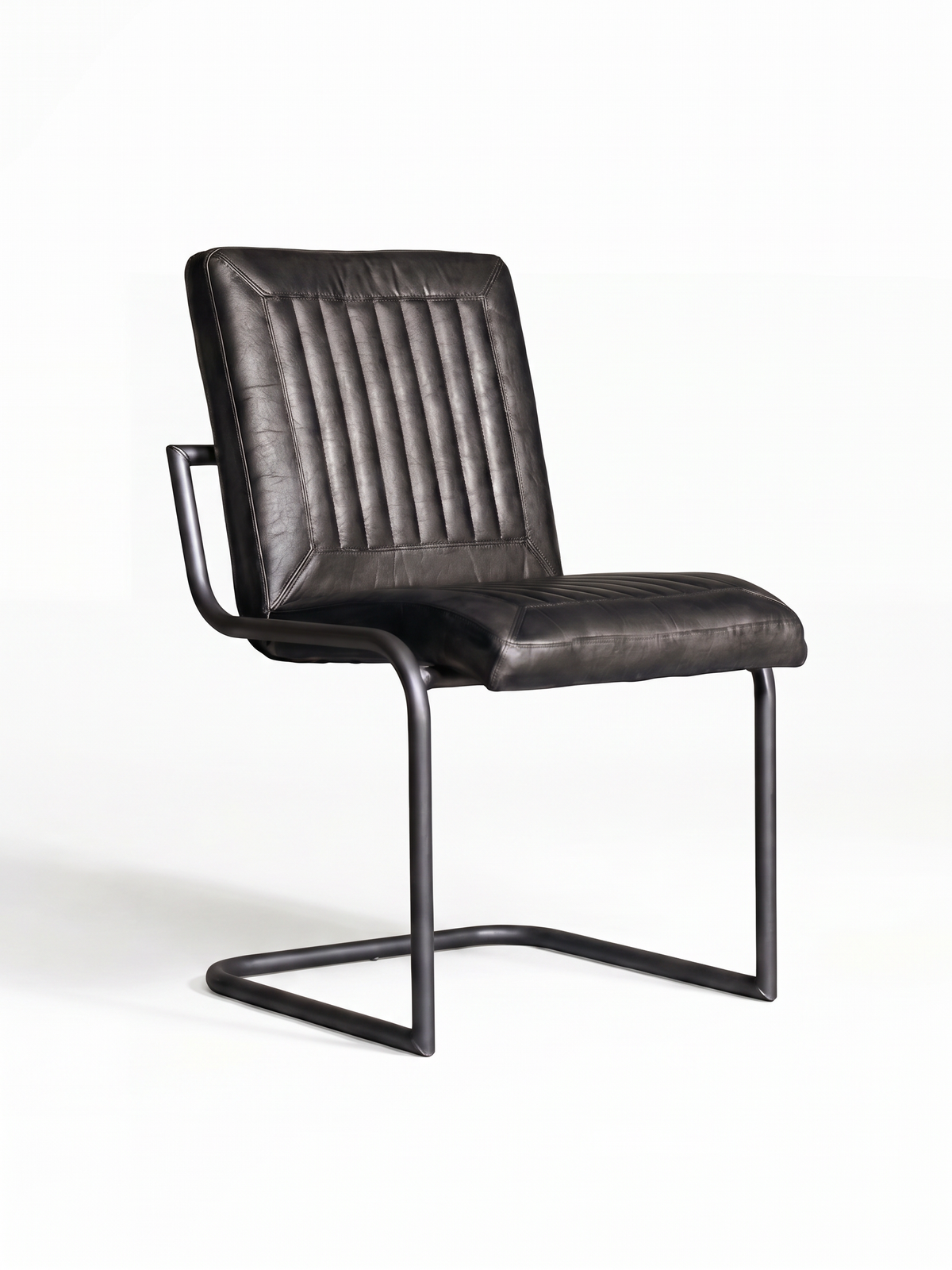
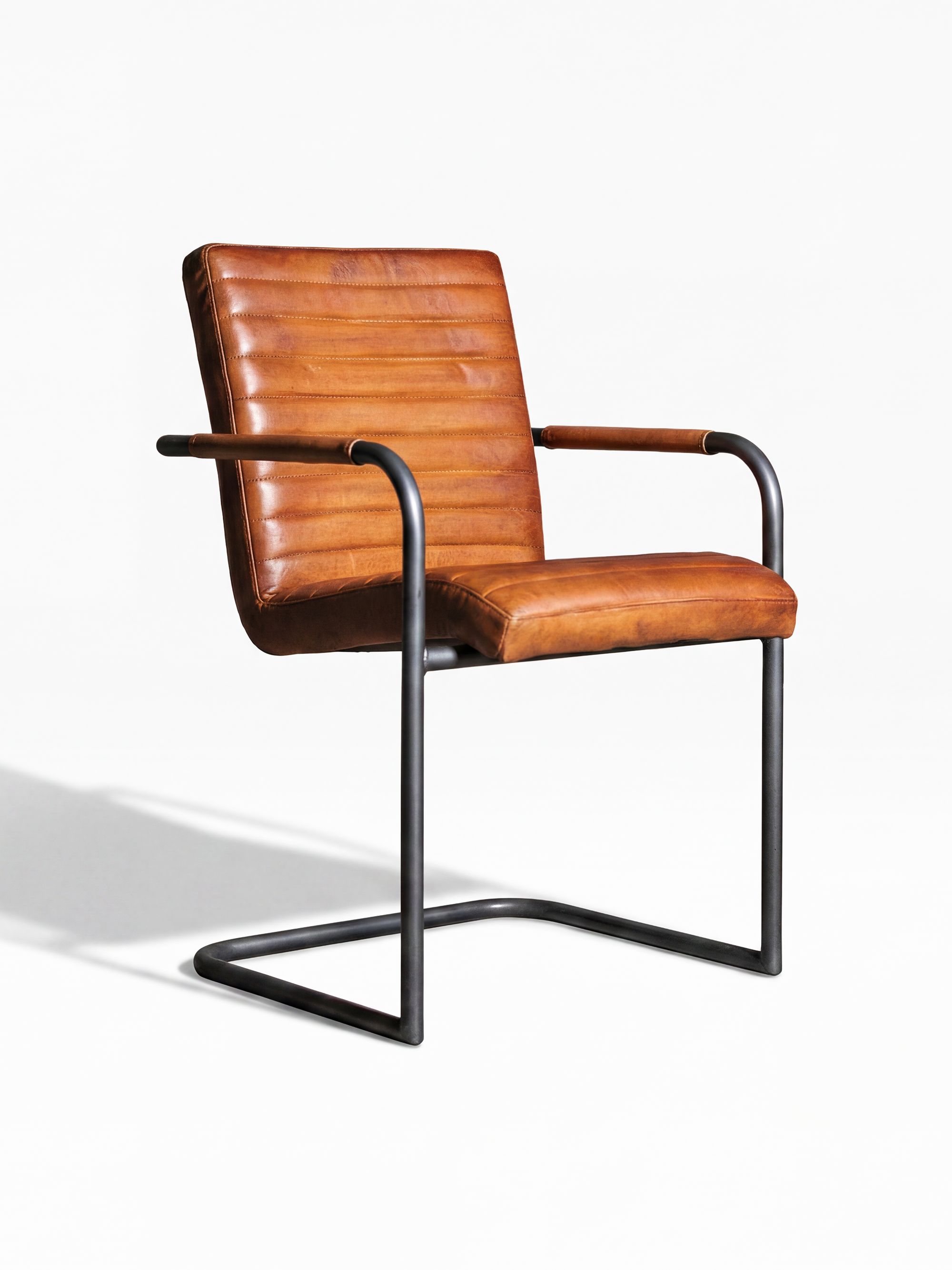
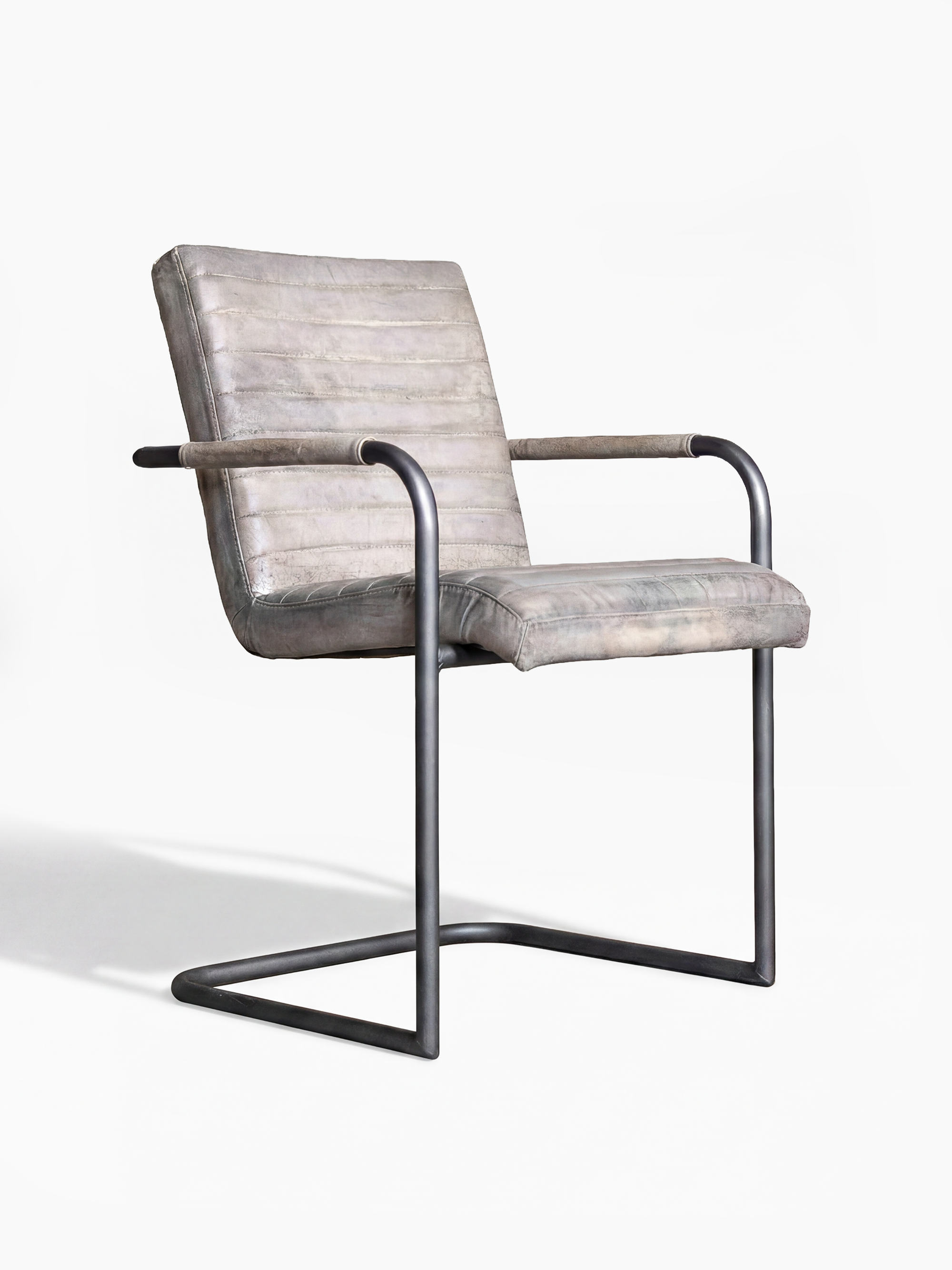
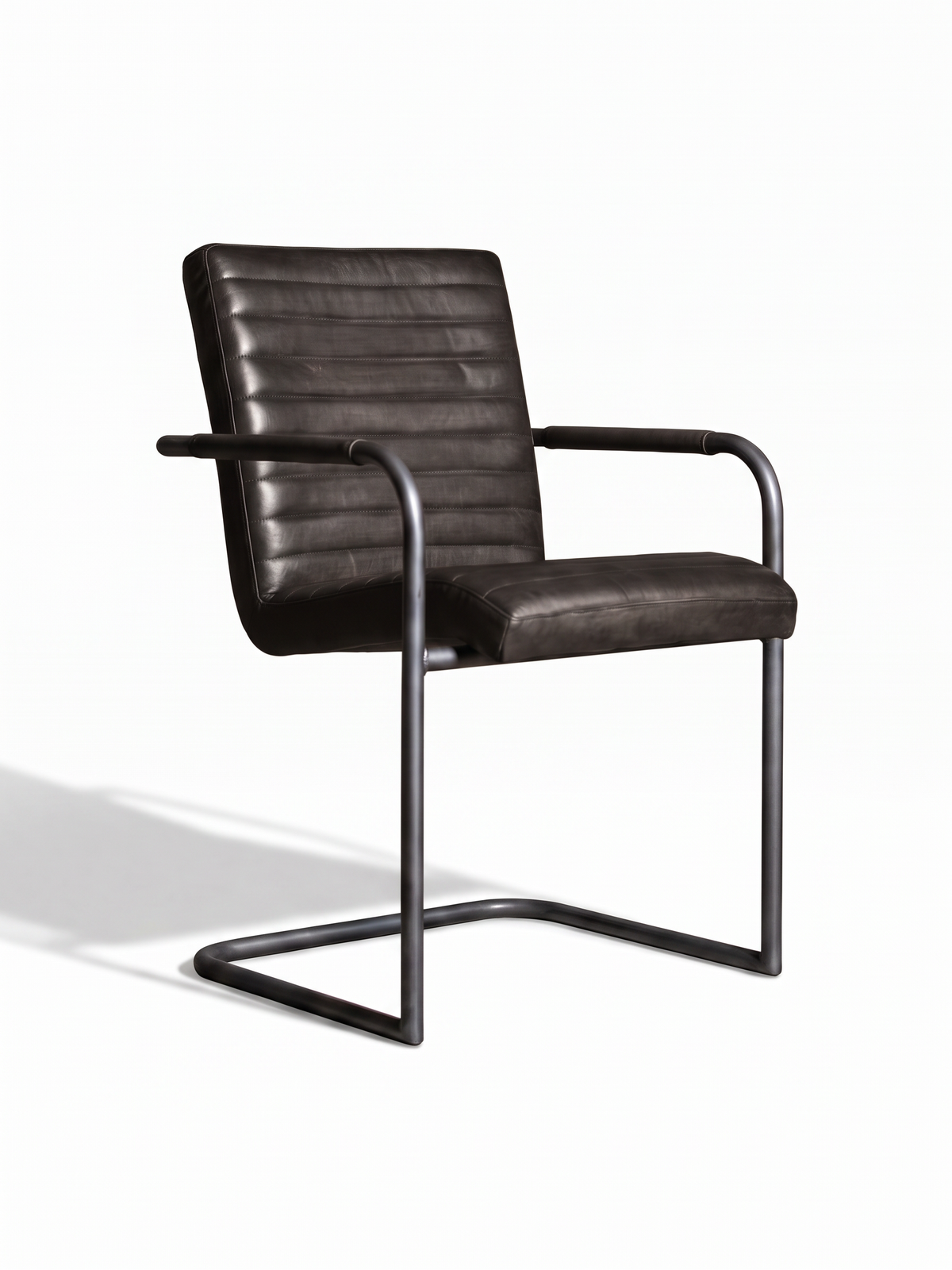
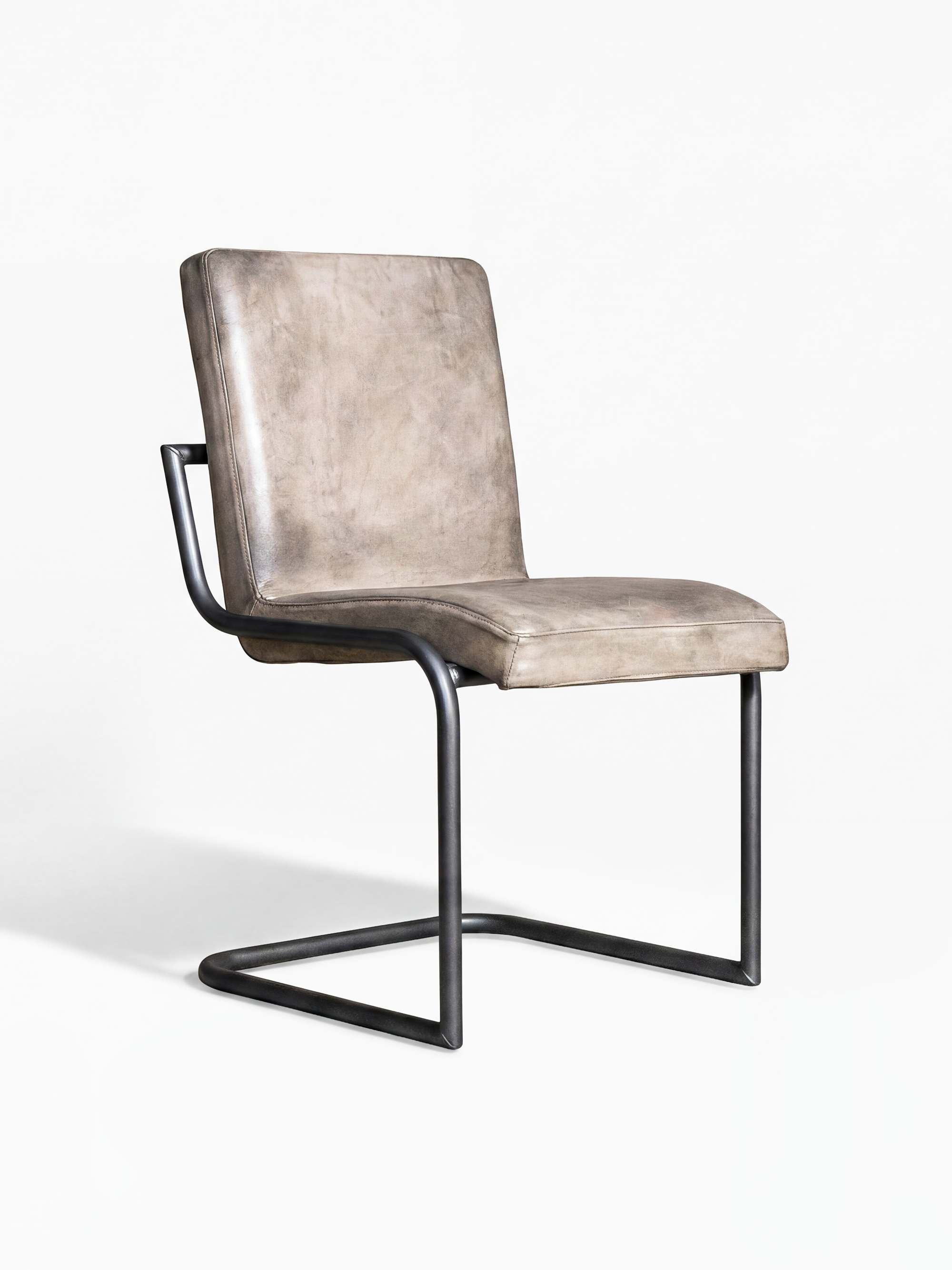
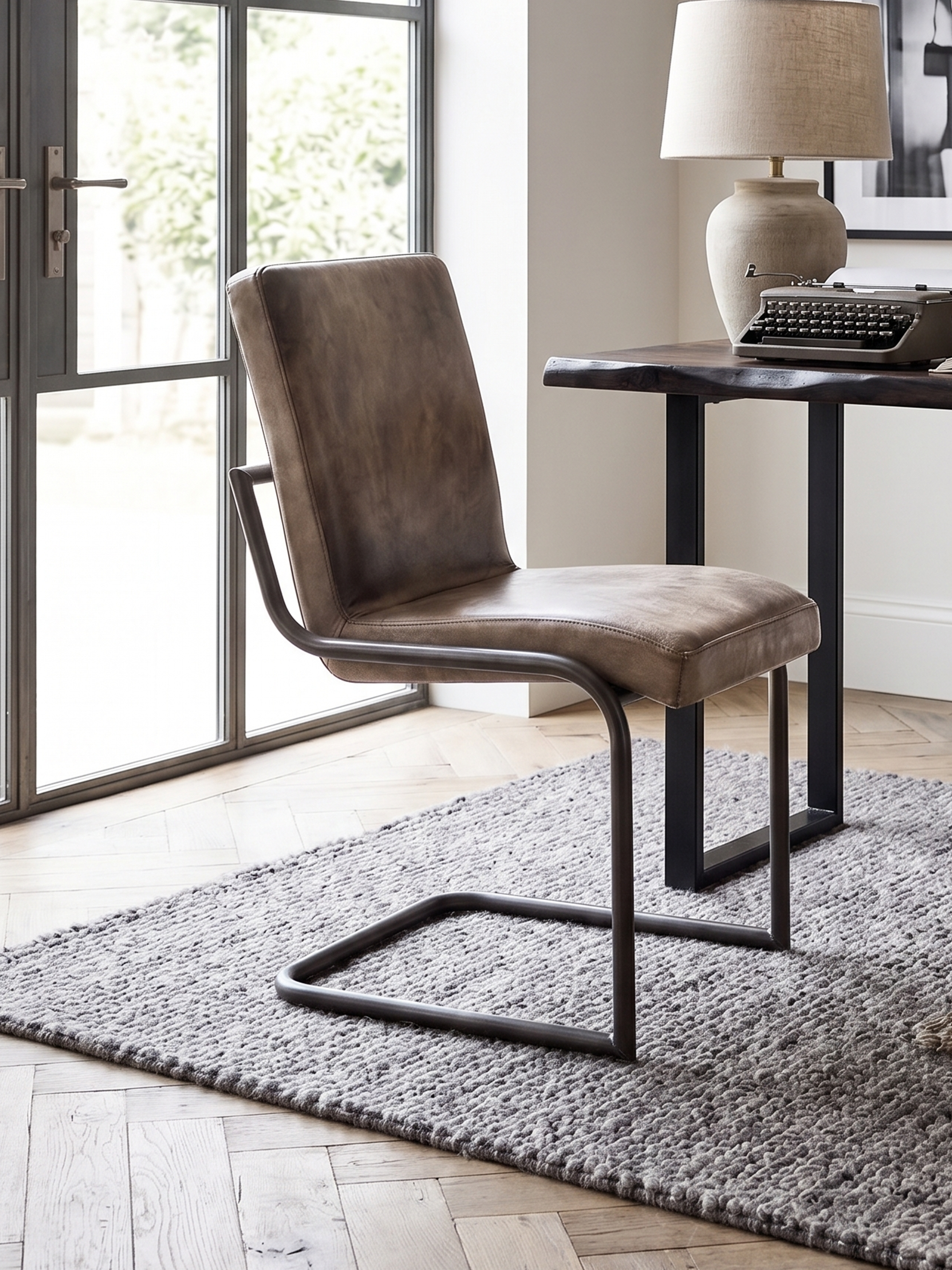
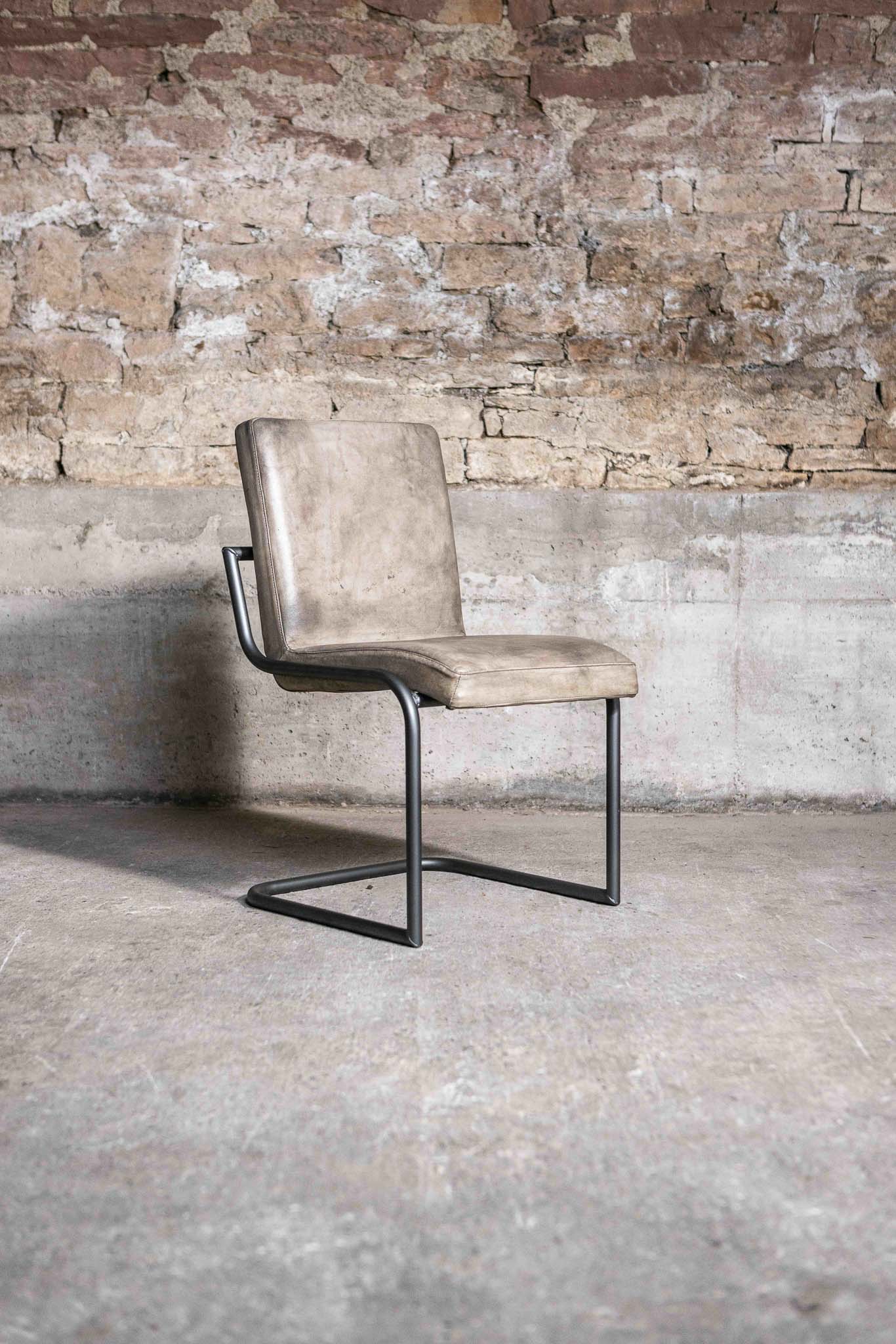
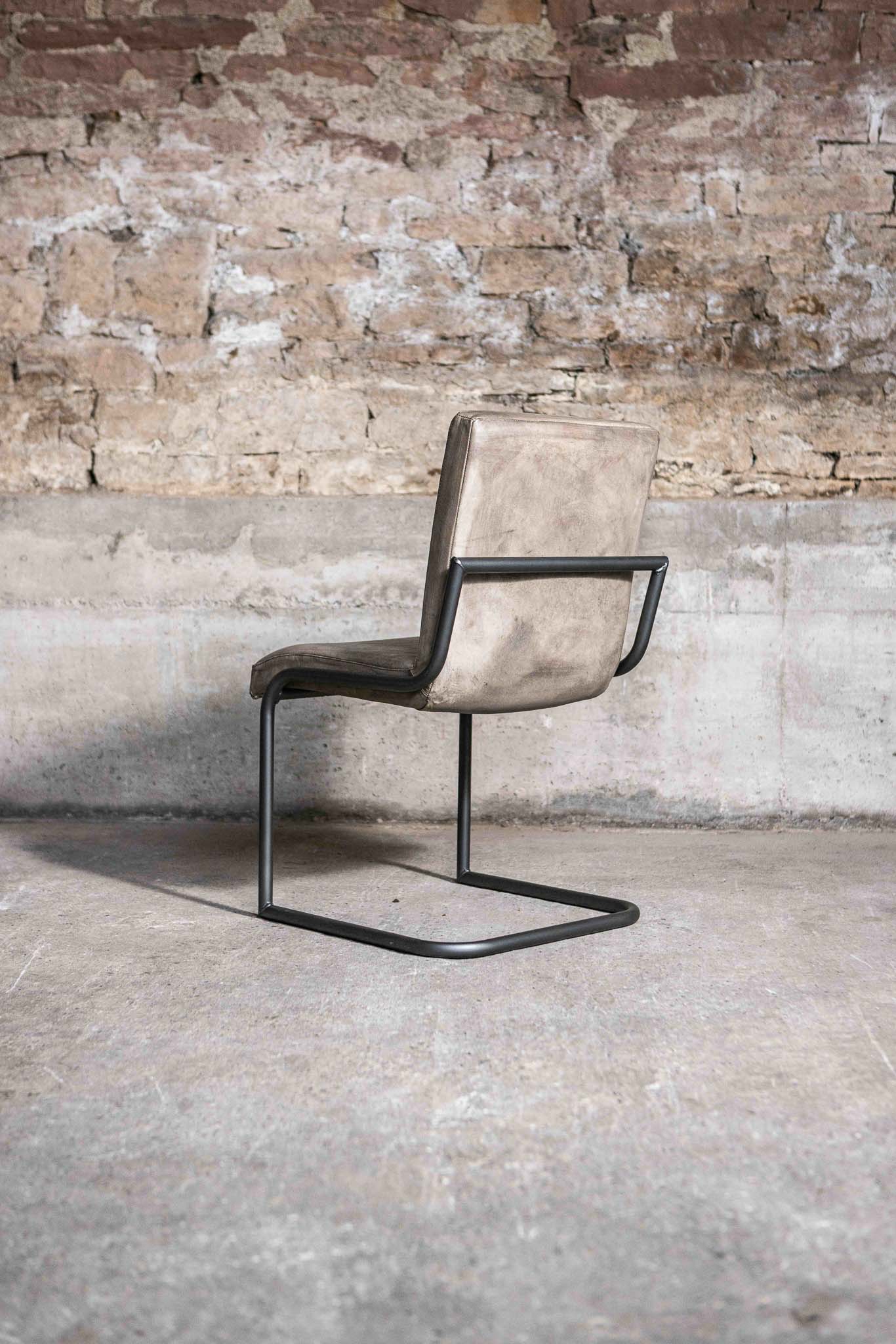
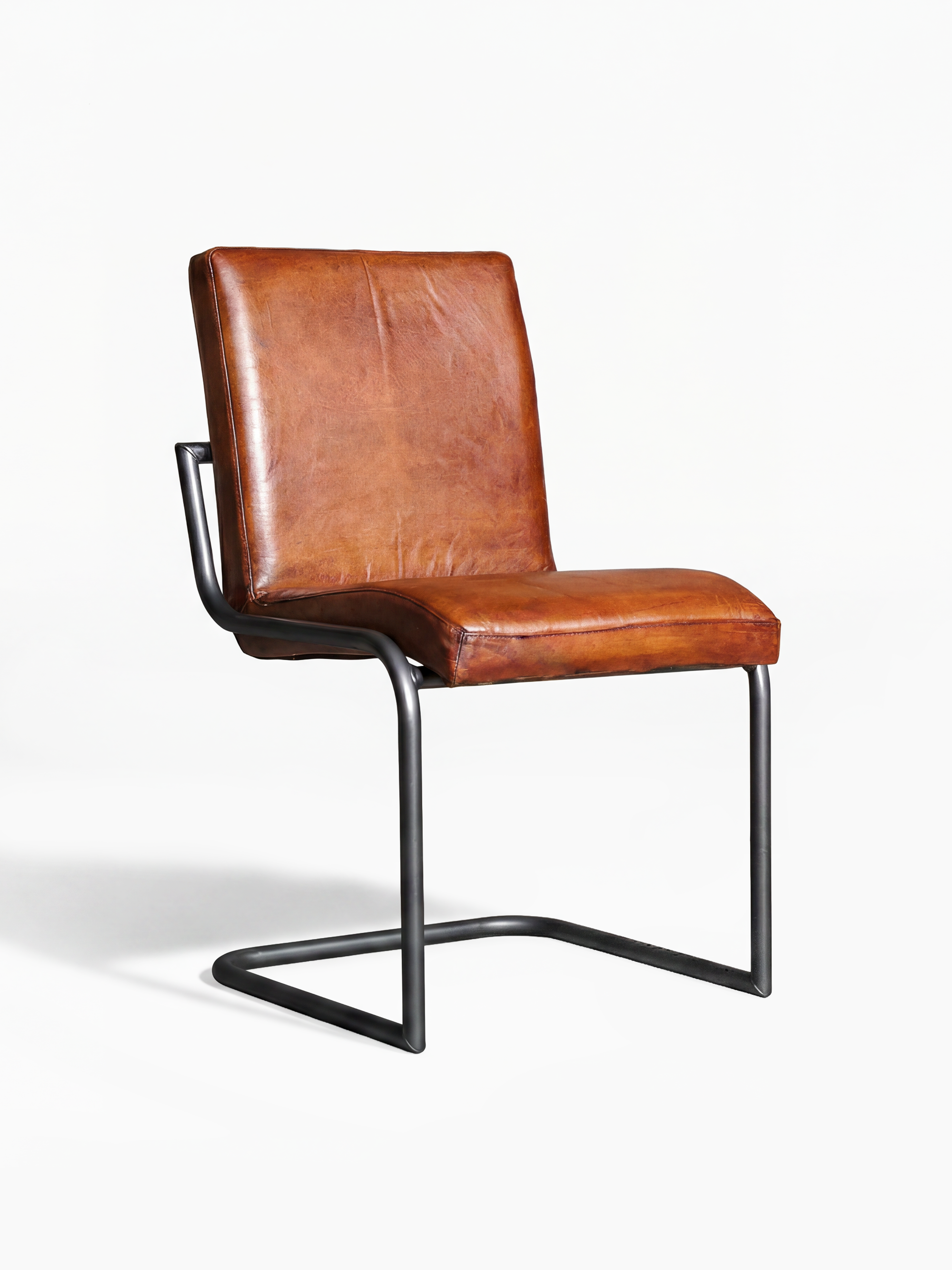
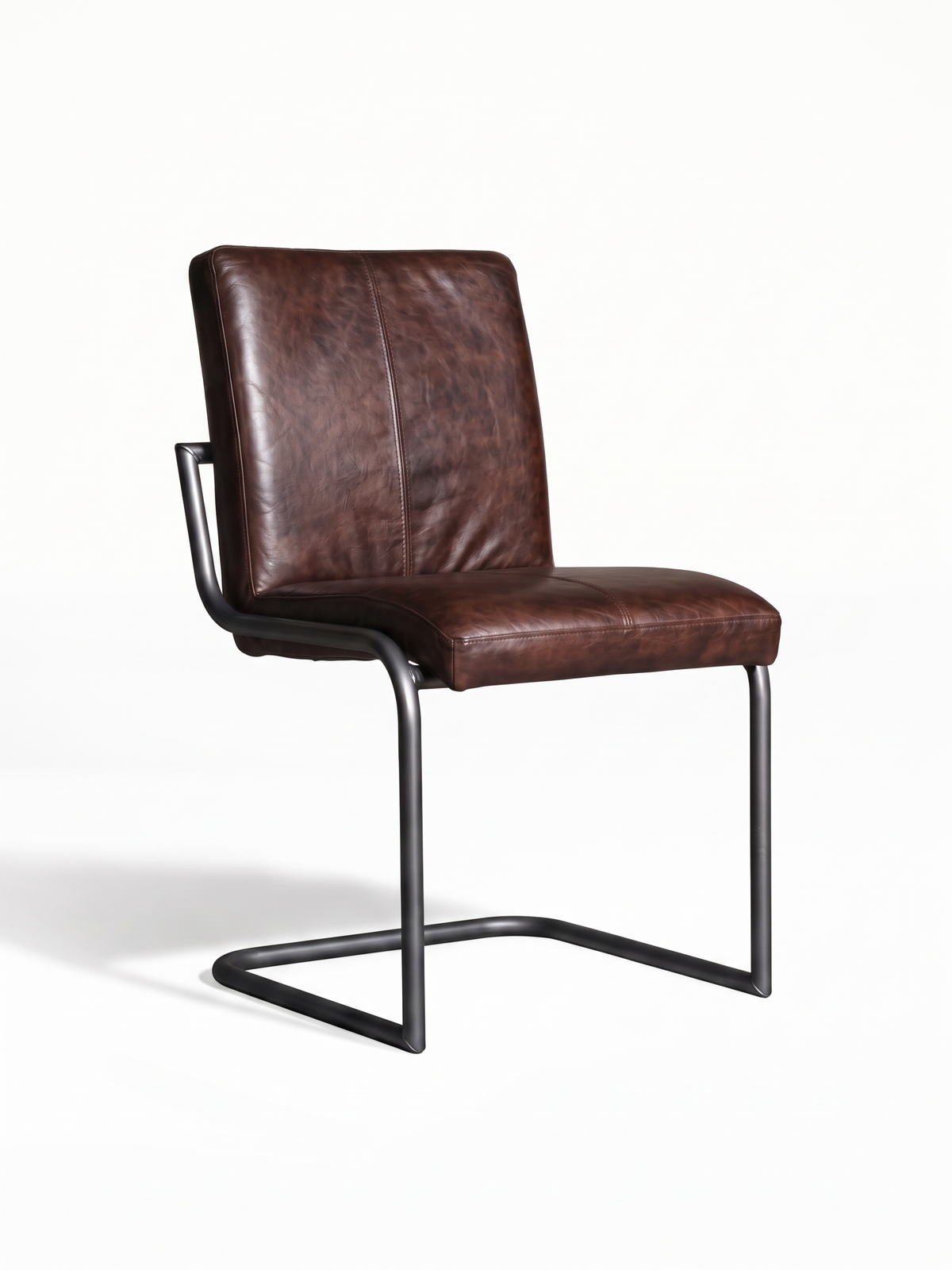
Cantilever Chairs
Discover our unique cantilever chair collection
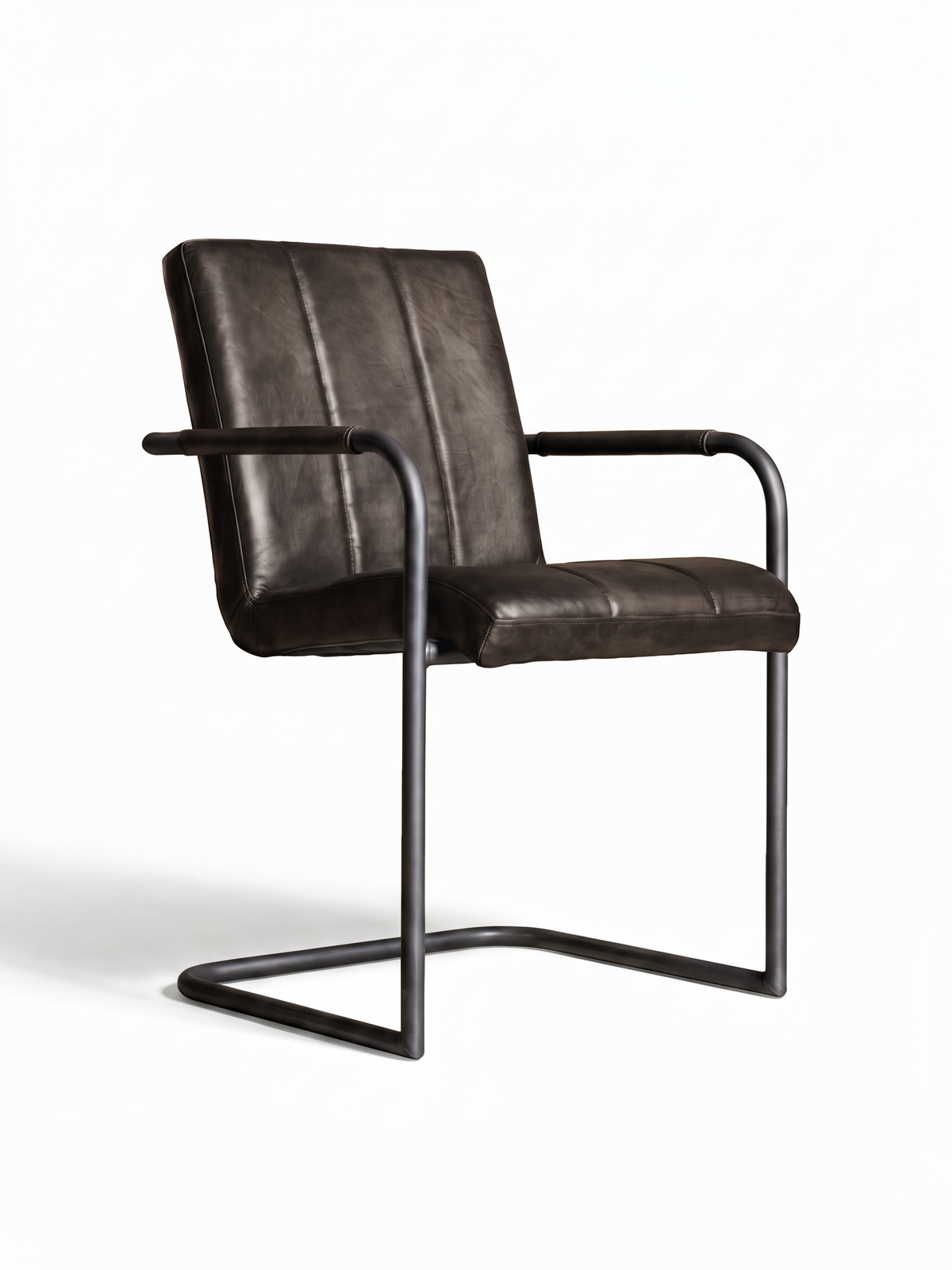
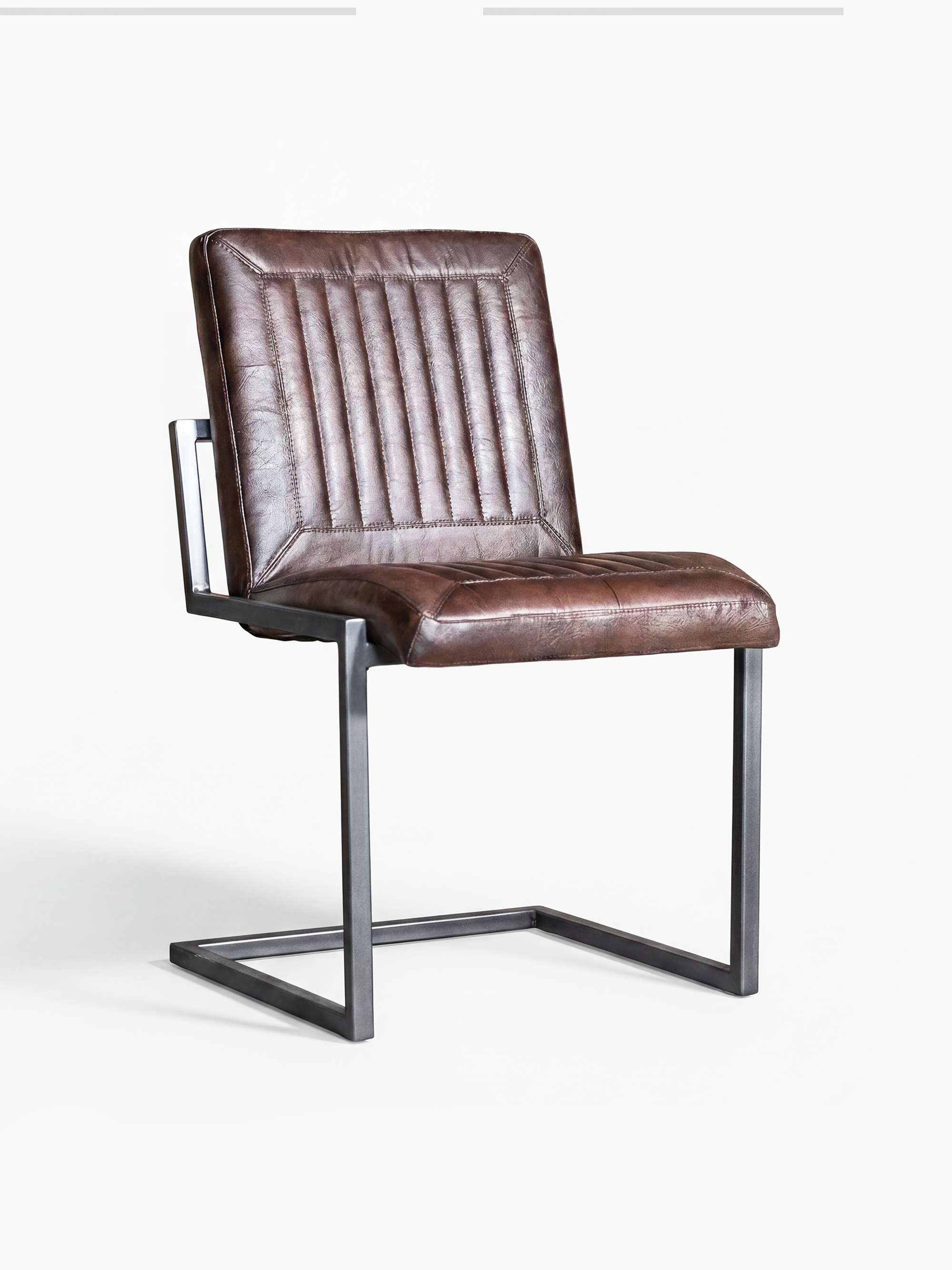
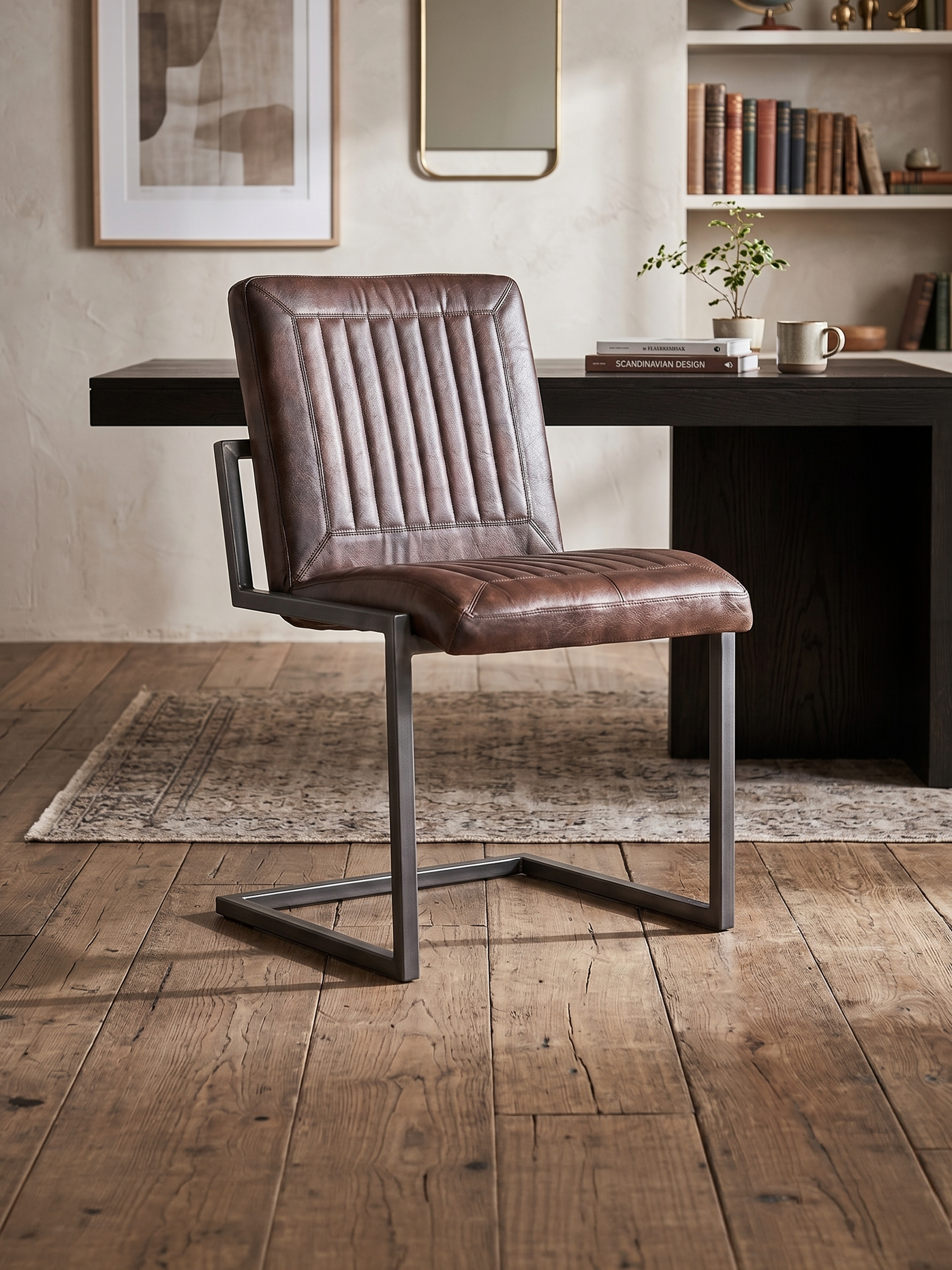
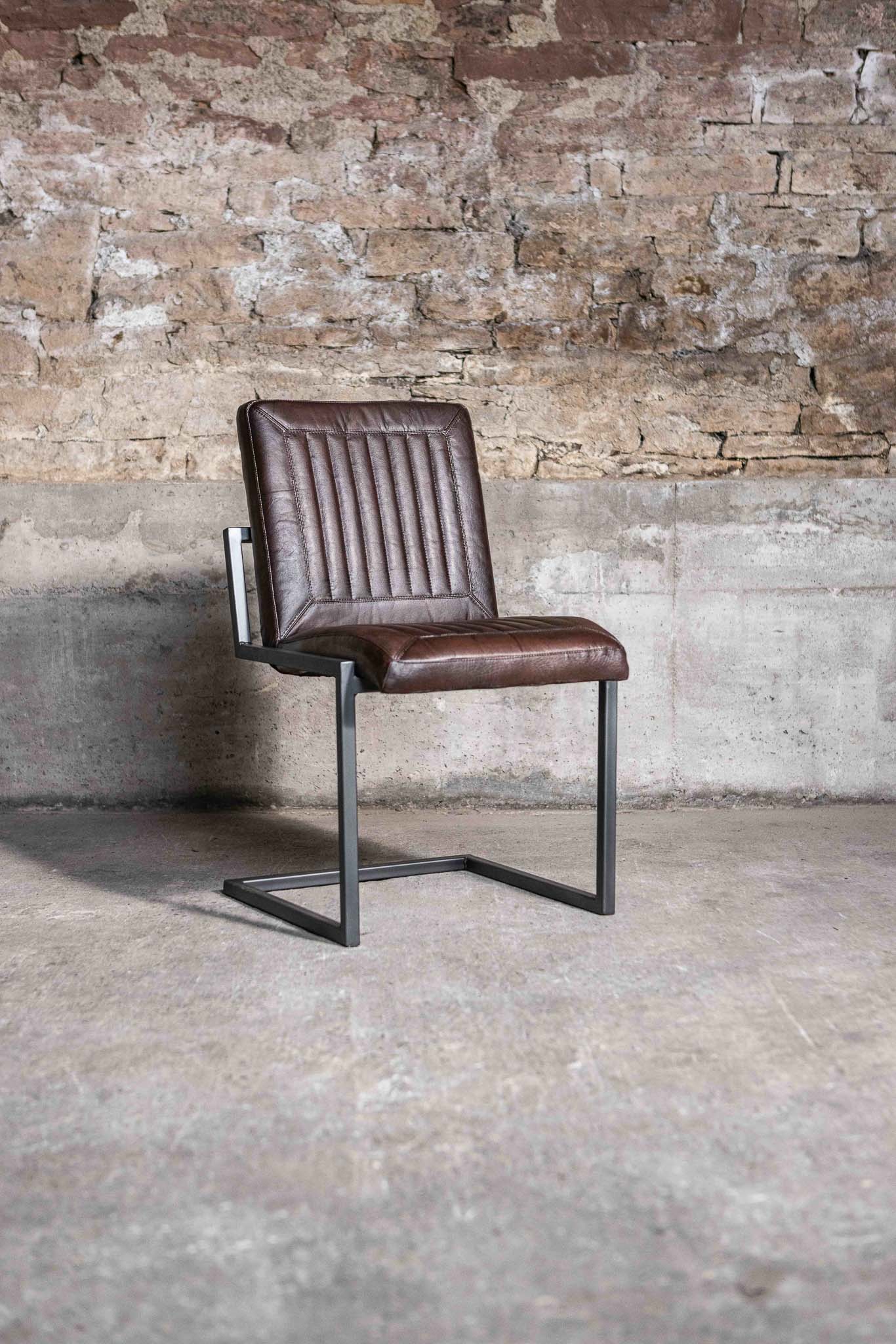
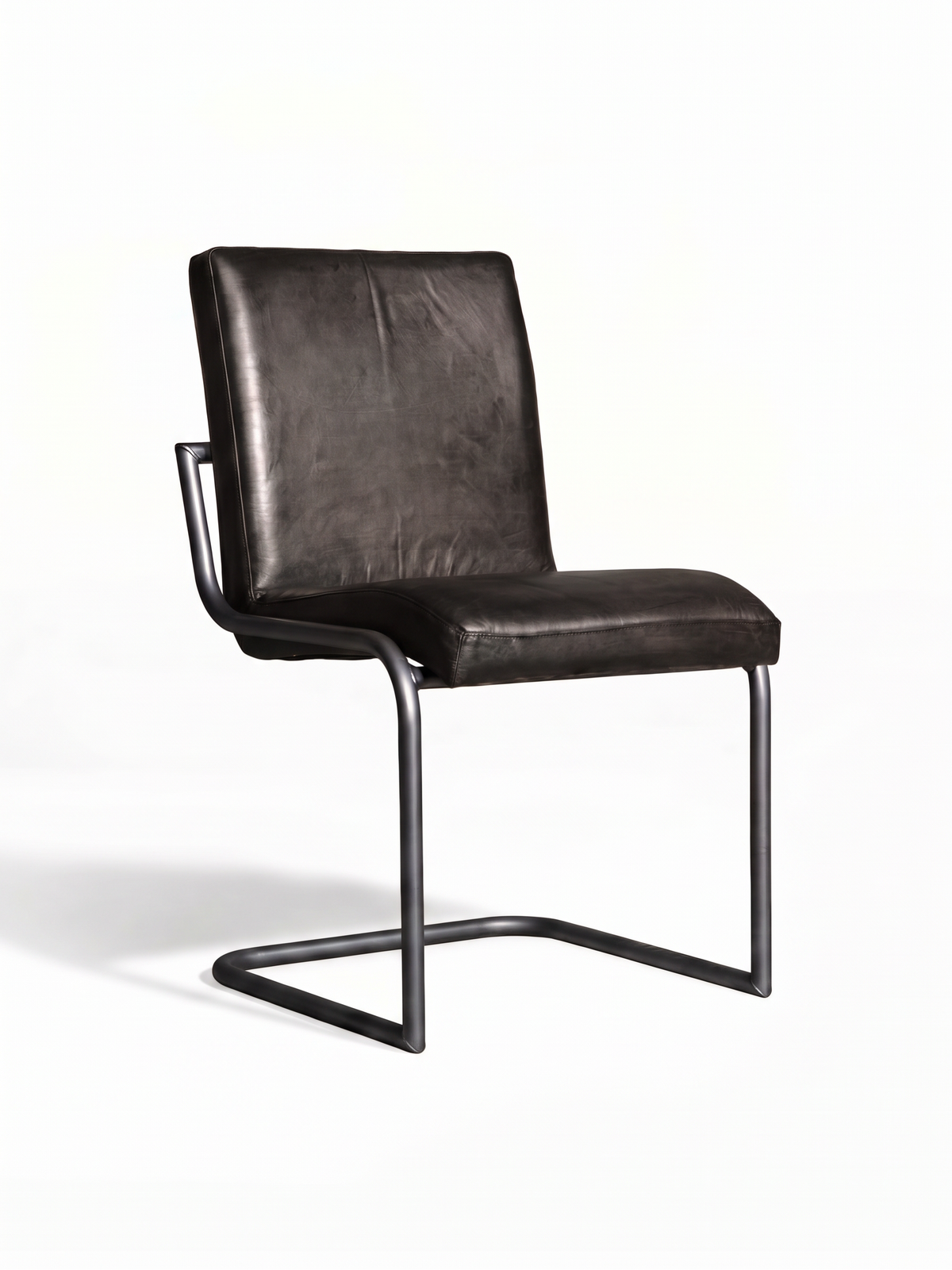
![3D-Modell Freischwinger CADI ohne Armlehne aus Leder in Braun [cantilever-publication:3dc2487a-fcd1-4ac7-9903-d92358383889]](http://www.livior.de/cdn/shop/files/preview_images/cantilever-45914735abdc130a-3dc2487a-fcd1-4ac7-9903-d92358383889.jpg?v=1789487253)
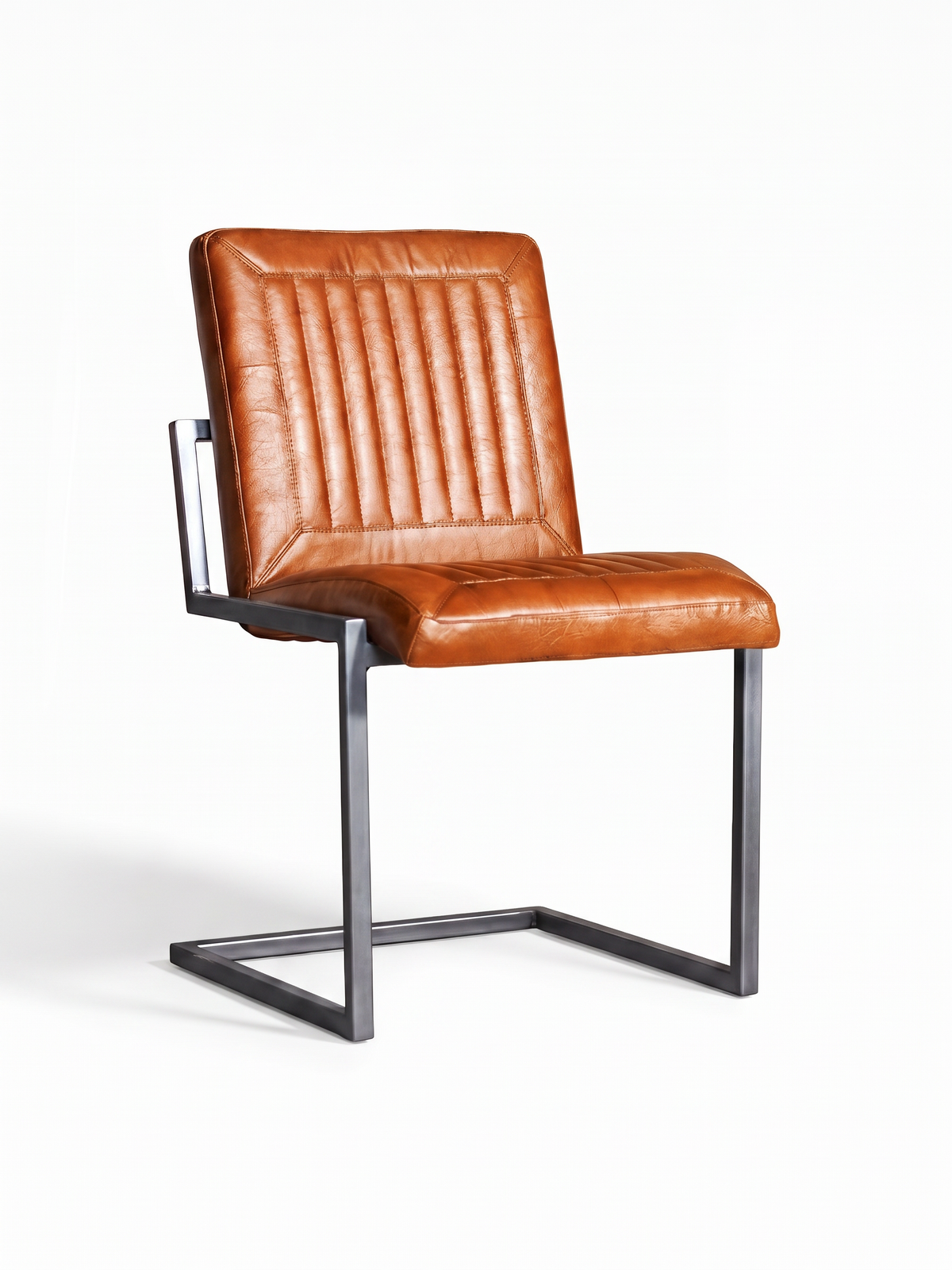
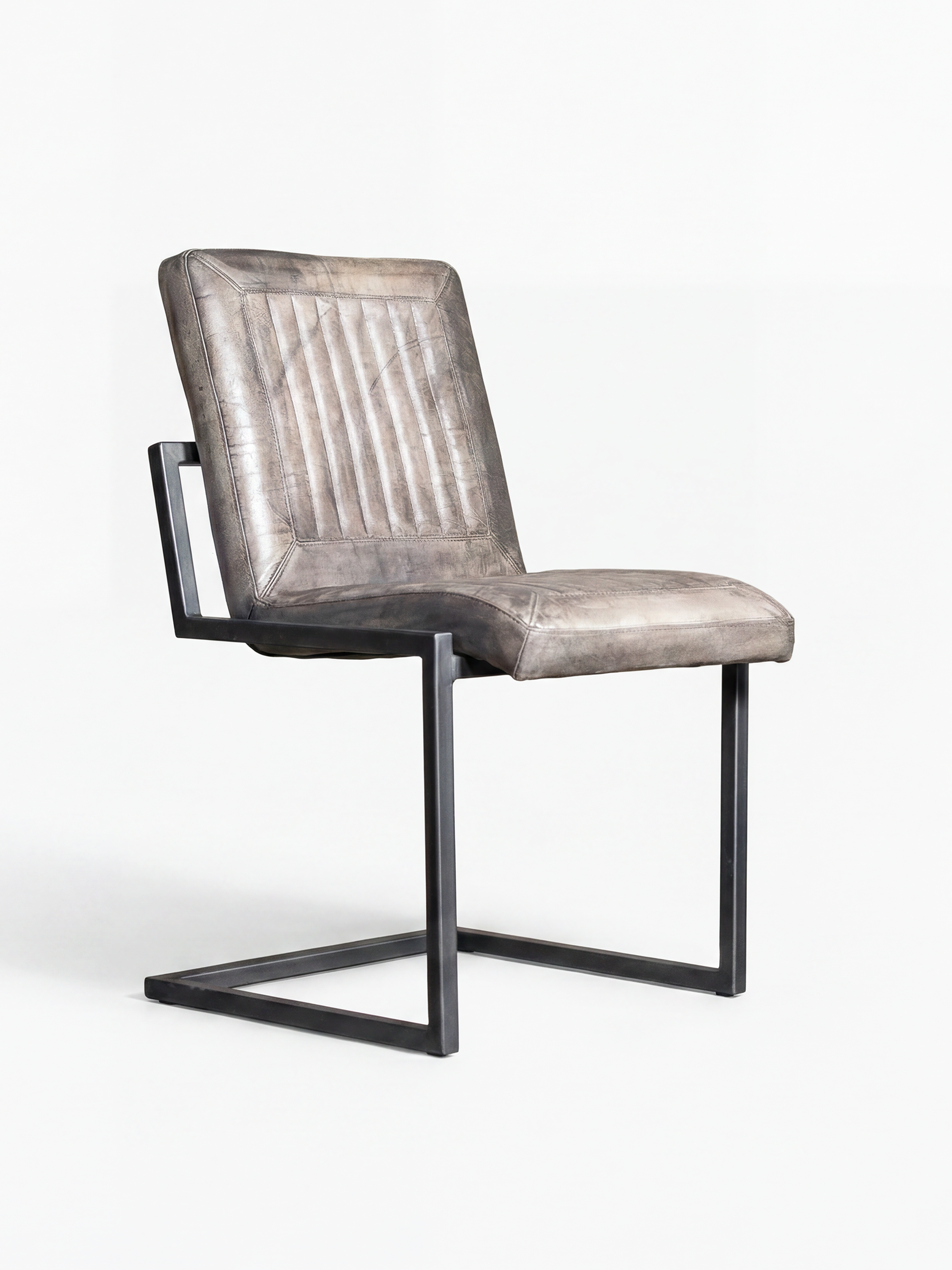
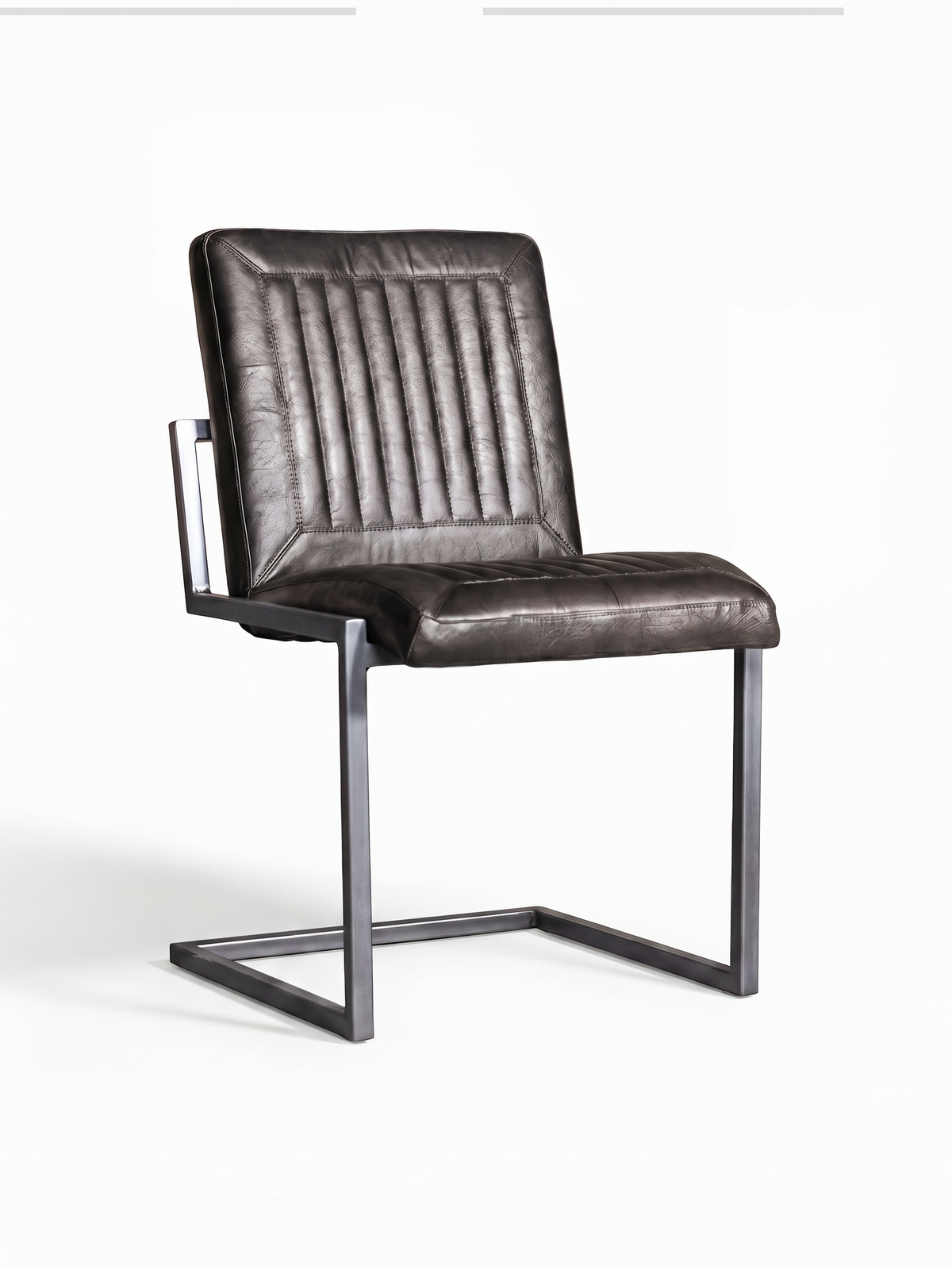
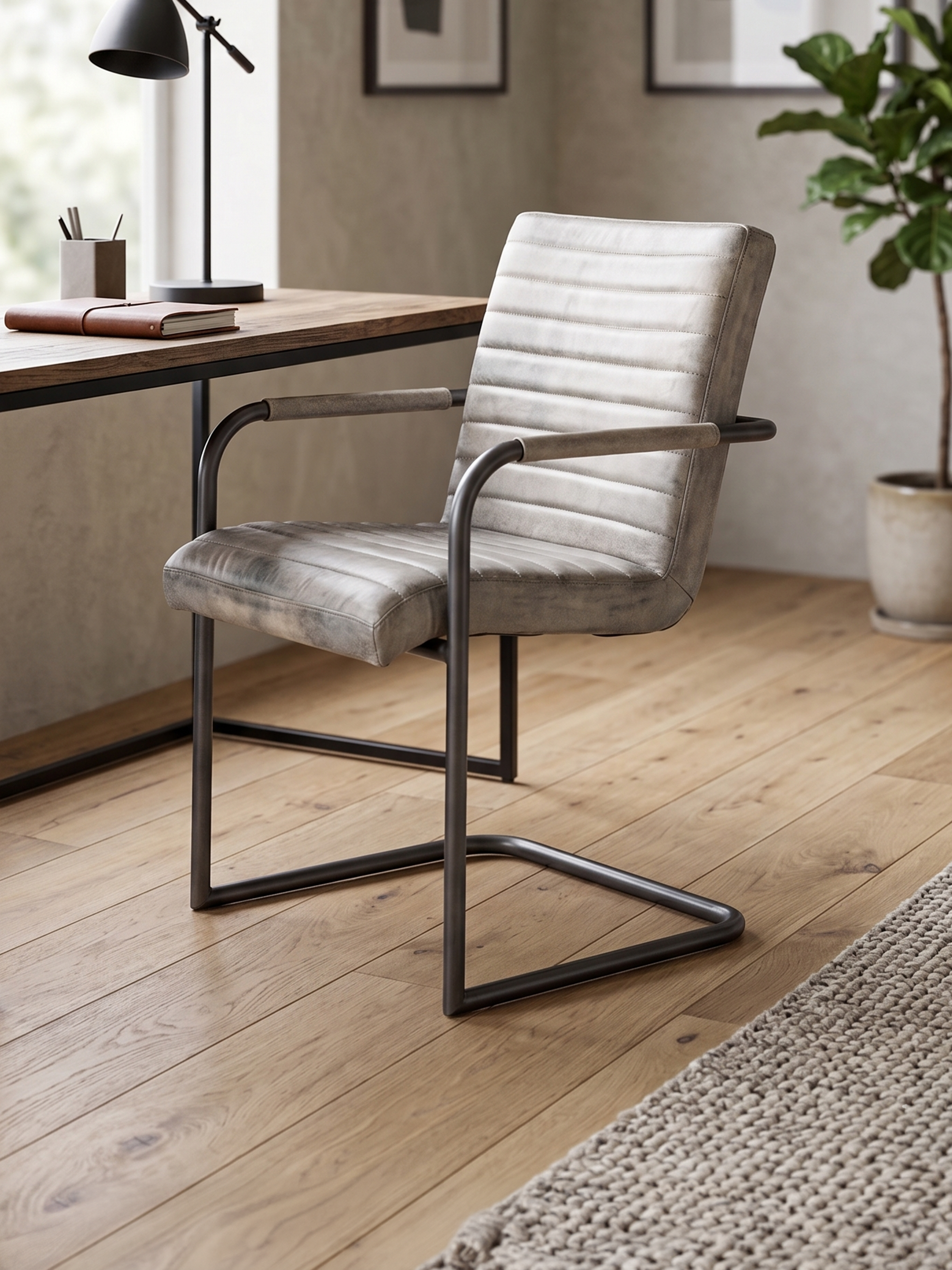
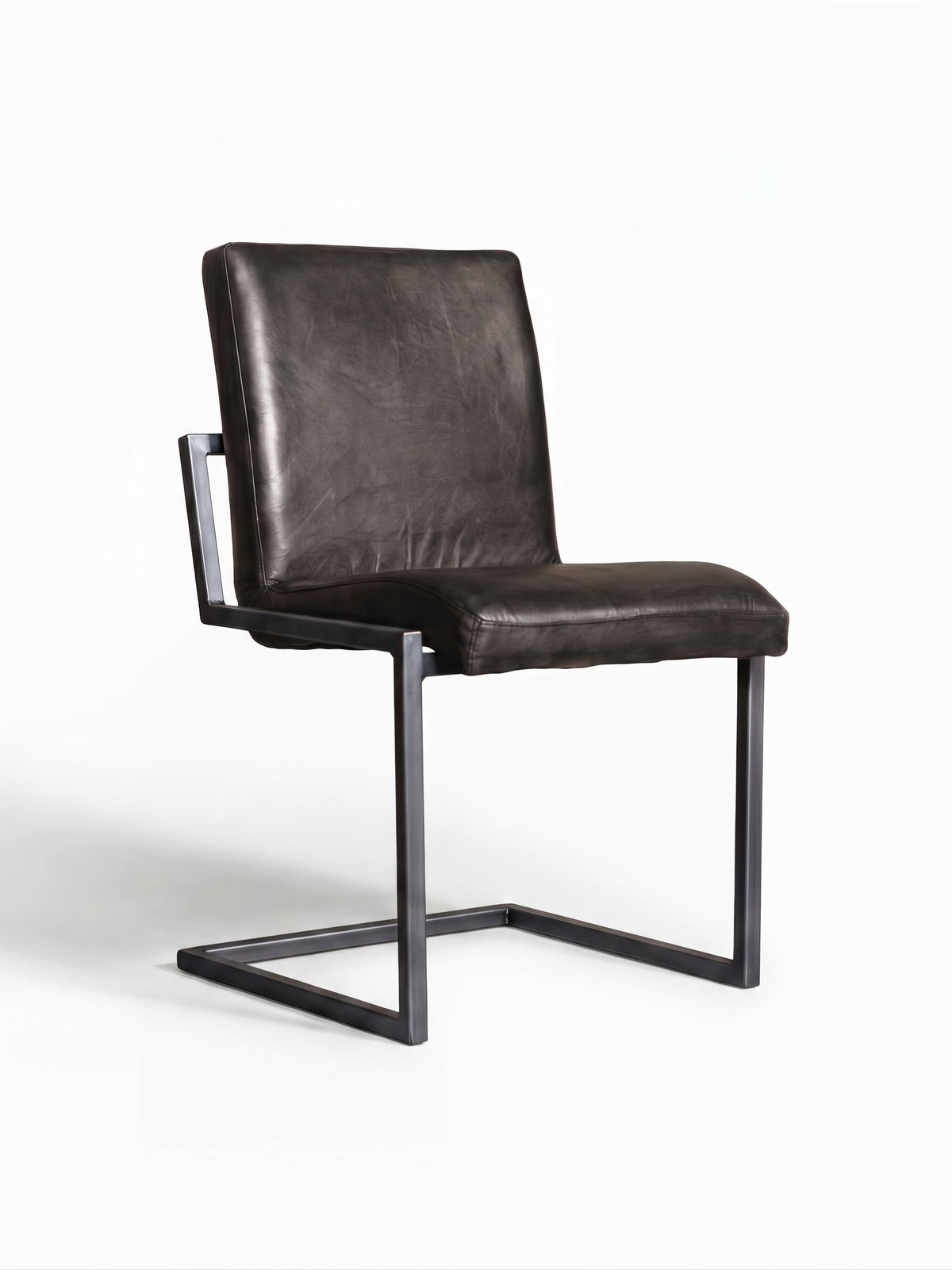
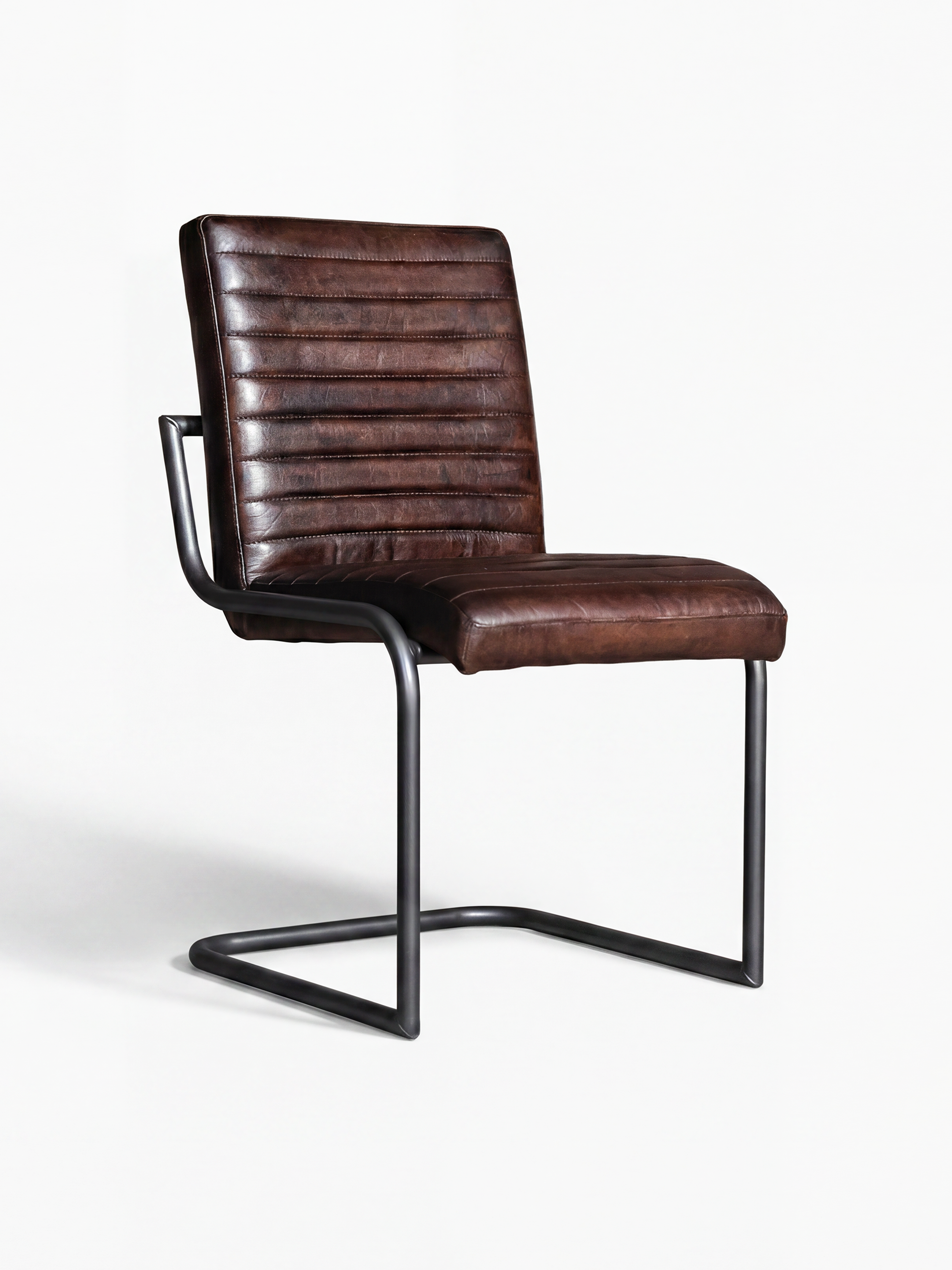
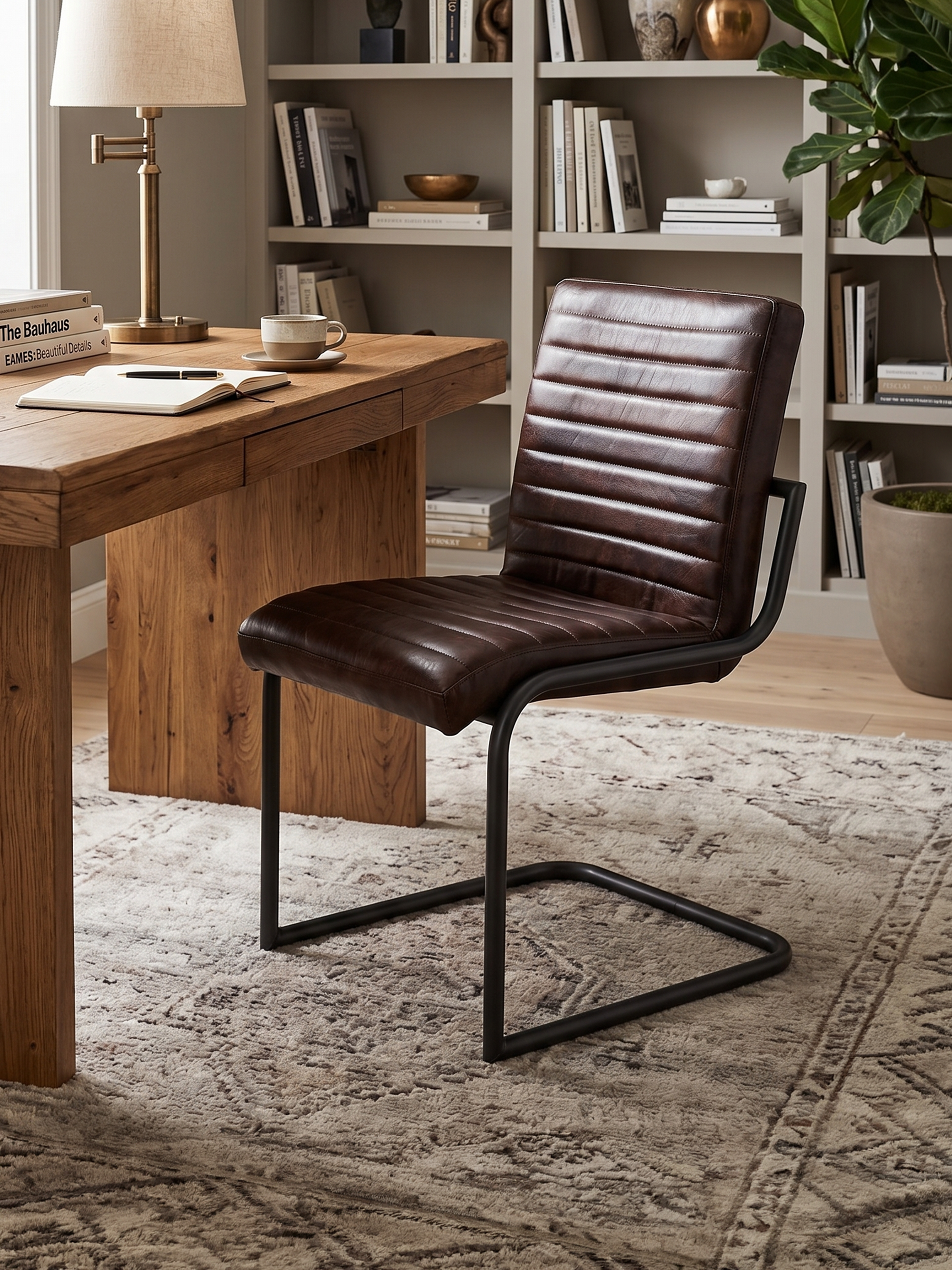
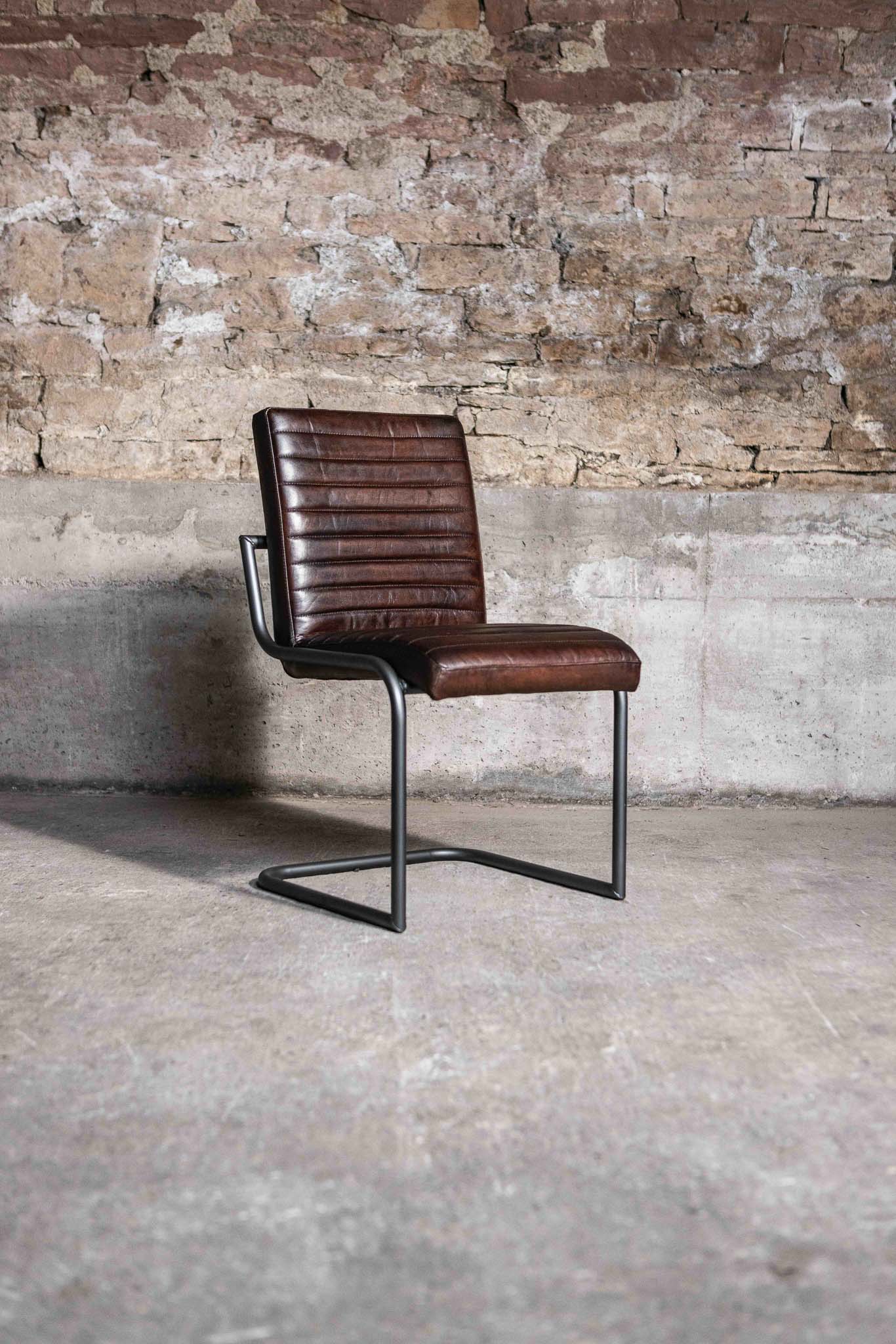
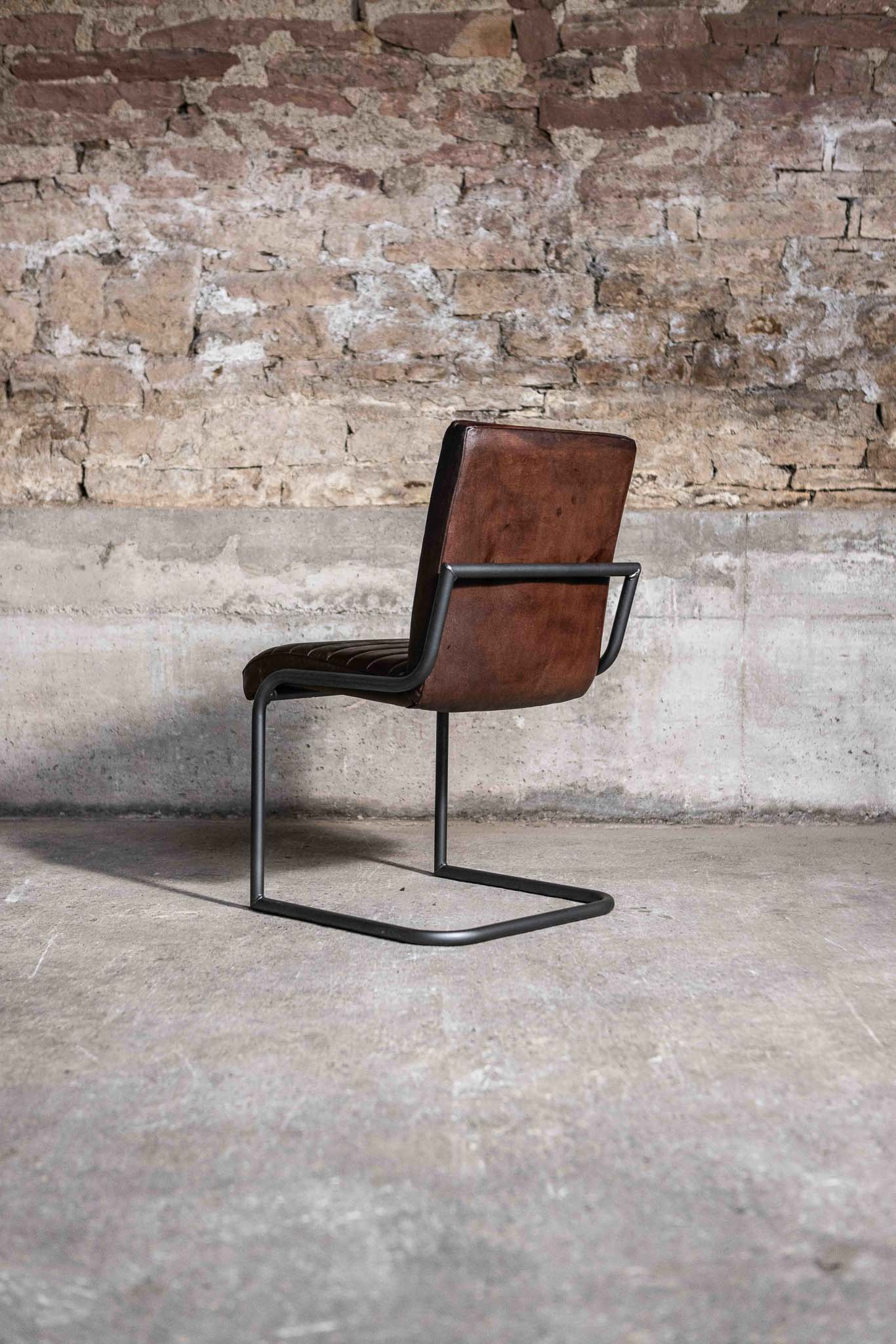
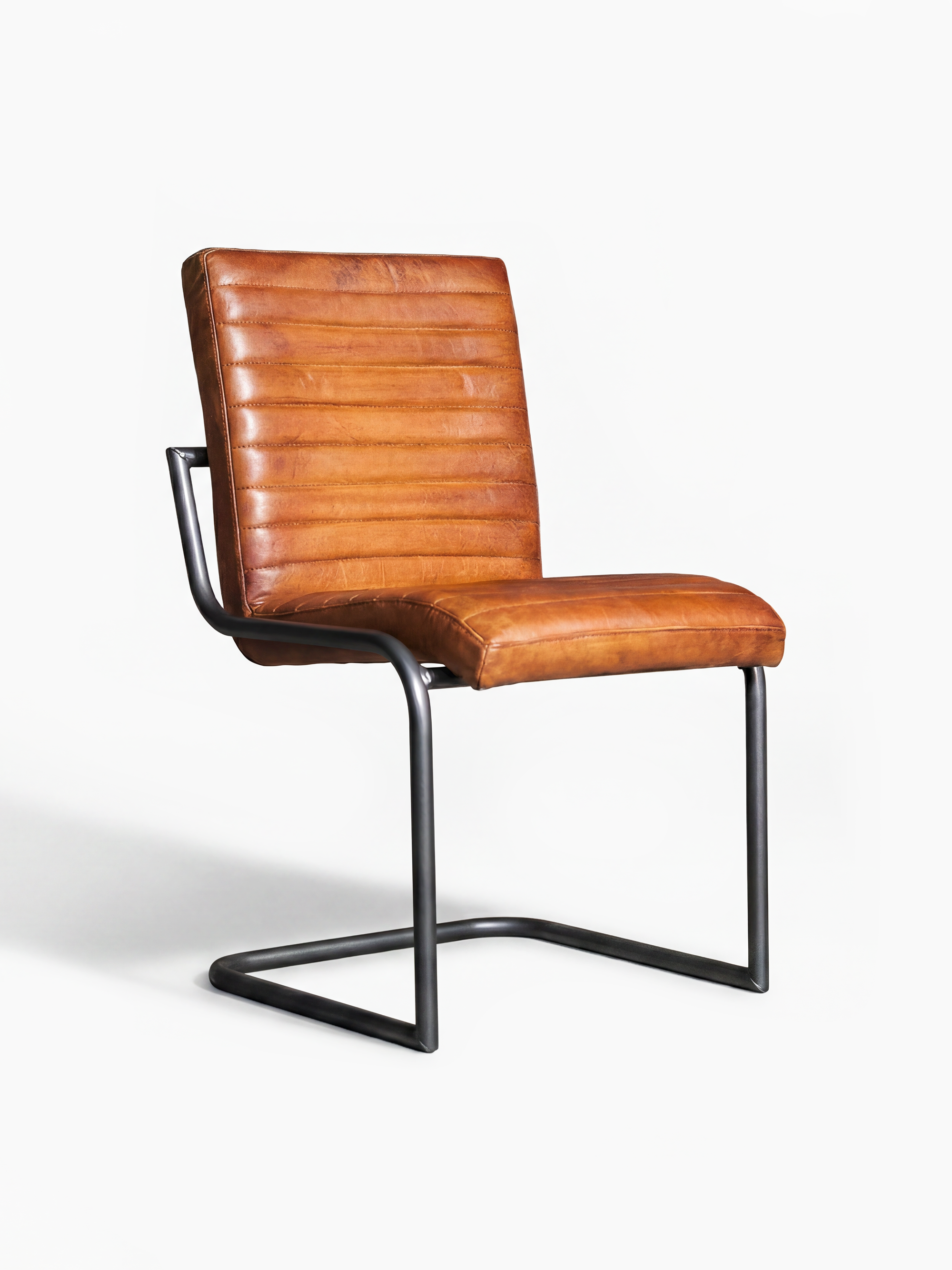
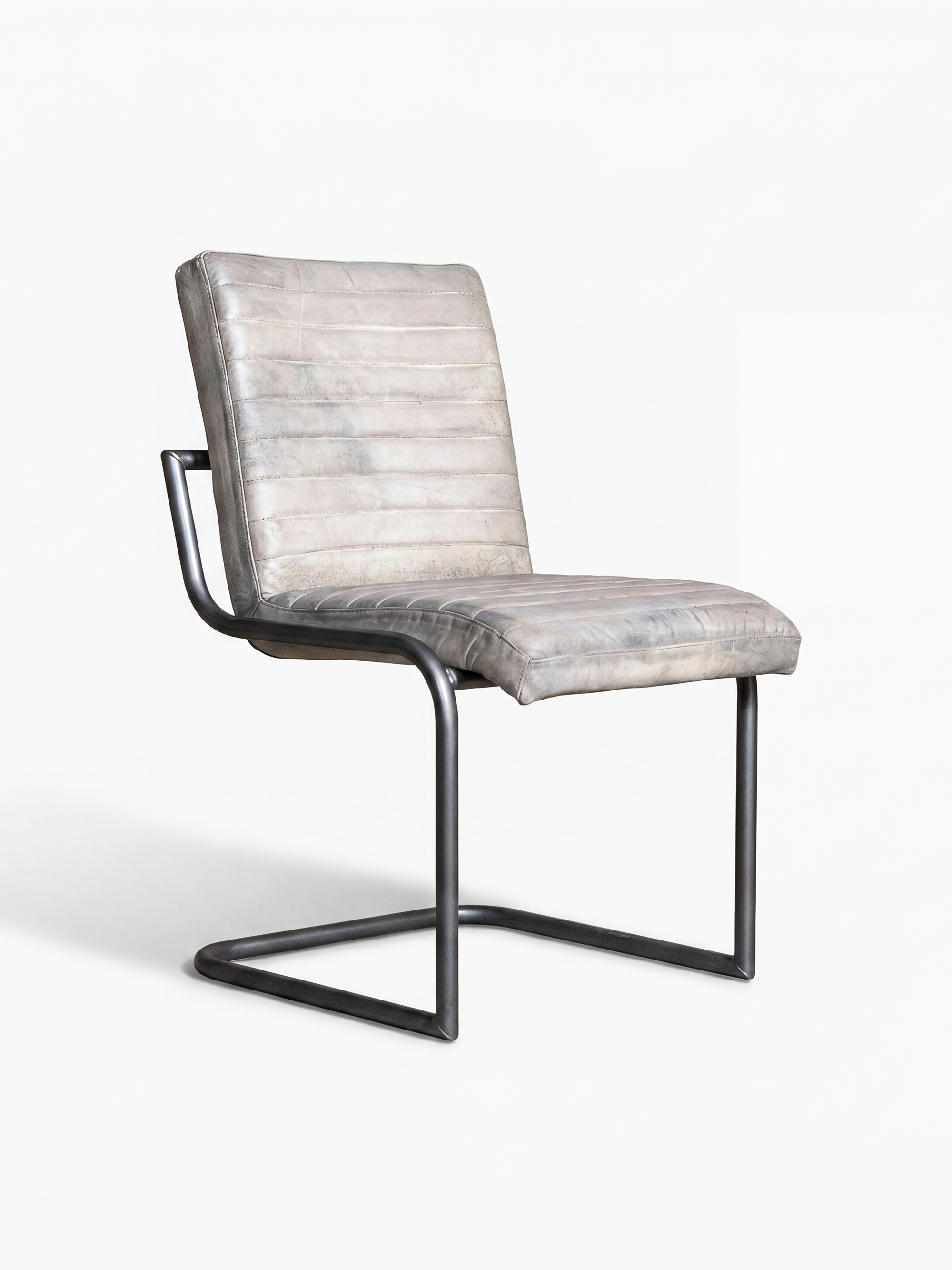
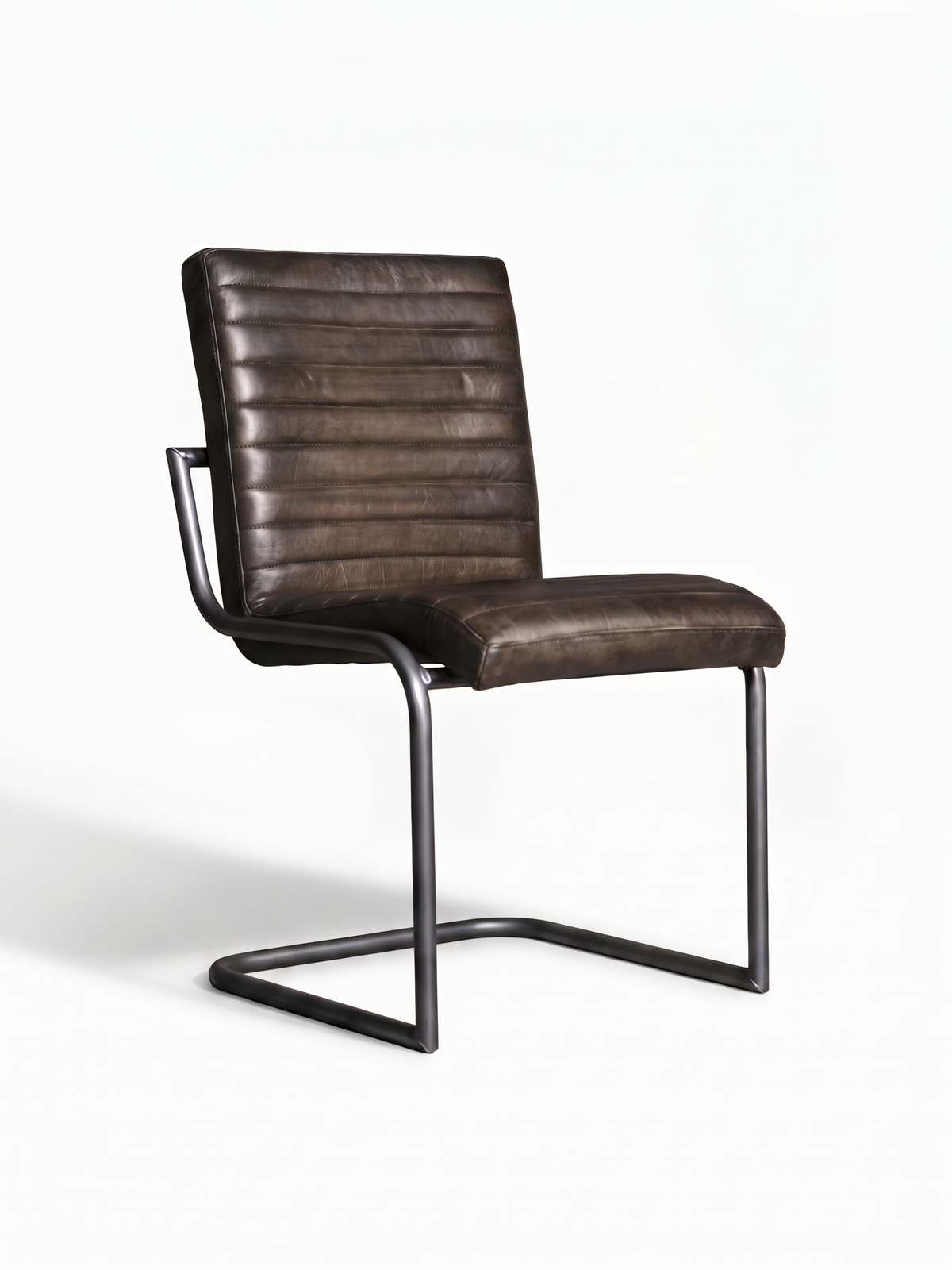
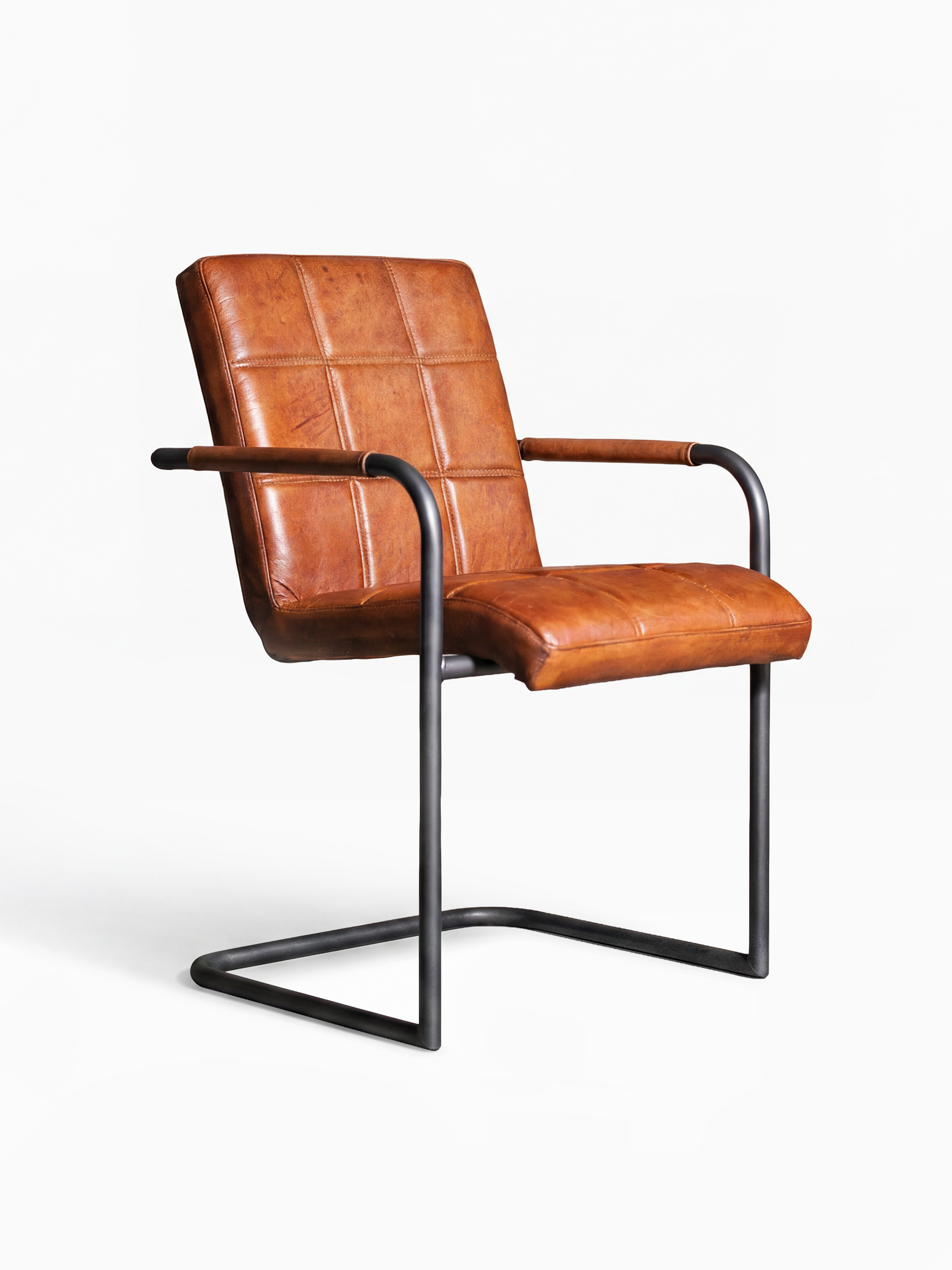
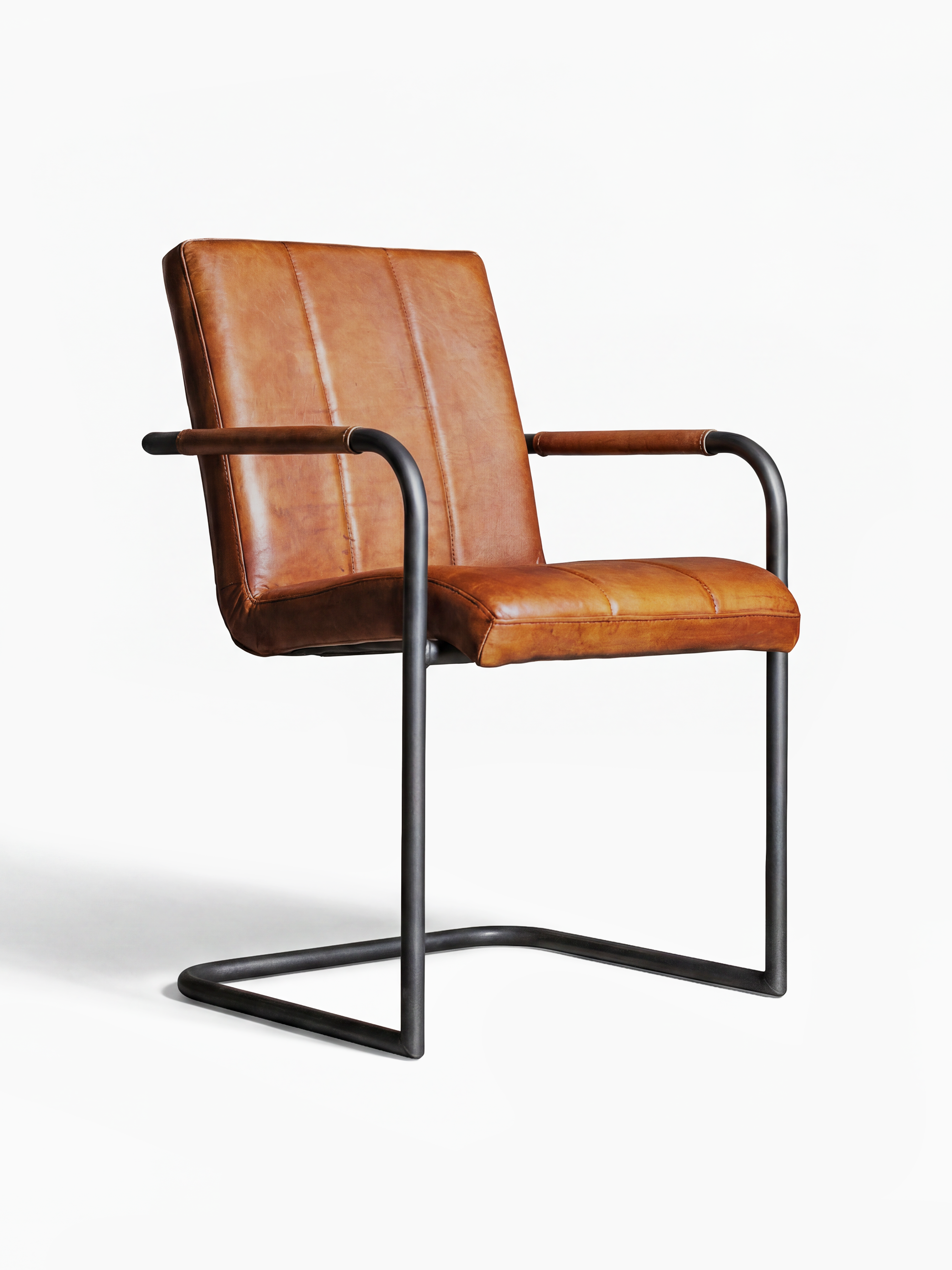
![3D-Modell Eleganter Freischwinger Stuhl FARGO aus Leder in Cognac [cantilever-publication:43b9838b-e071-418e-a4ae-7724b176f0ce]](http://www.livior.de/cdn/shop/files/preview_images/cantilever-becb011608b3b74a-43b9838b-e071-418e-a4ae-7724b176f0ce.jpg?v=1789485283)
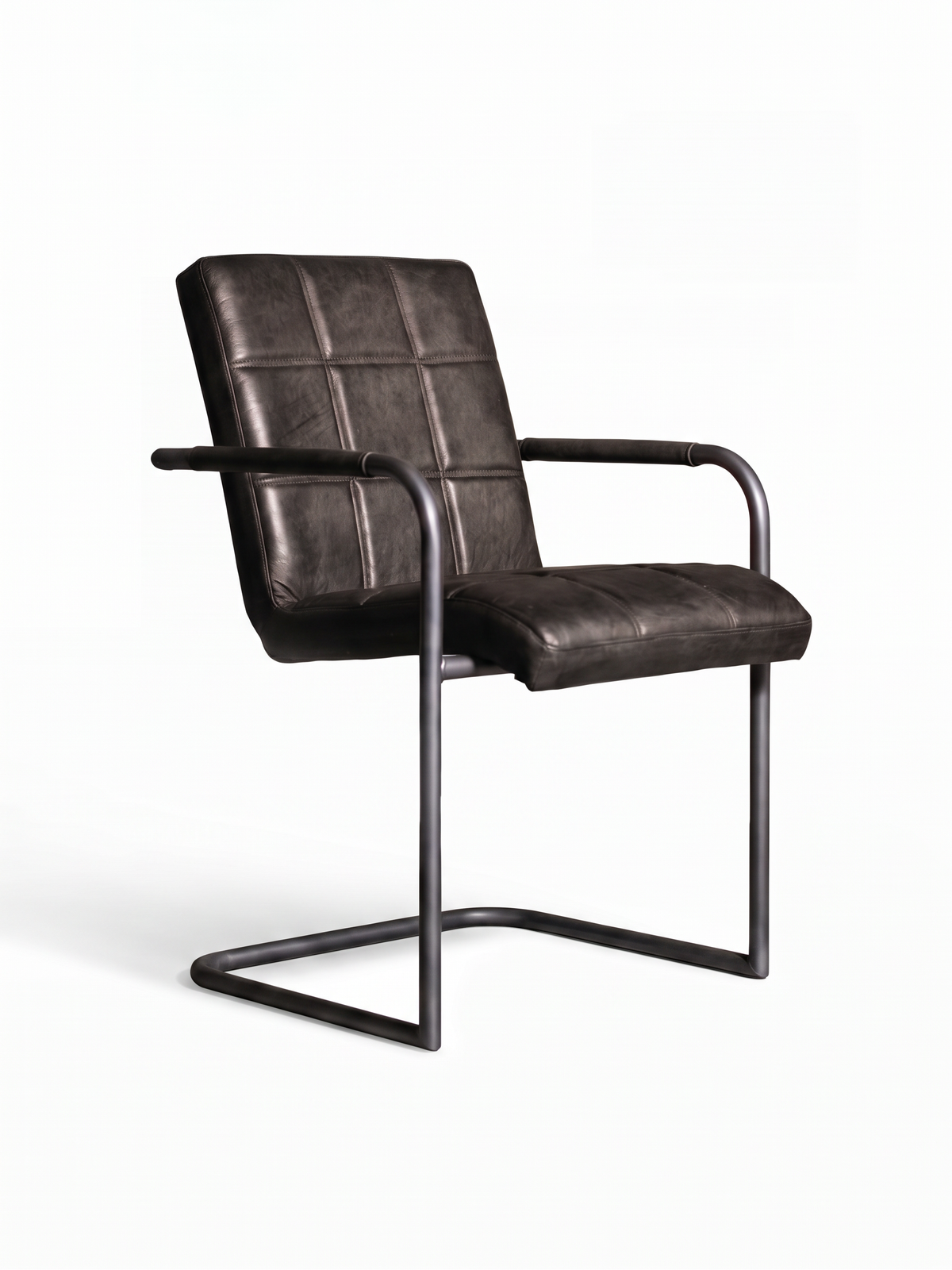
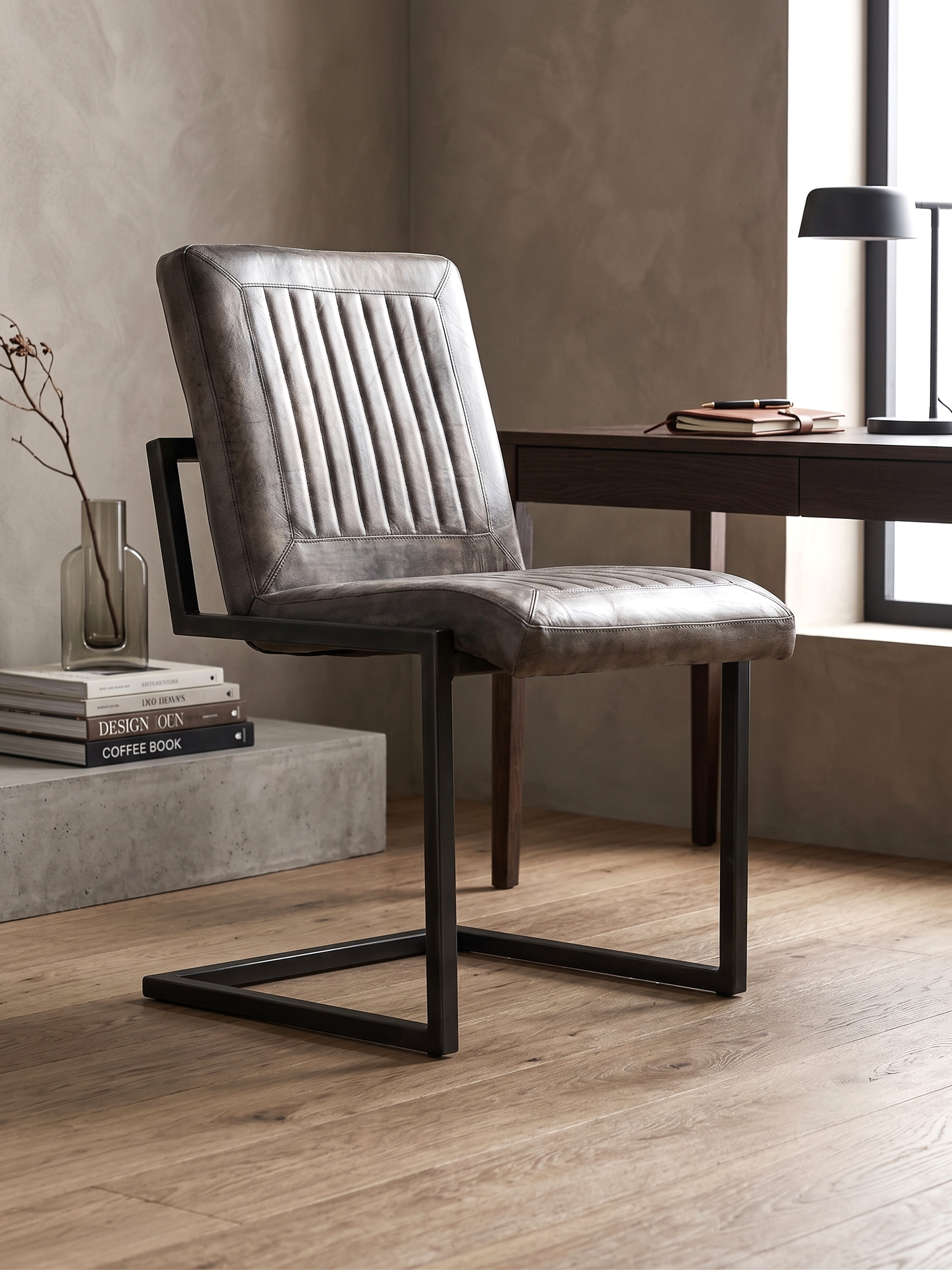
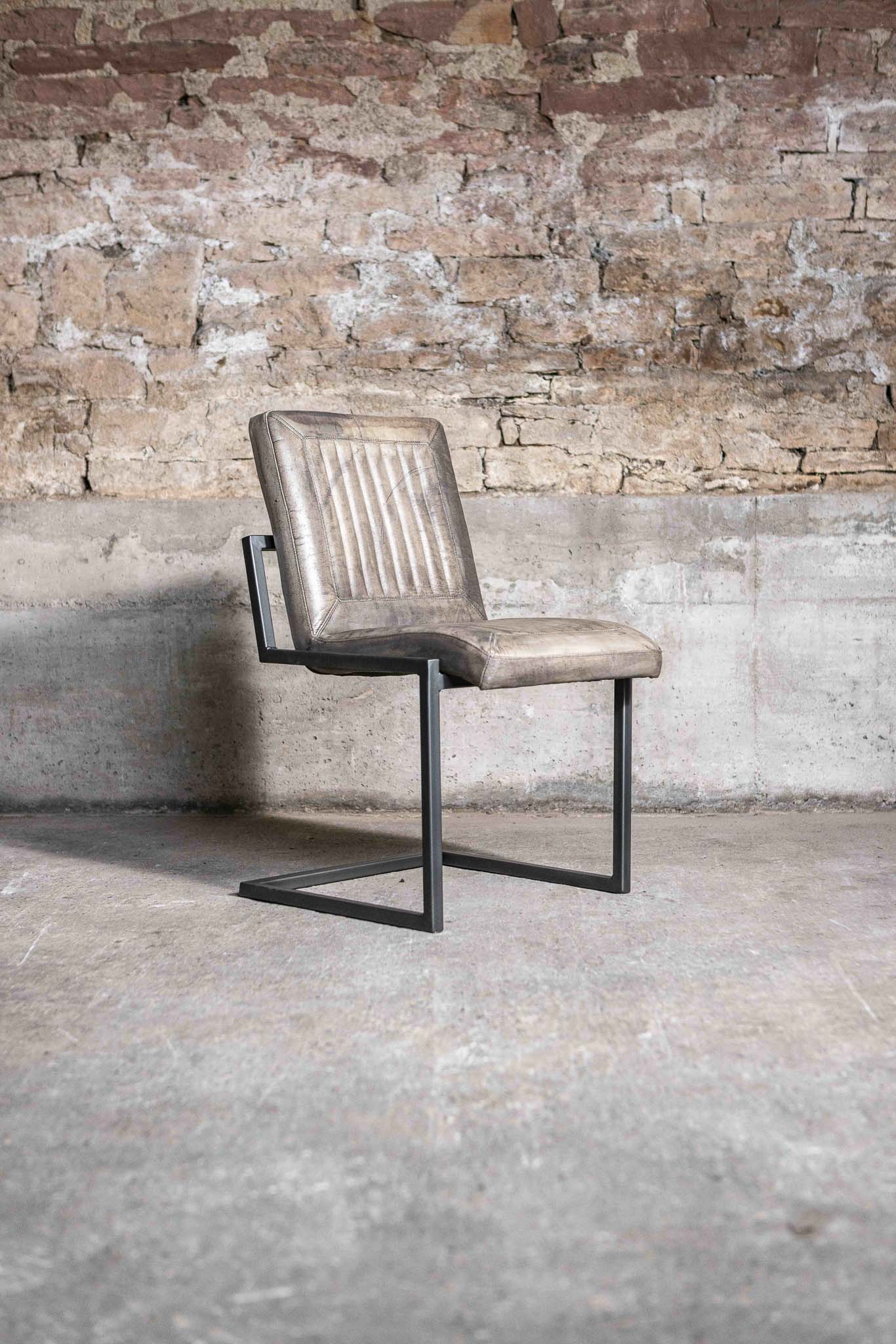
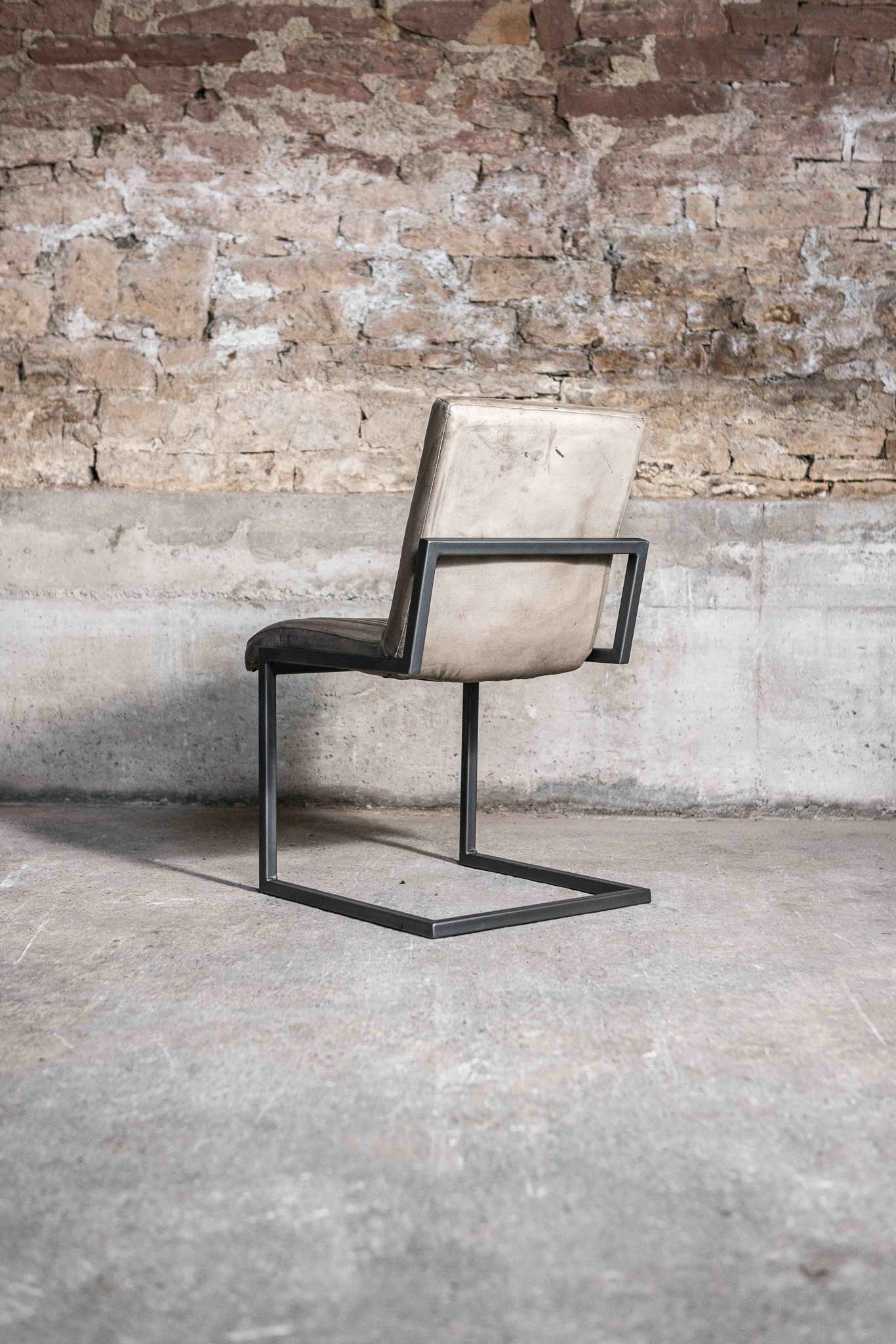
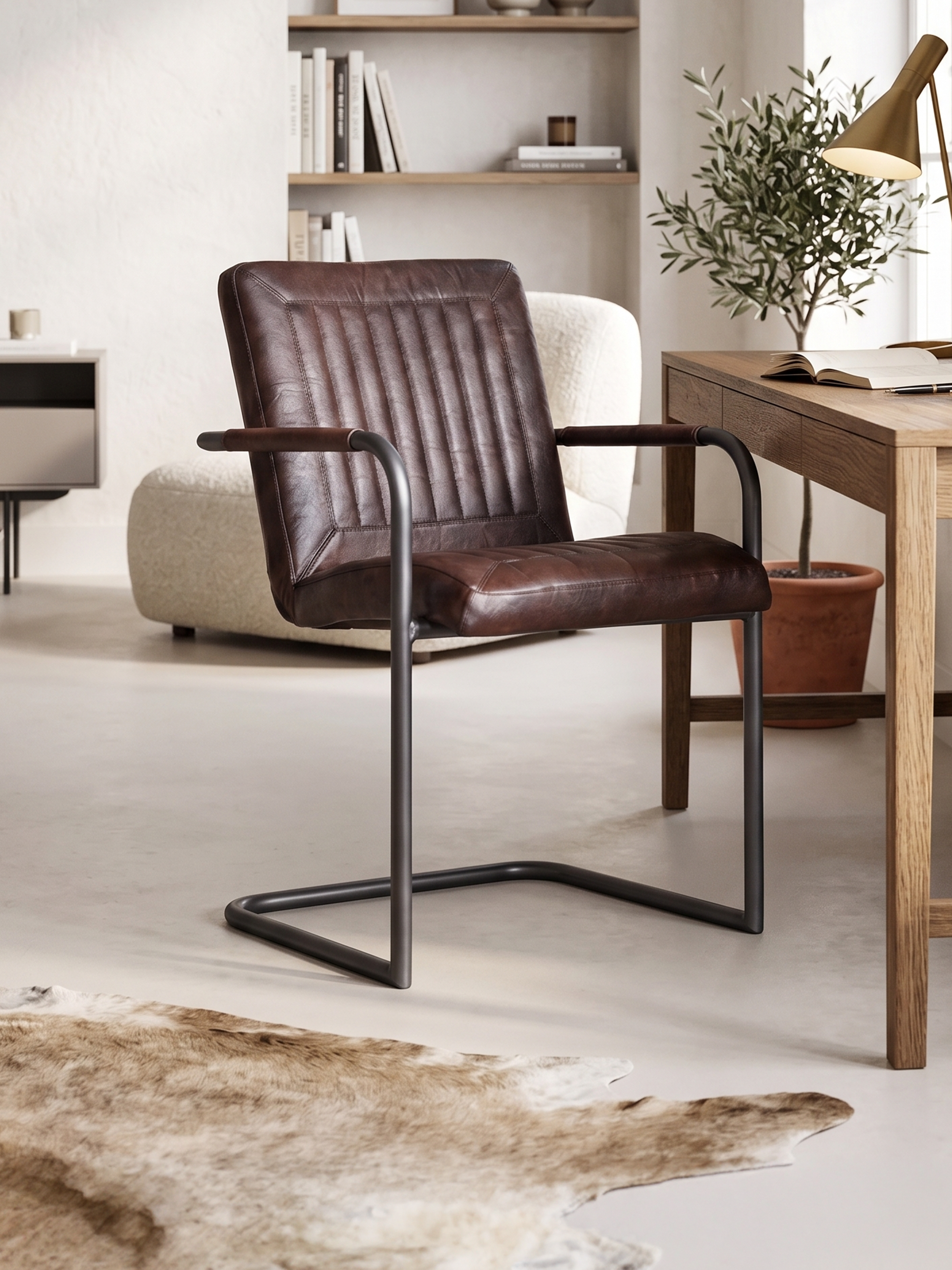
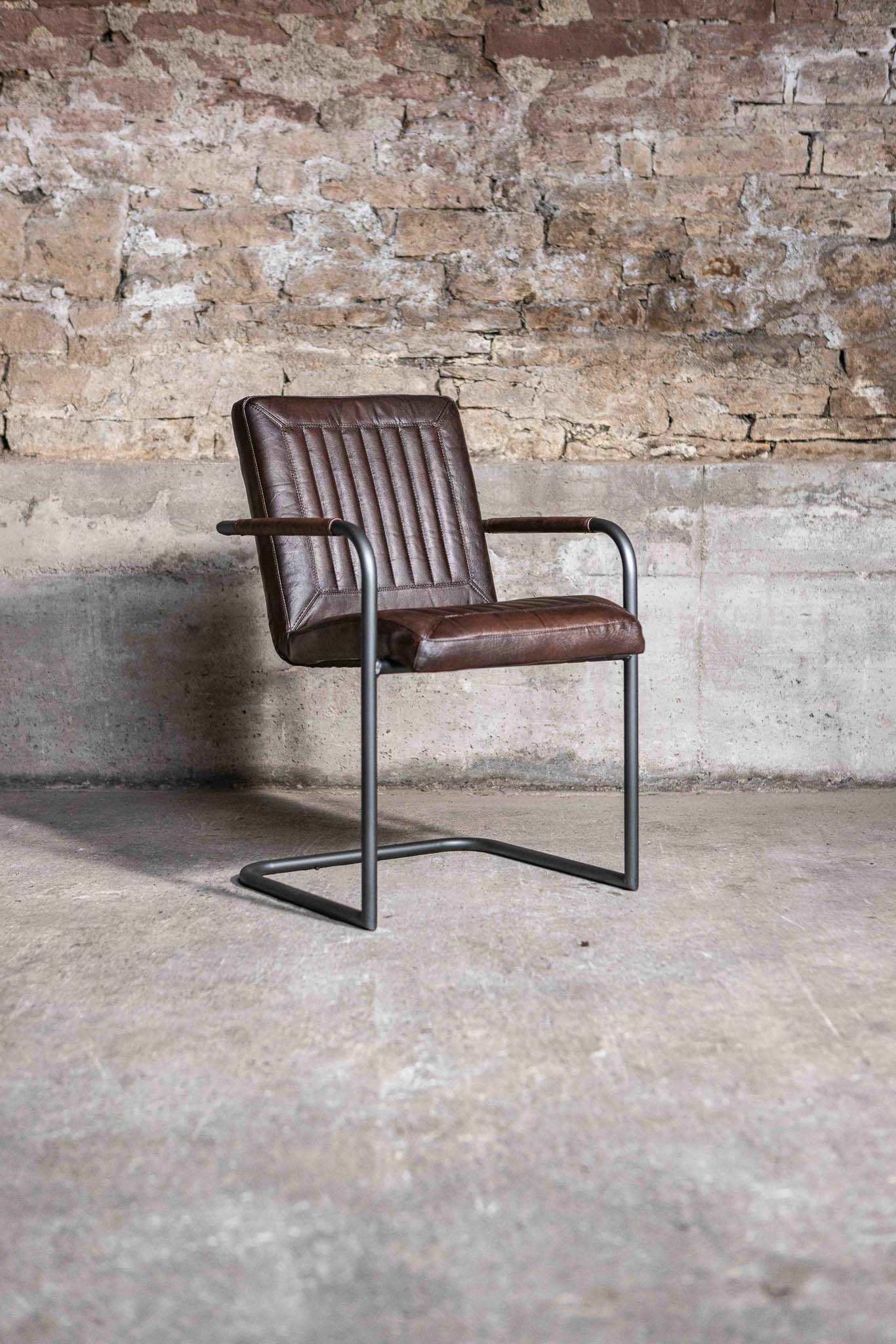
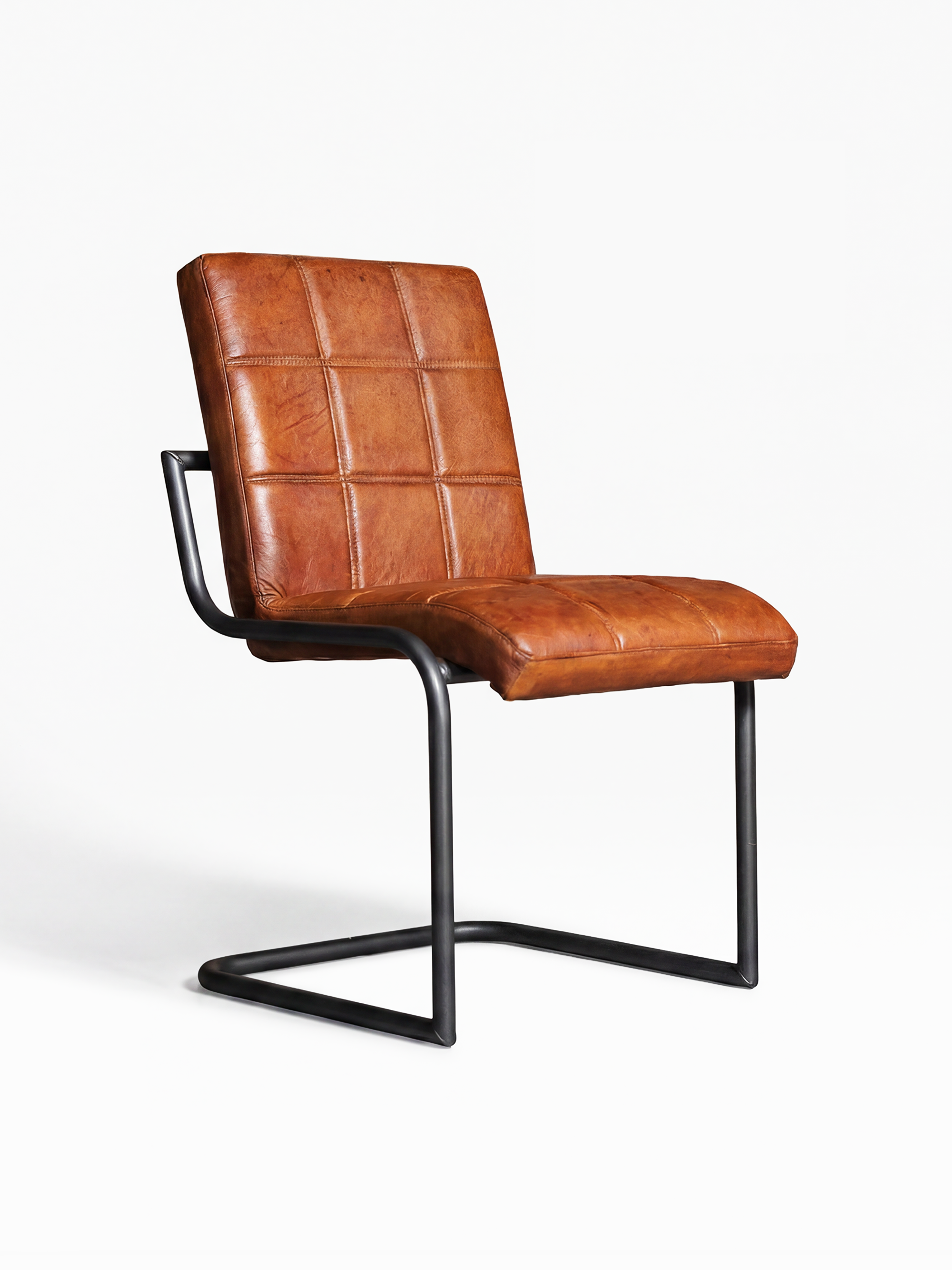
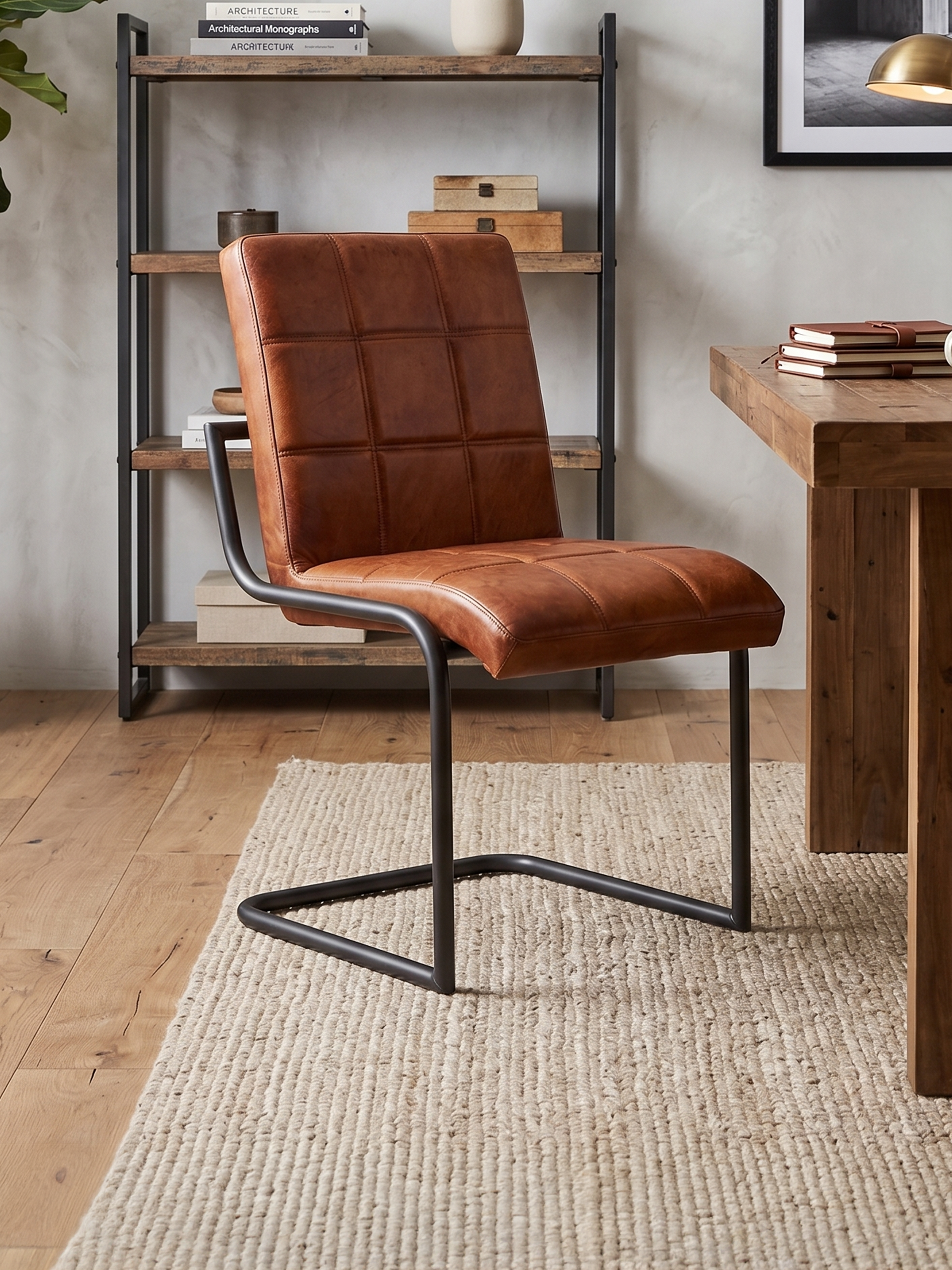
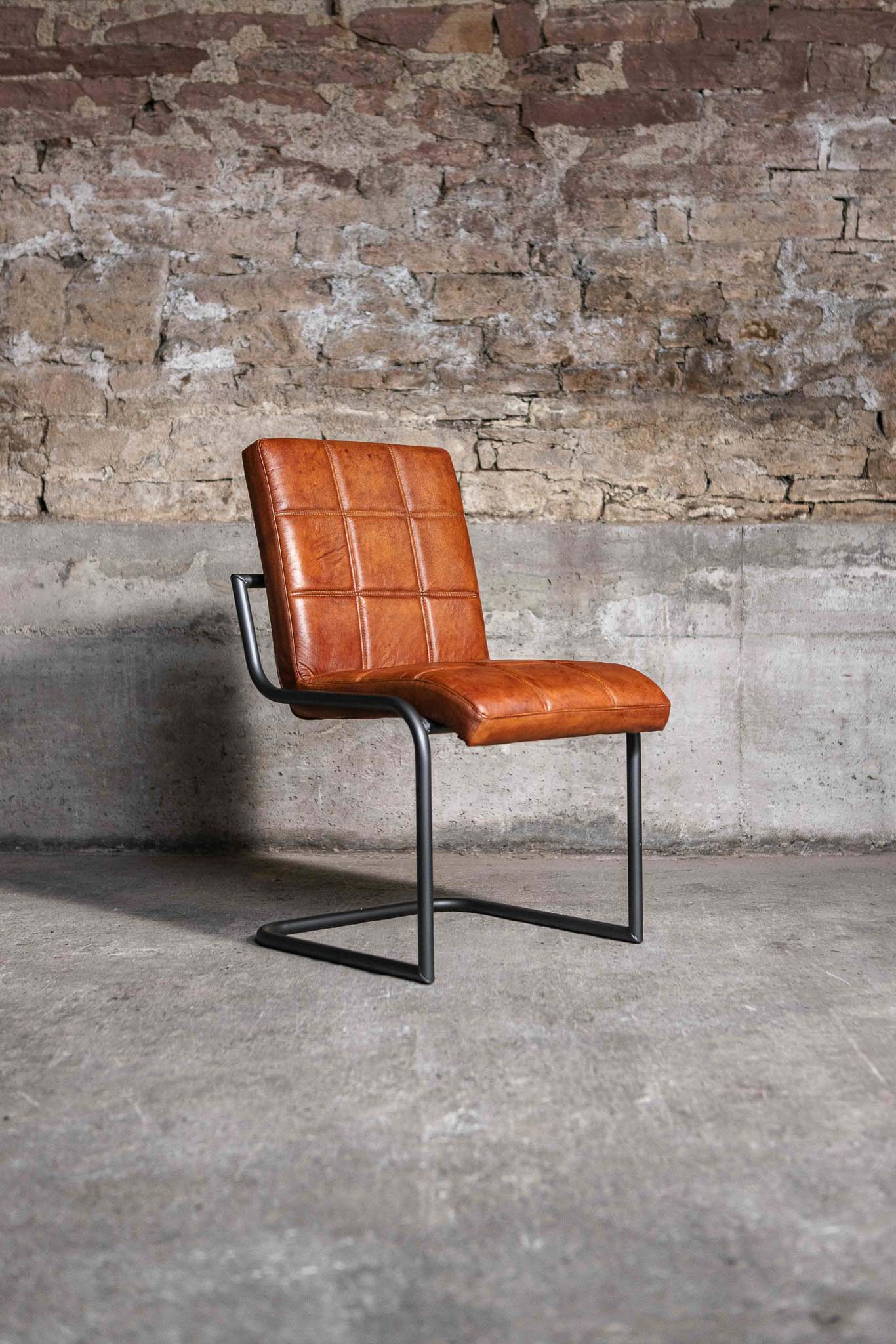
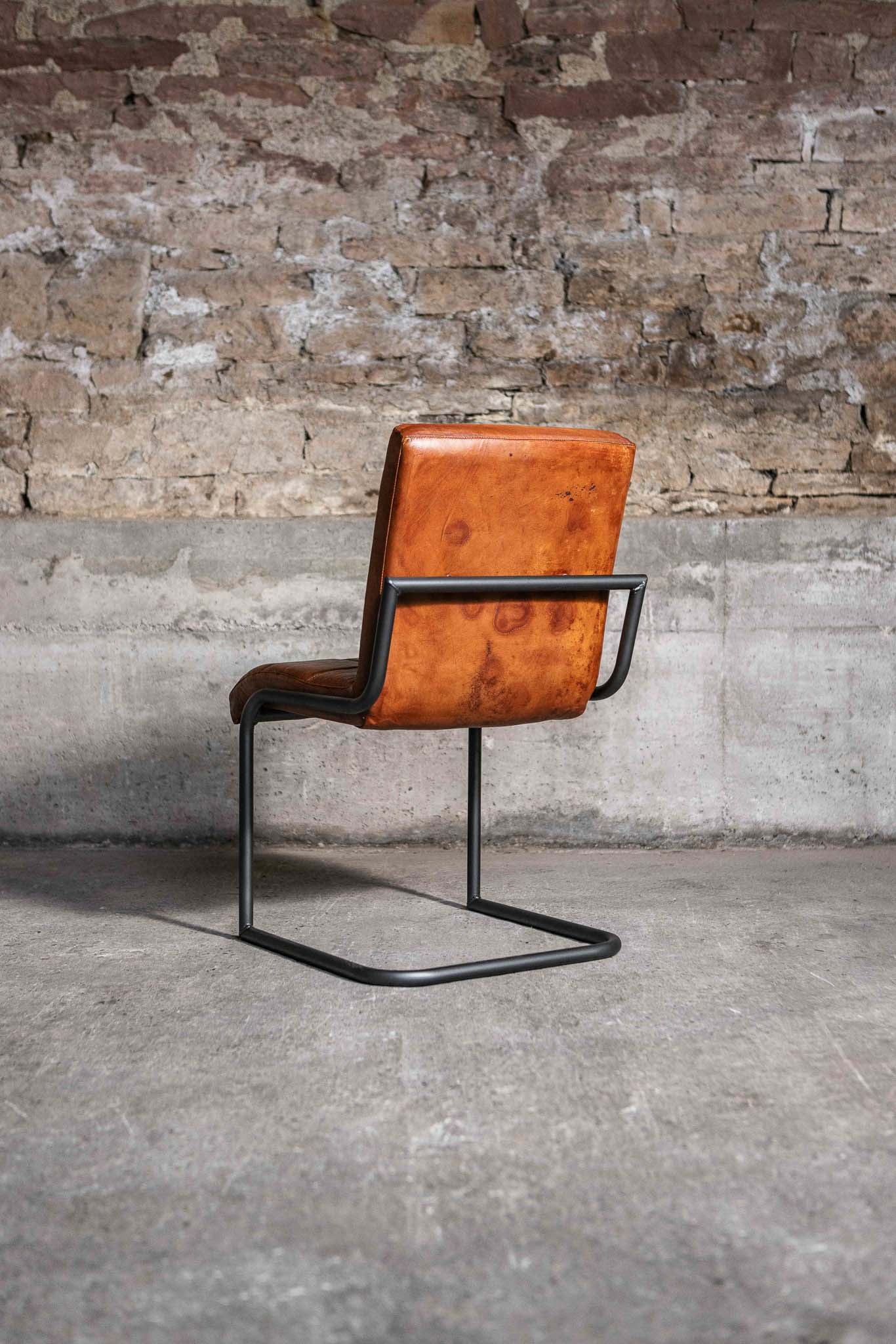
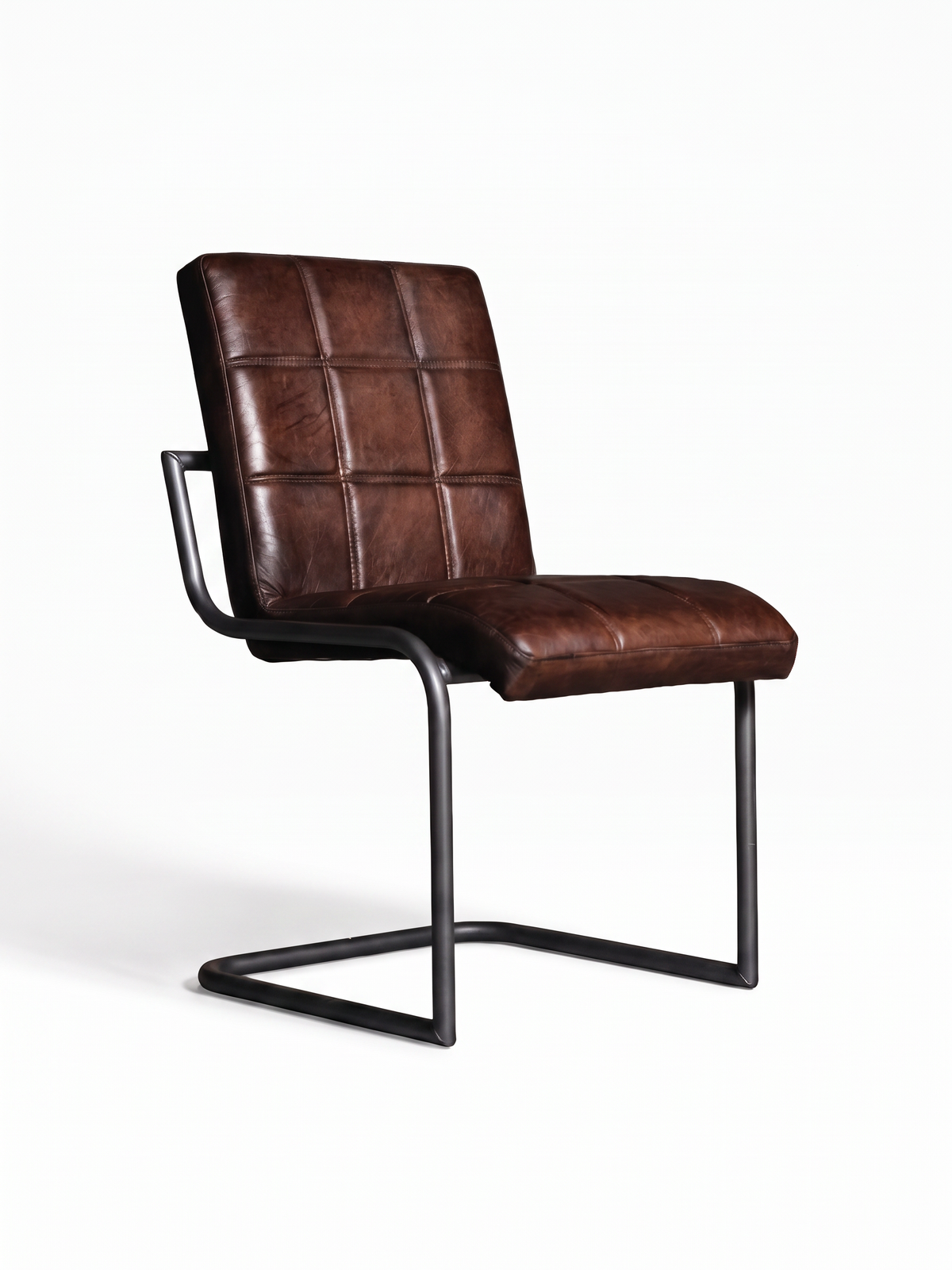
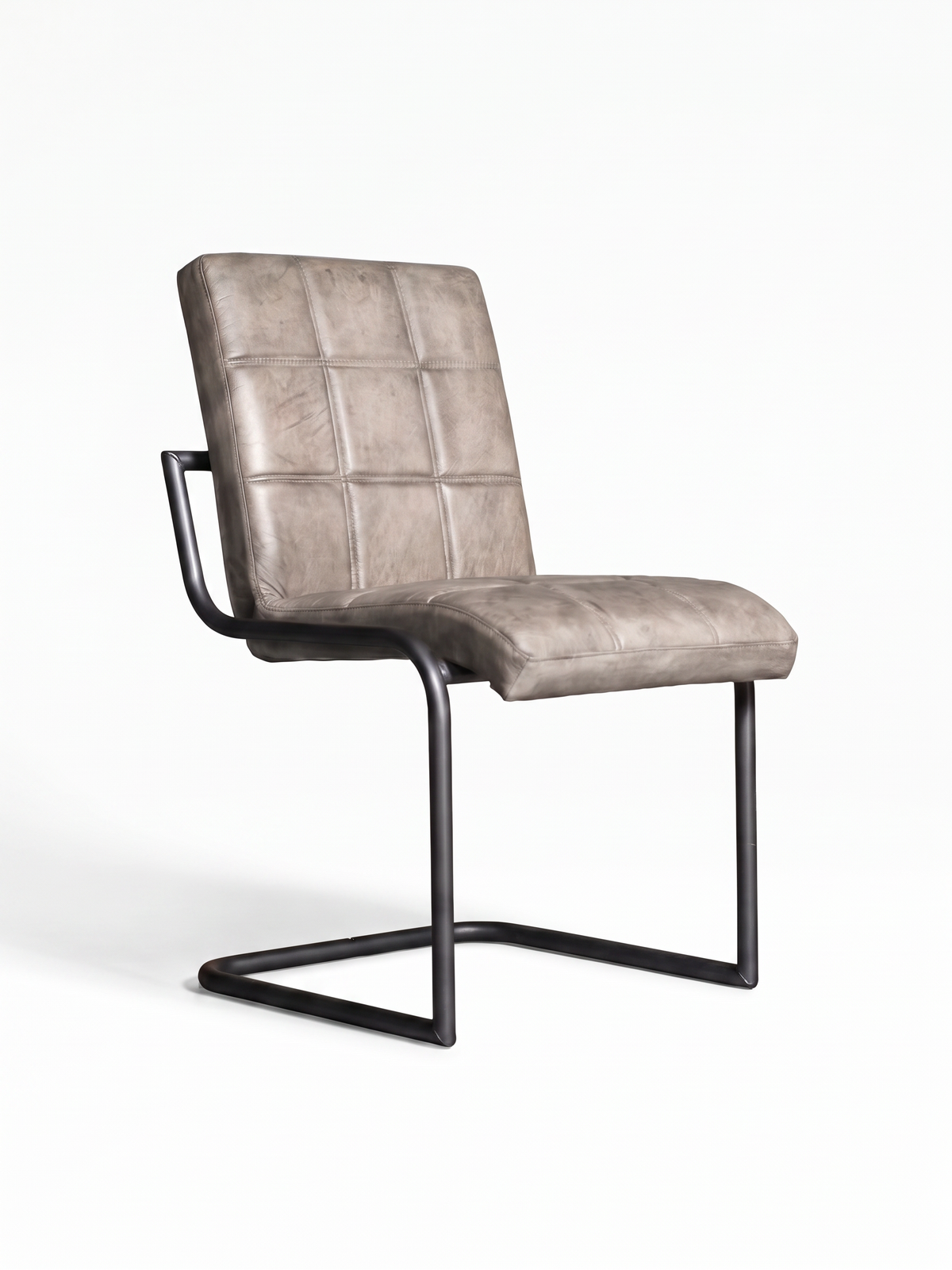
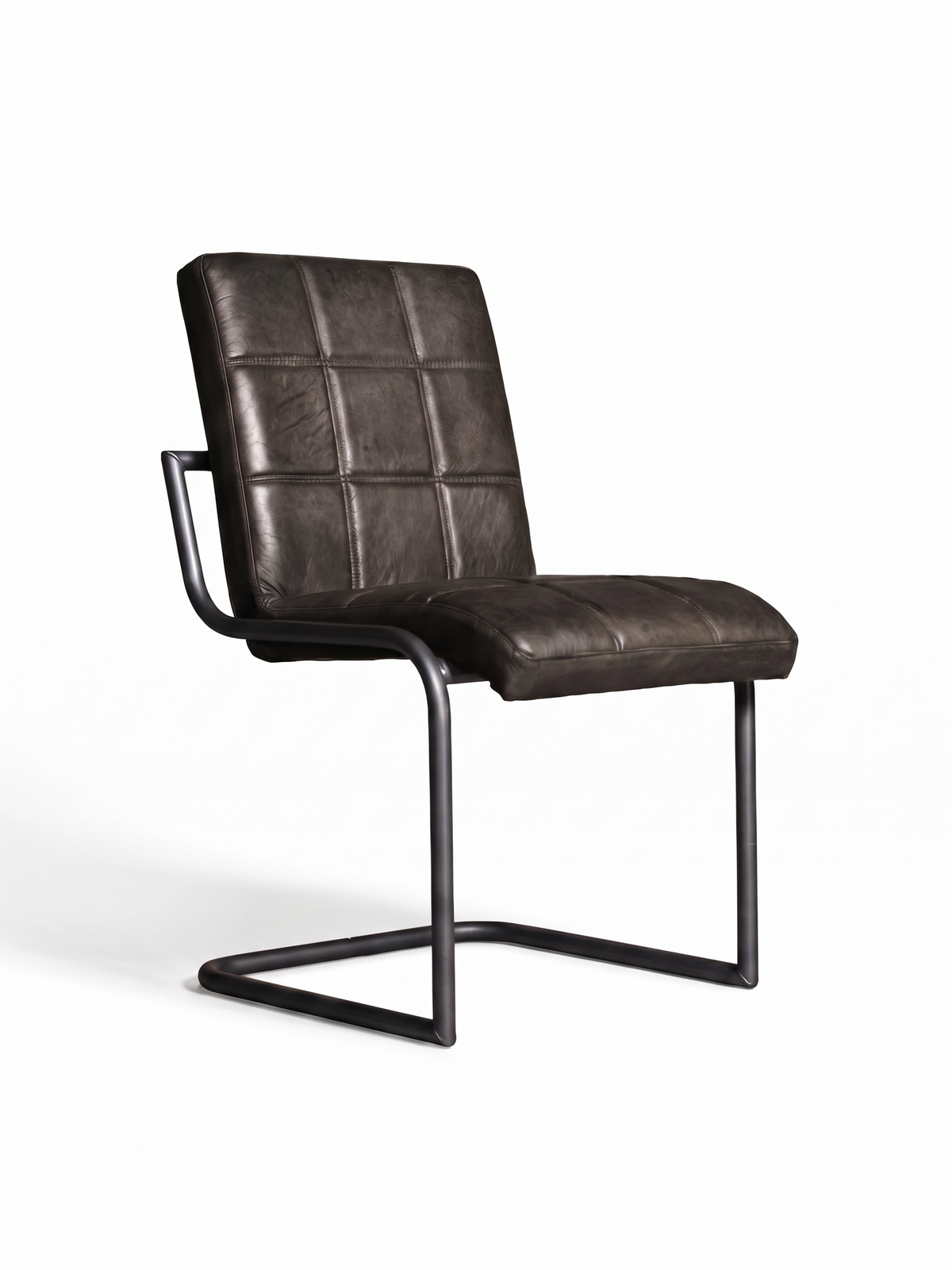
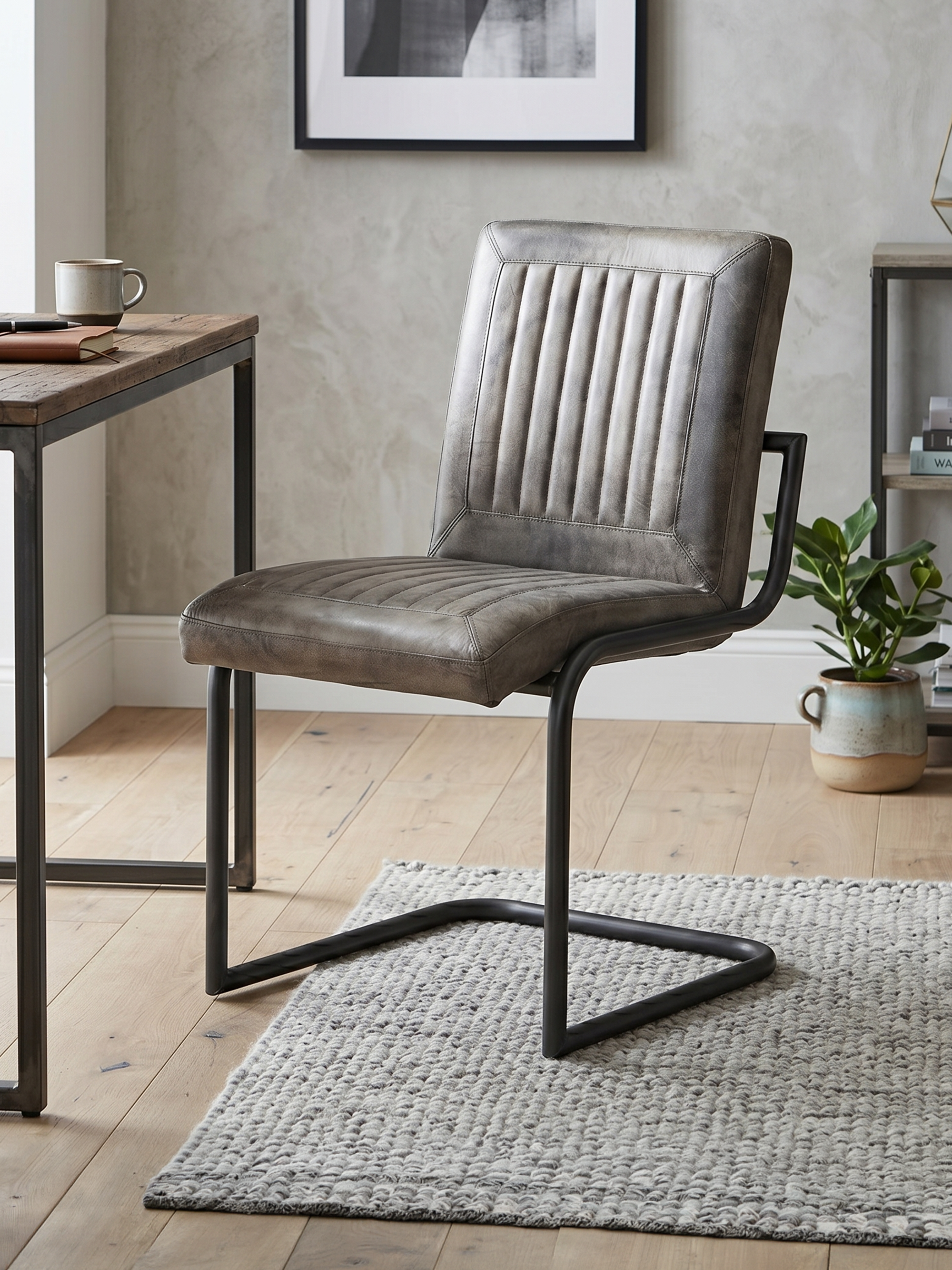
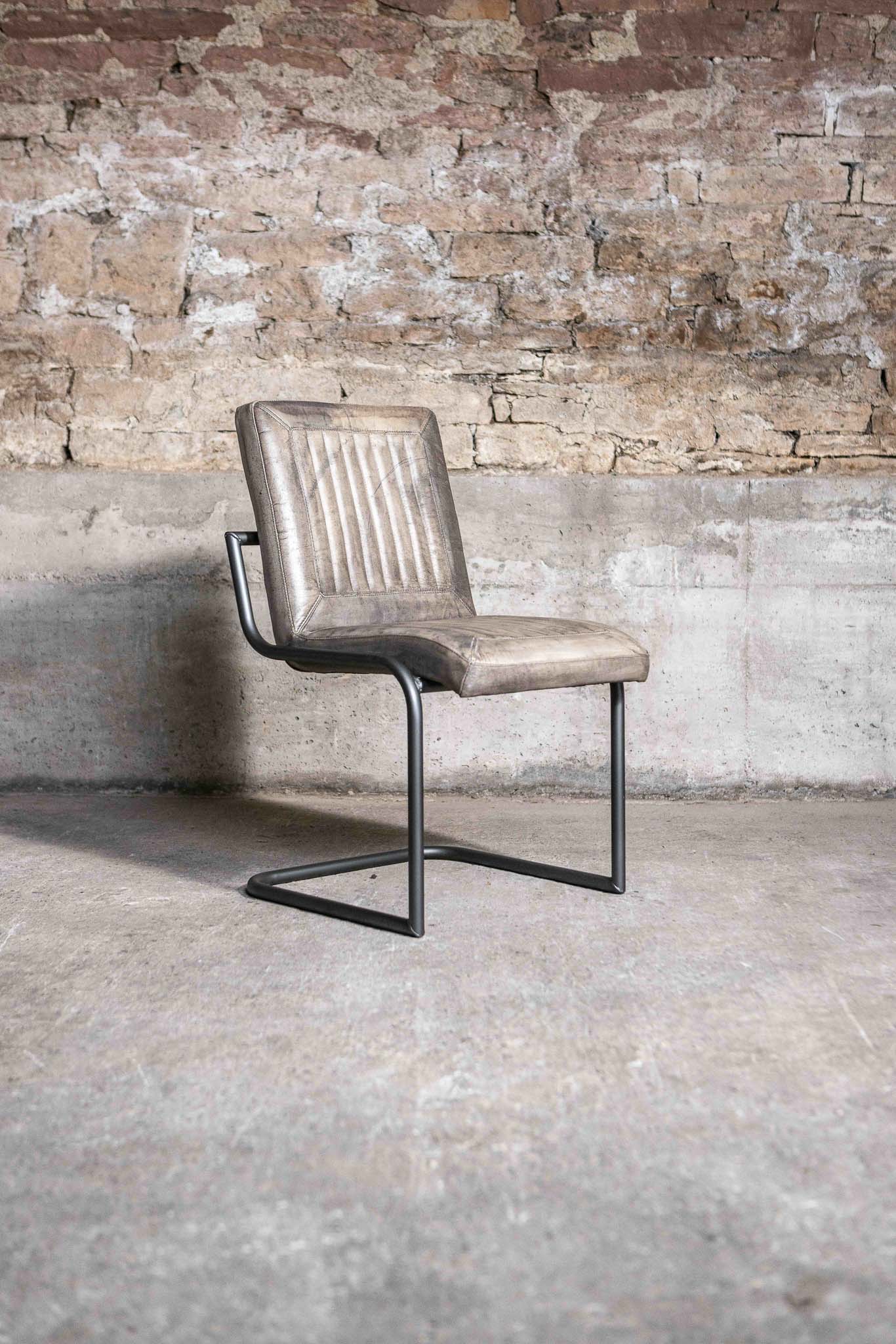
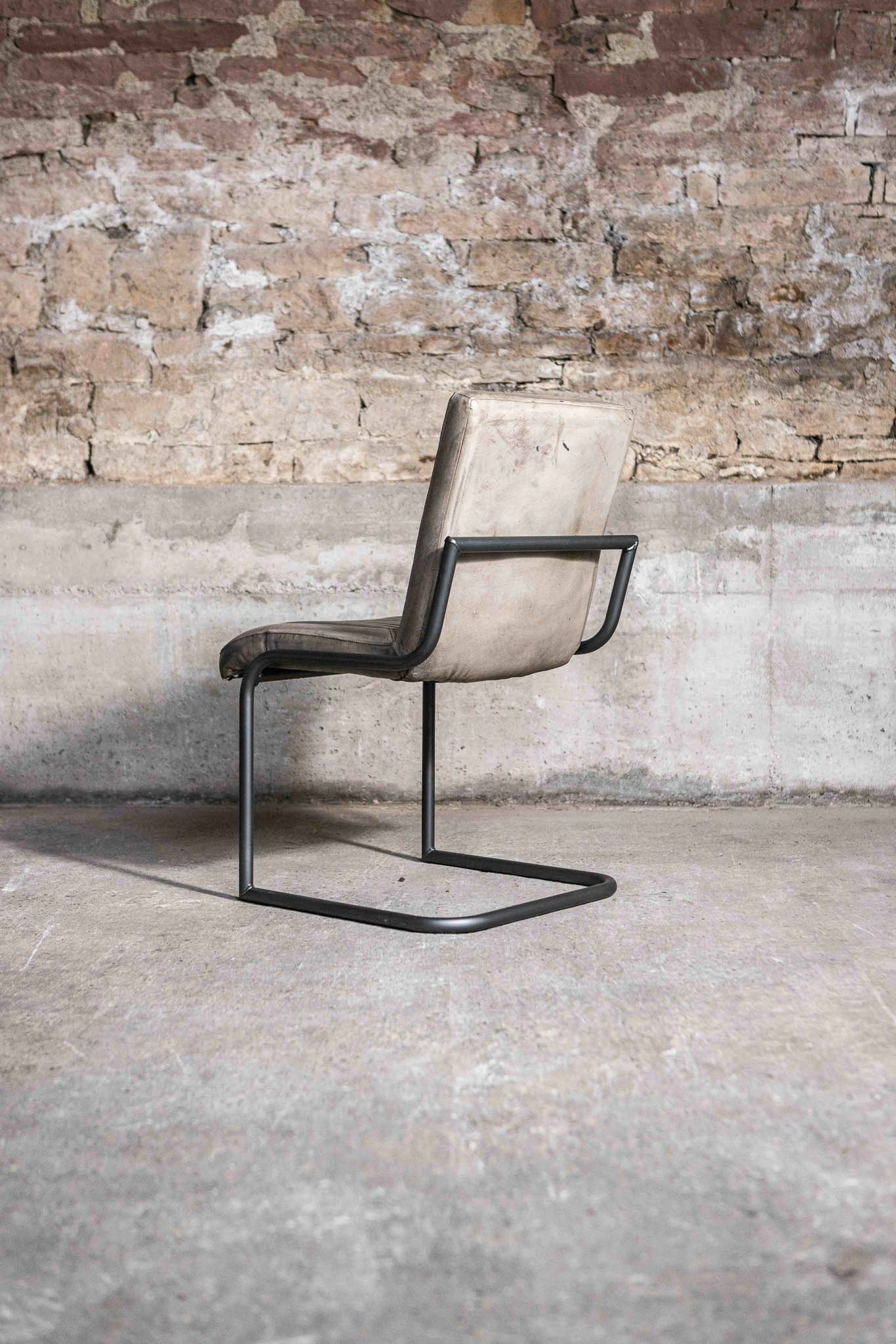
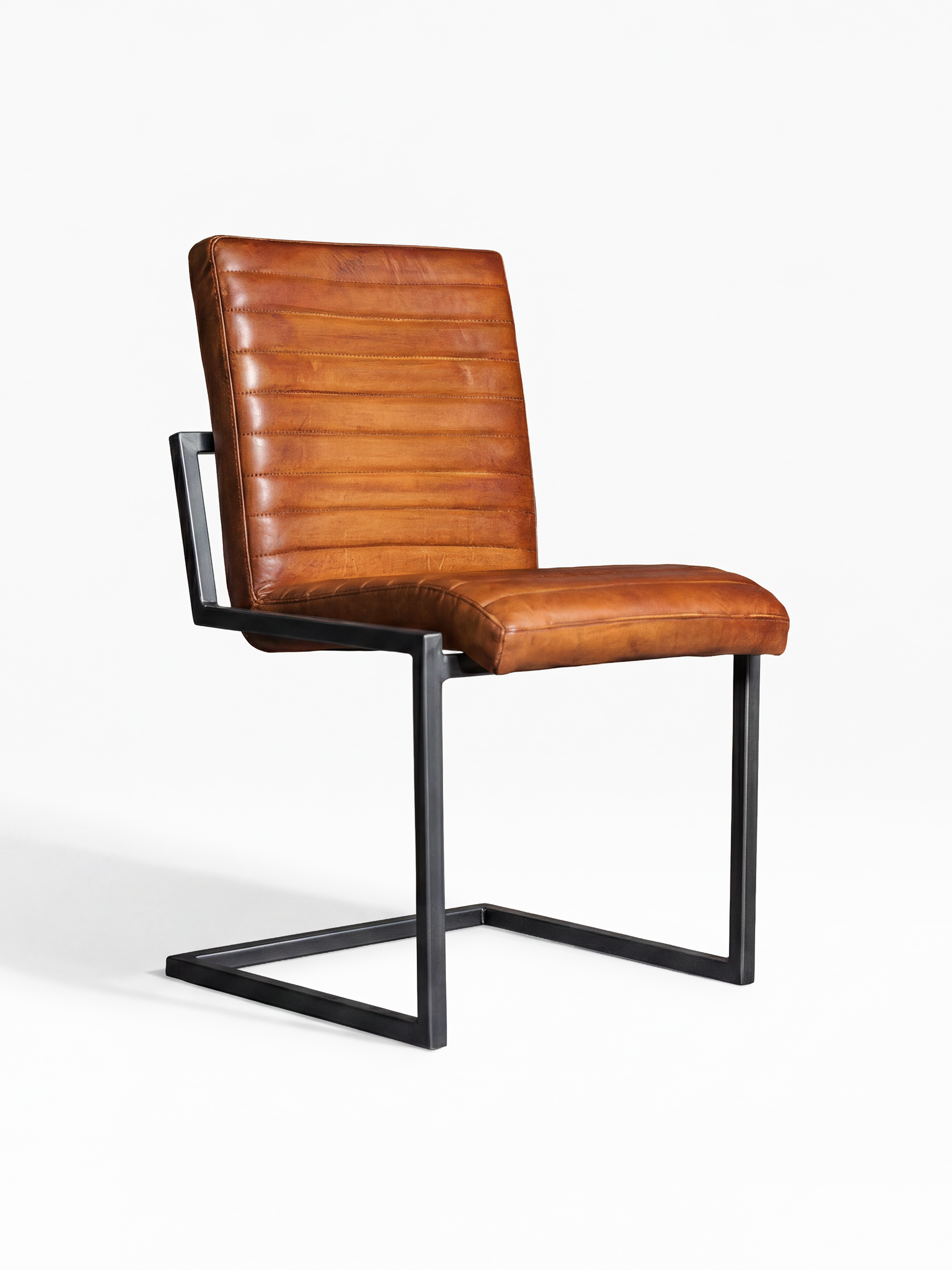
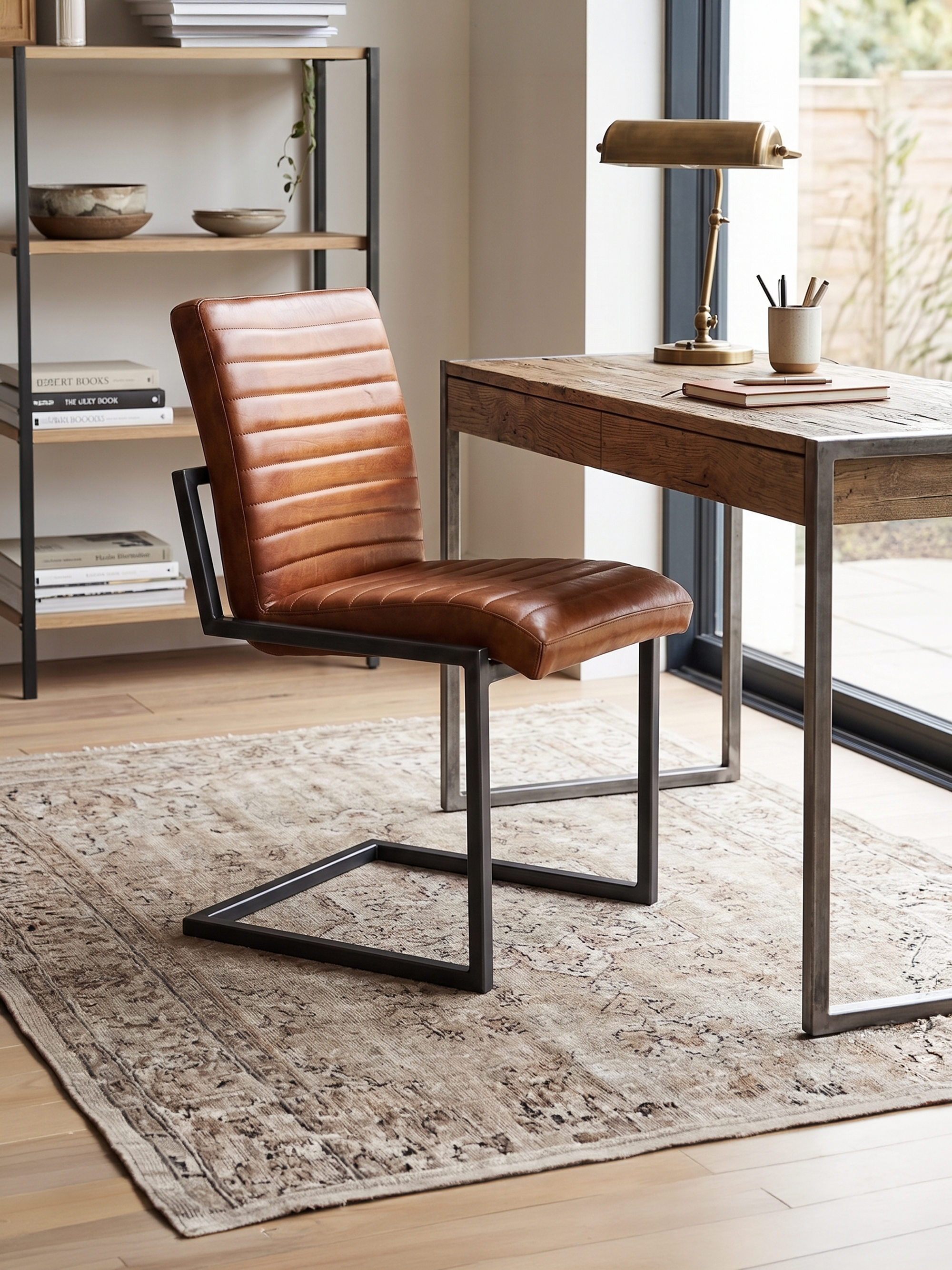
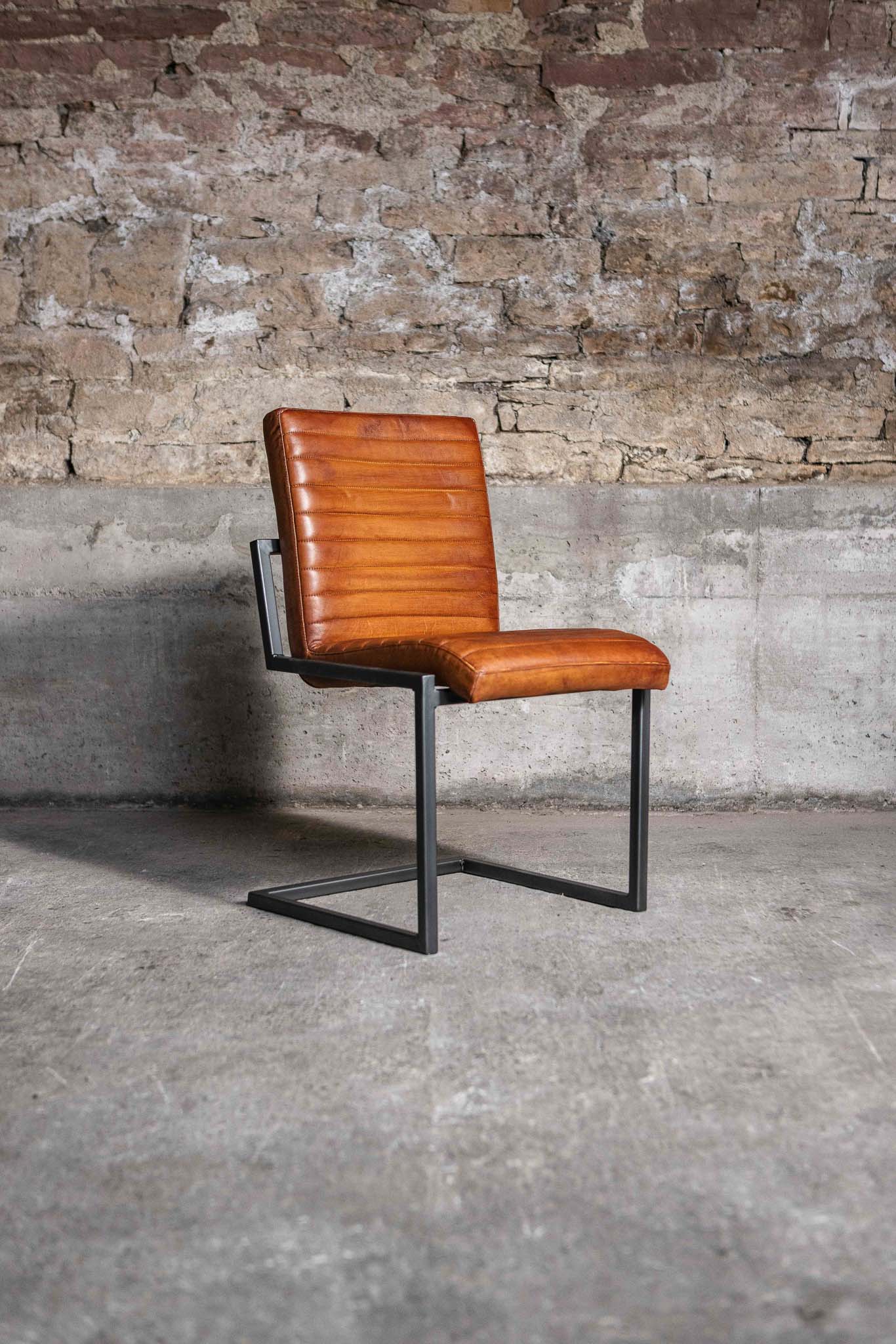
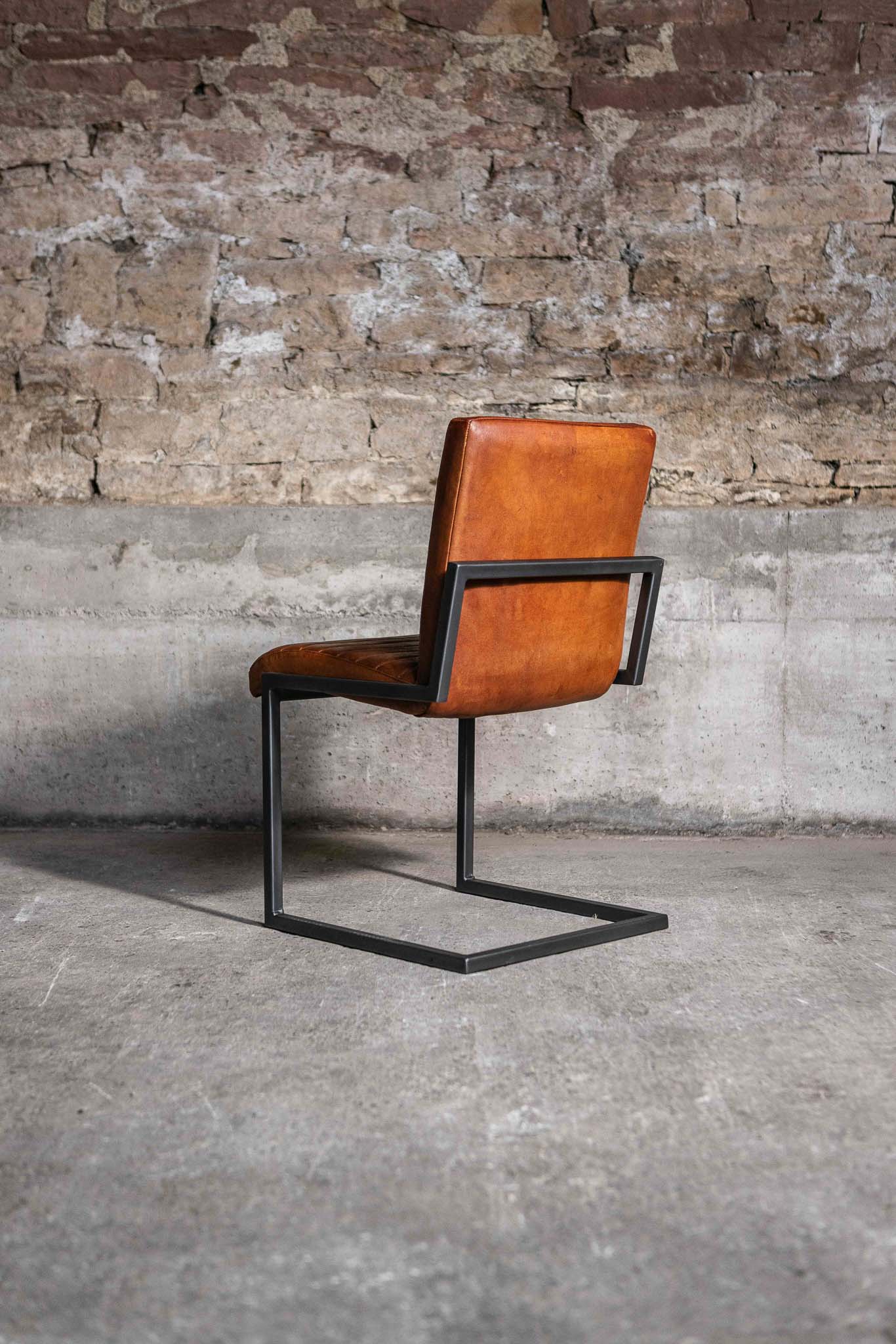
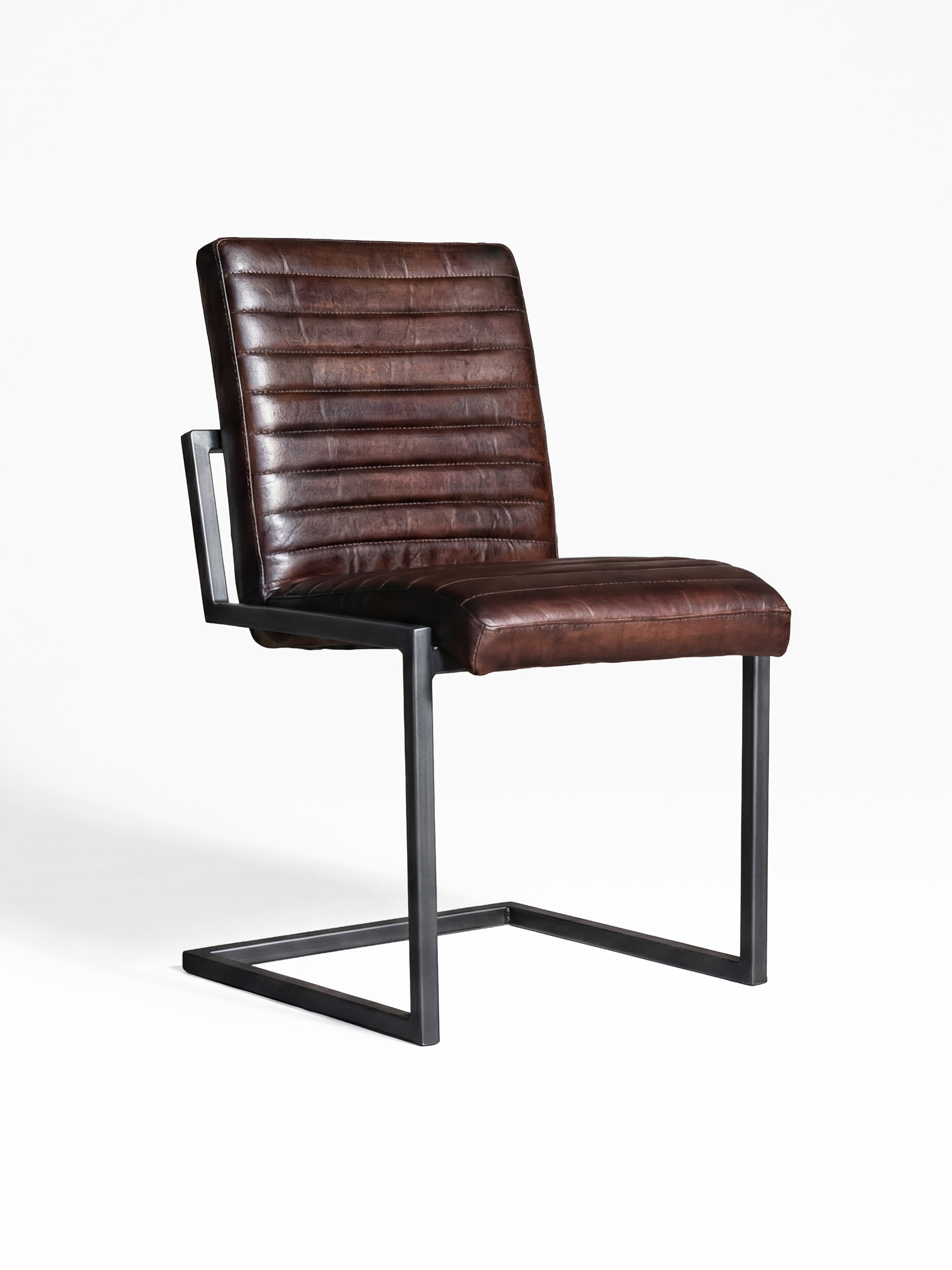
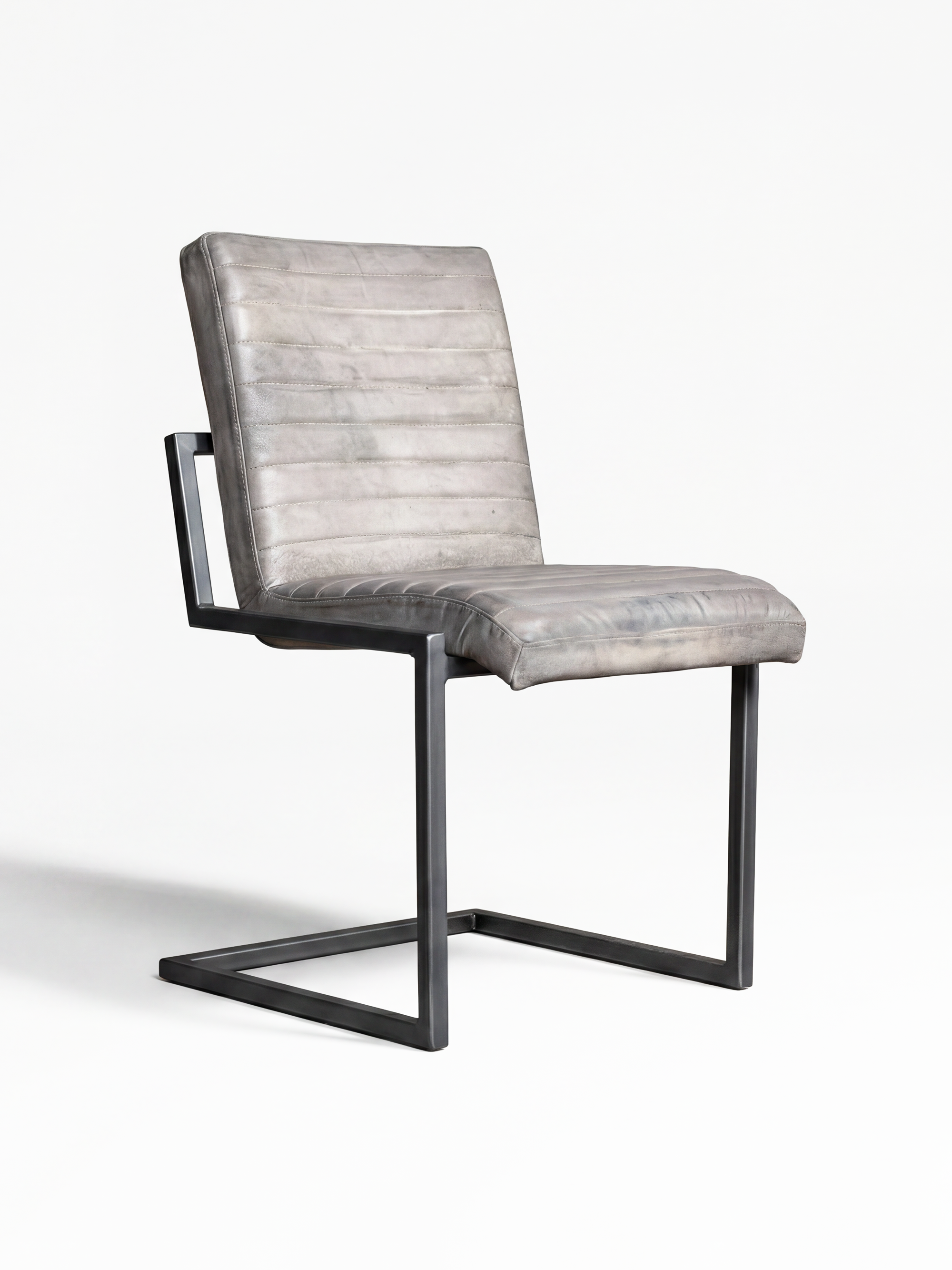
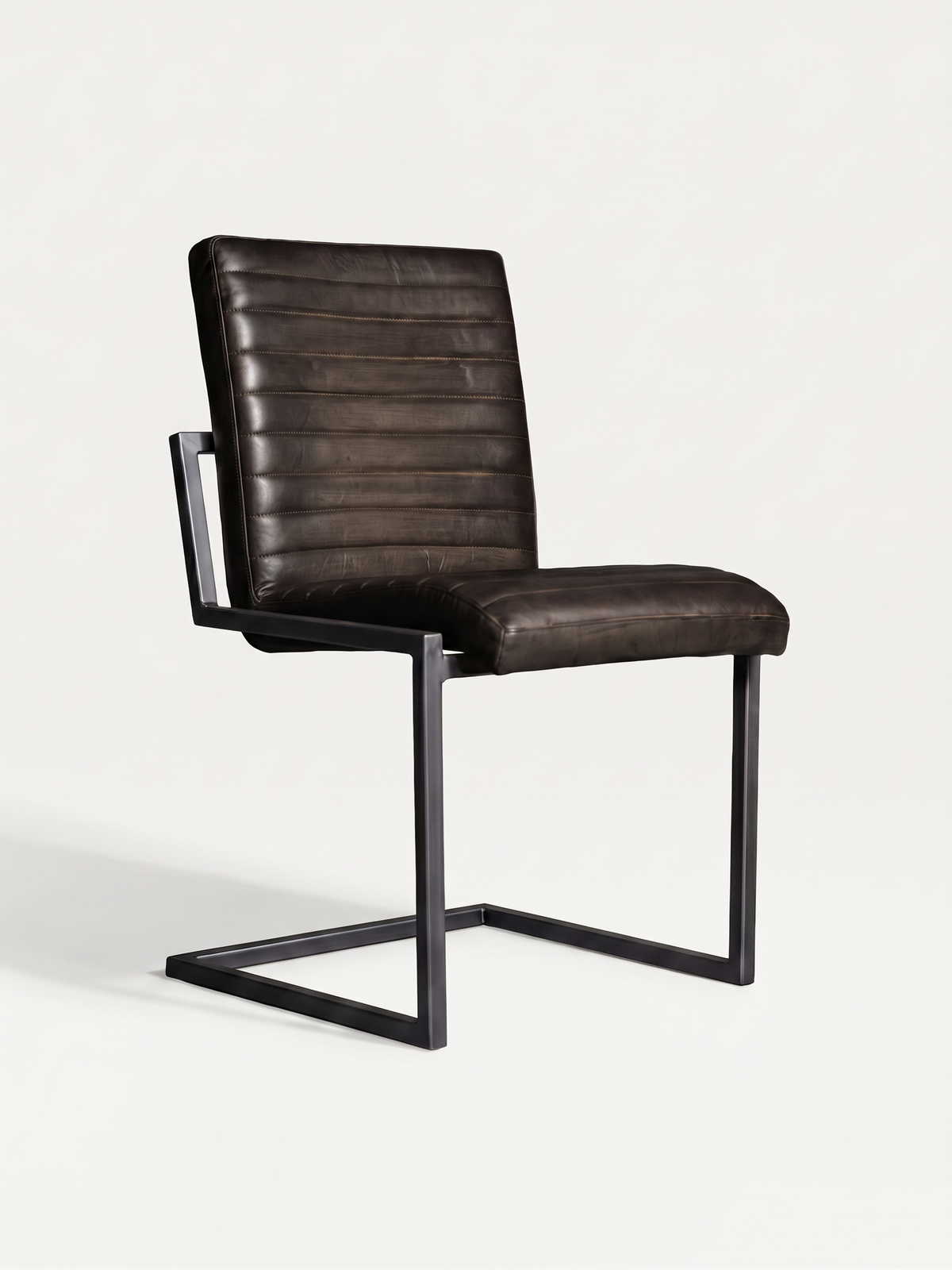
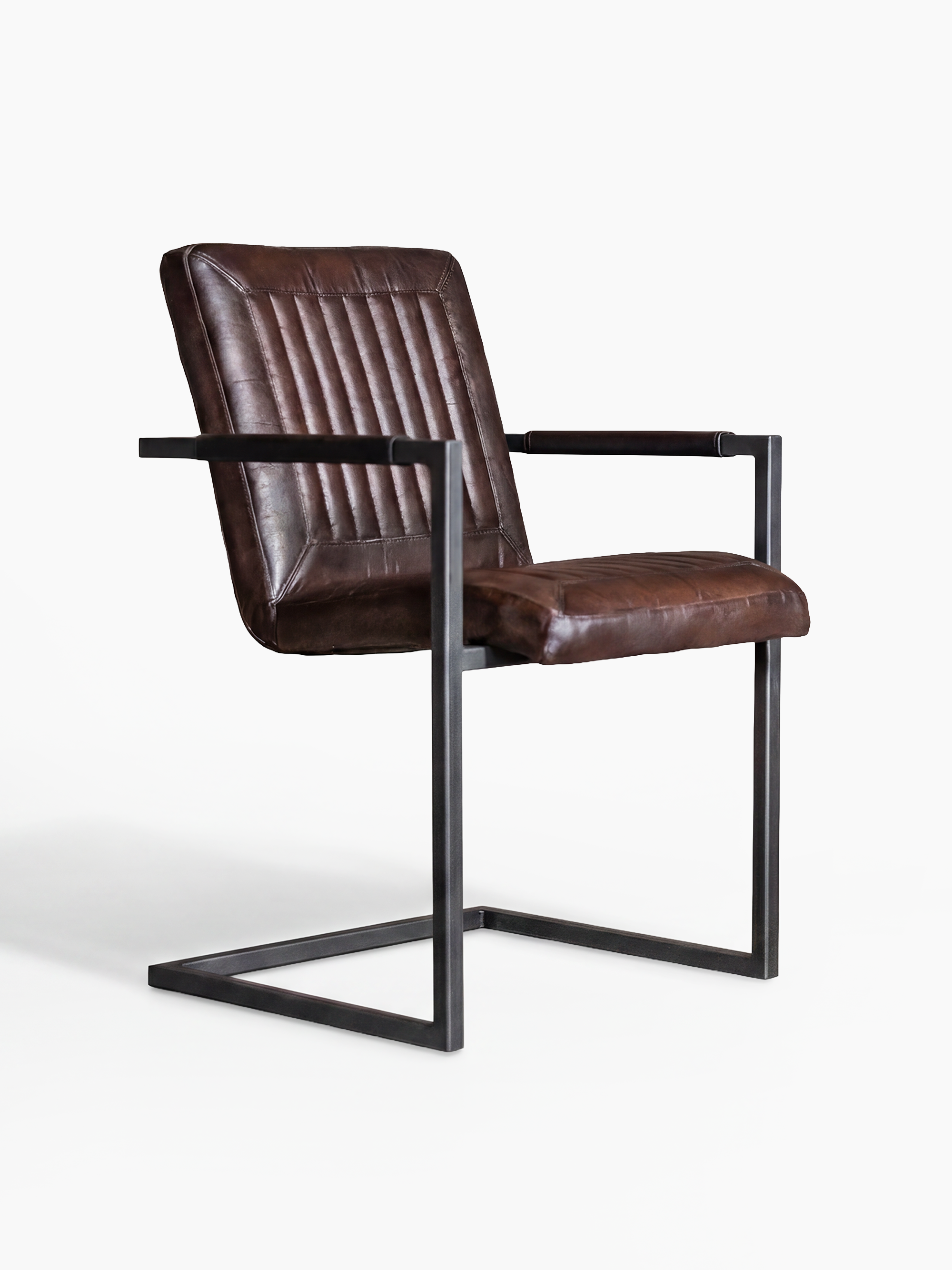
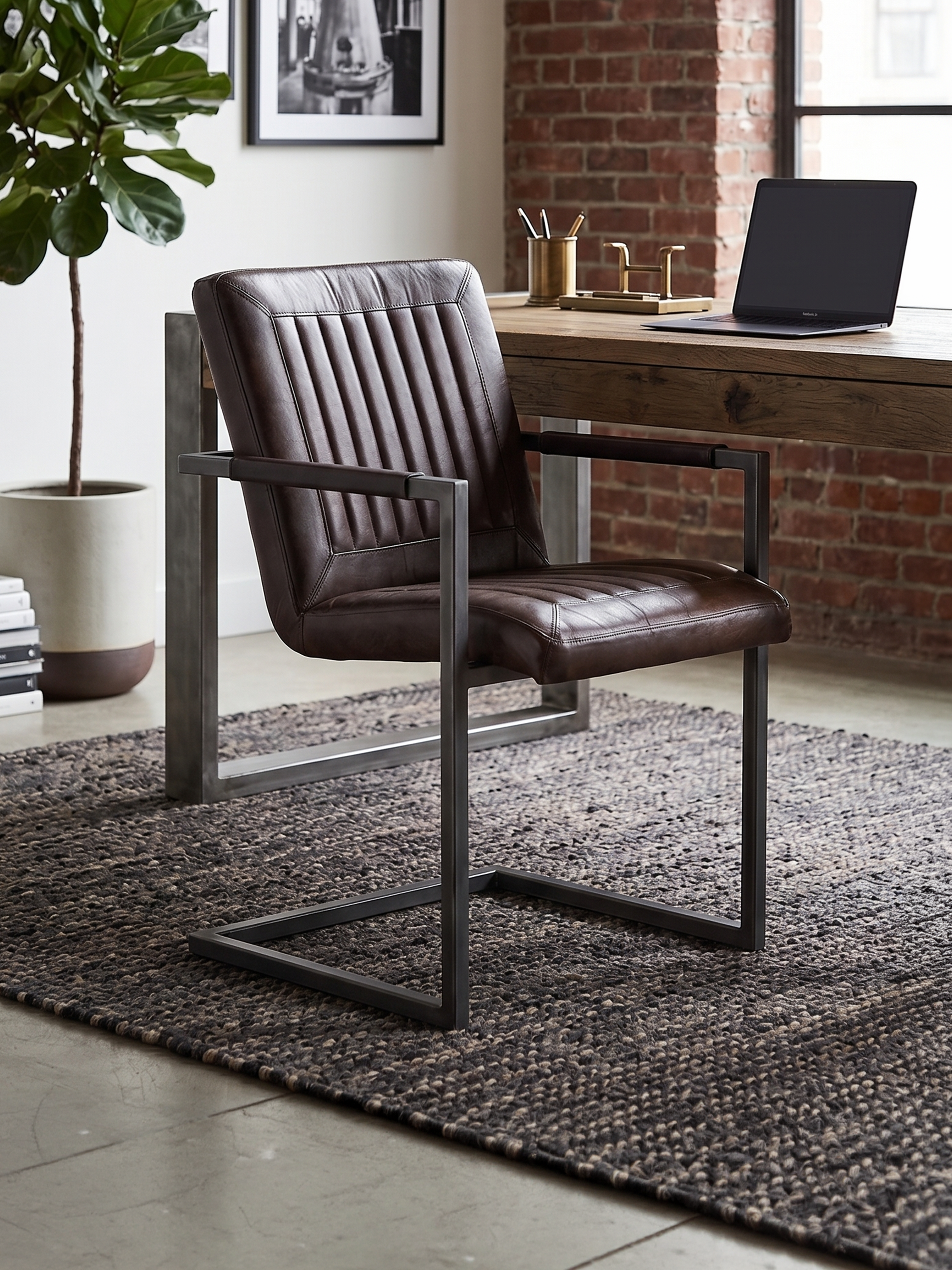
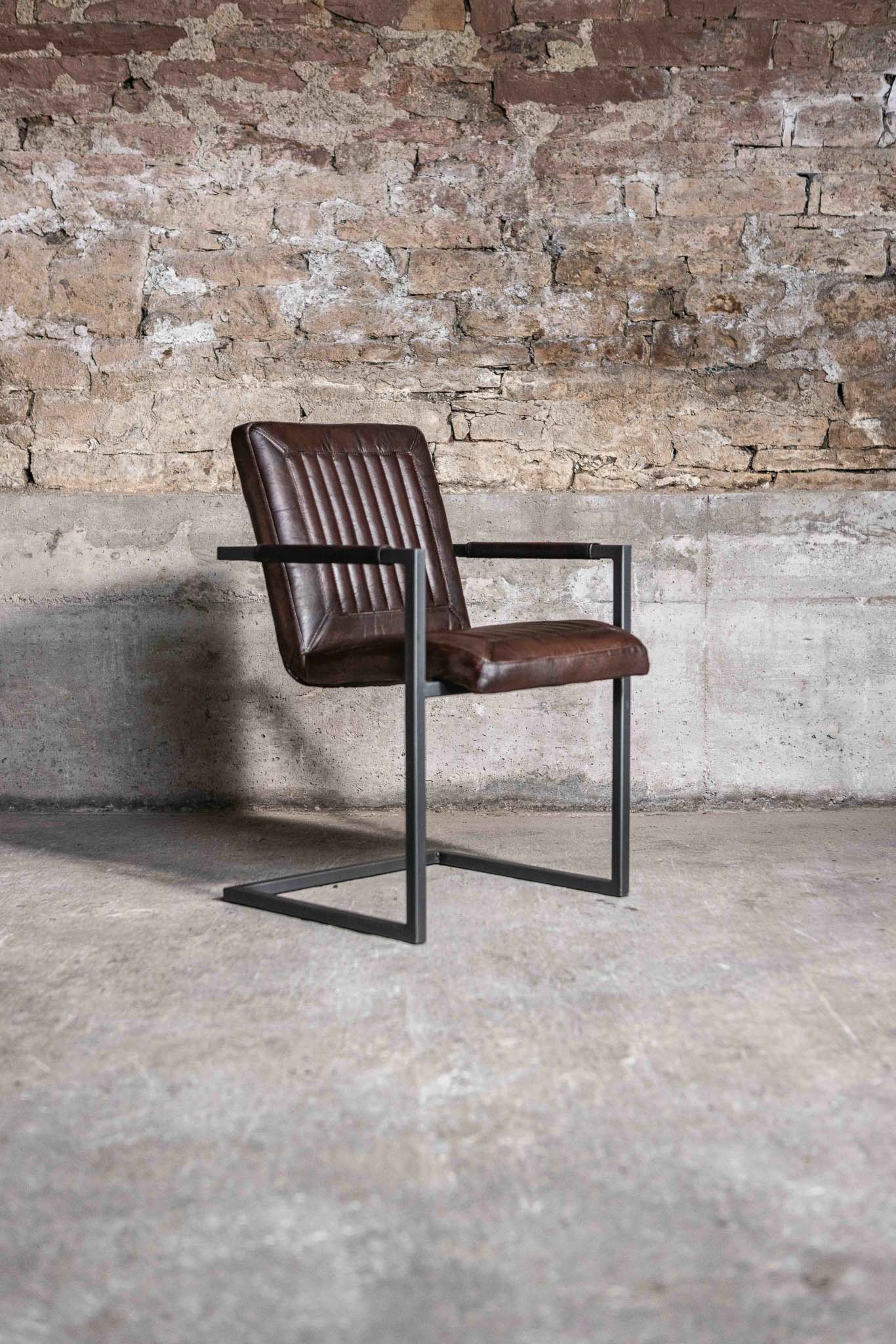
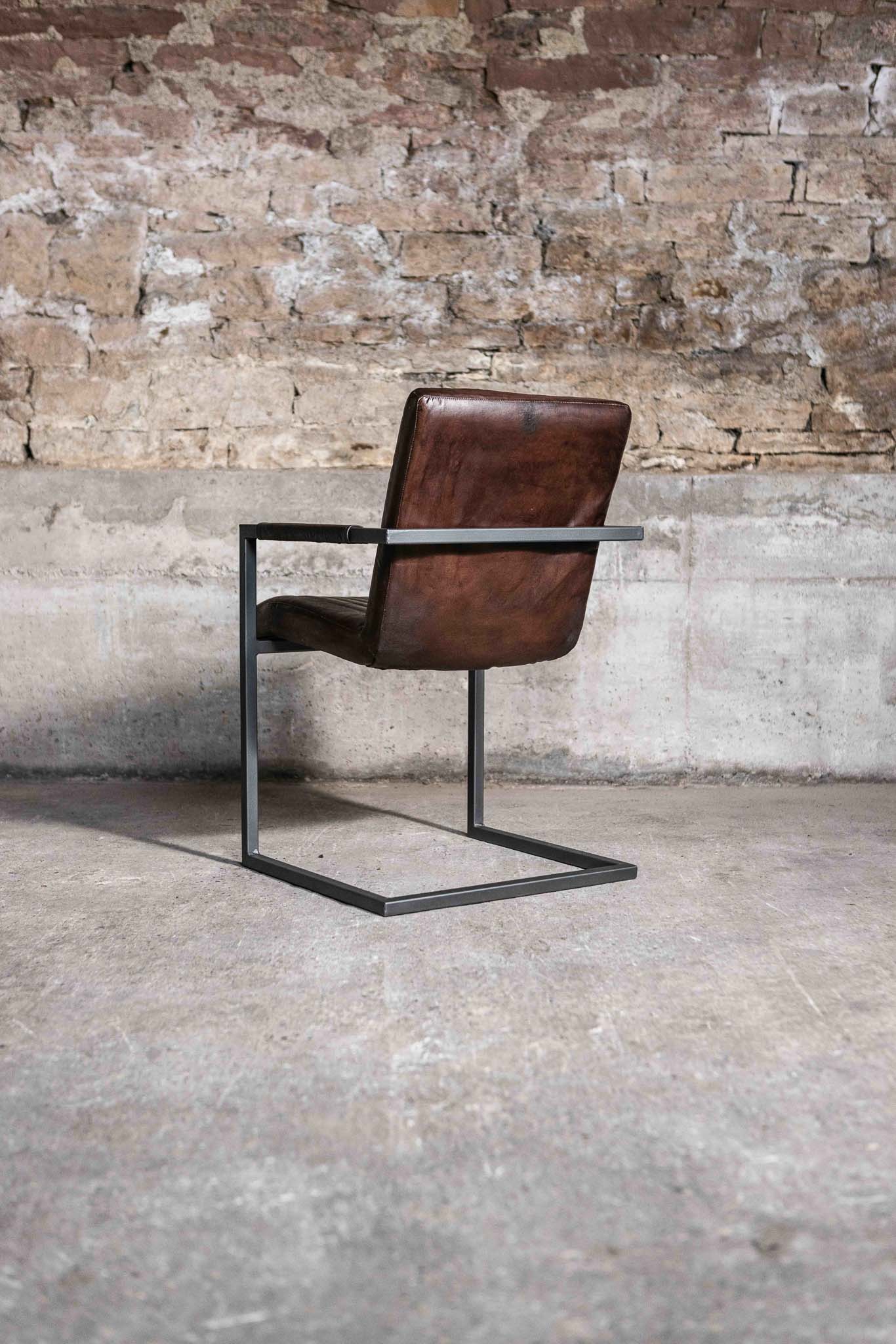
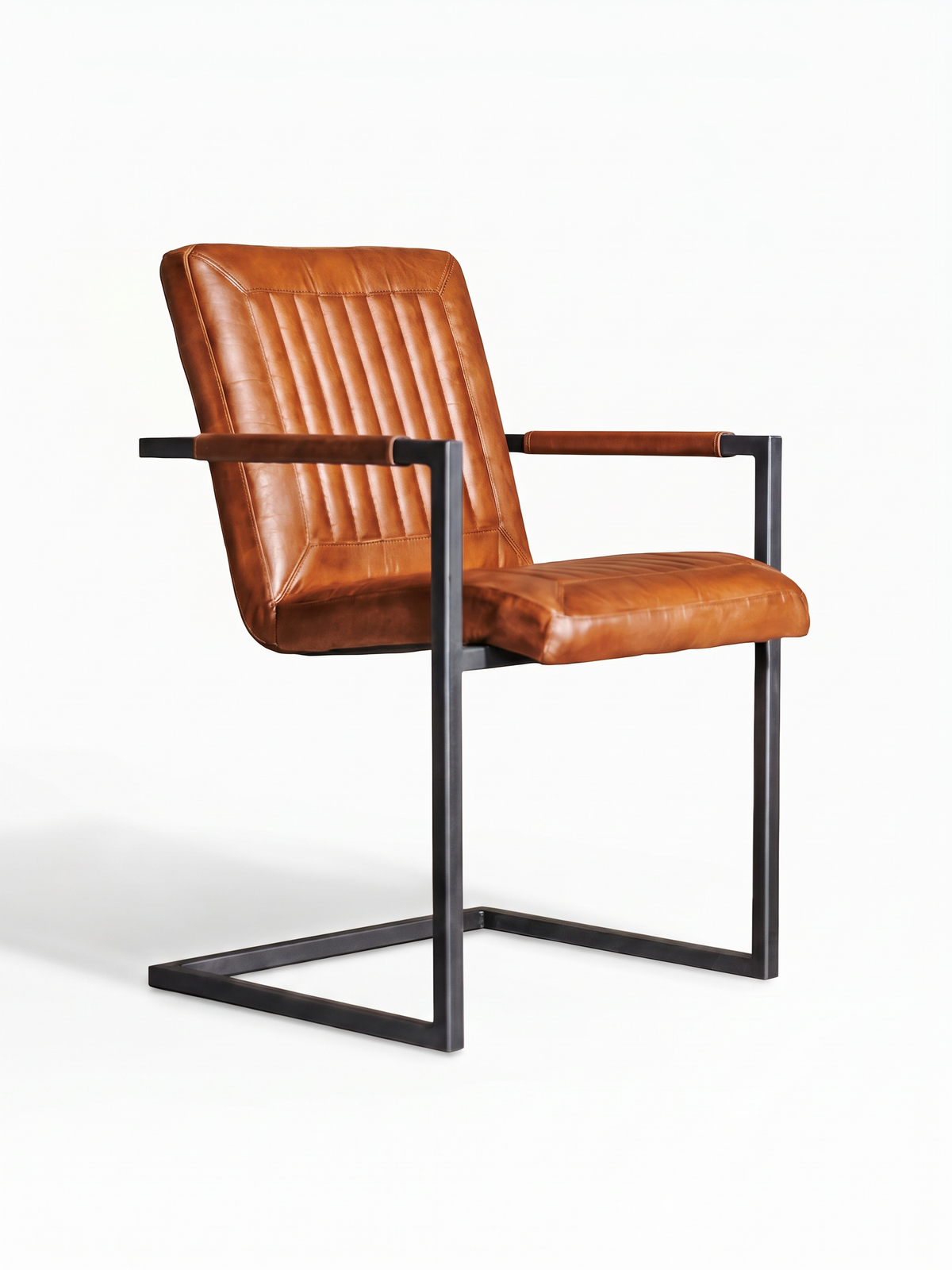
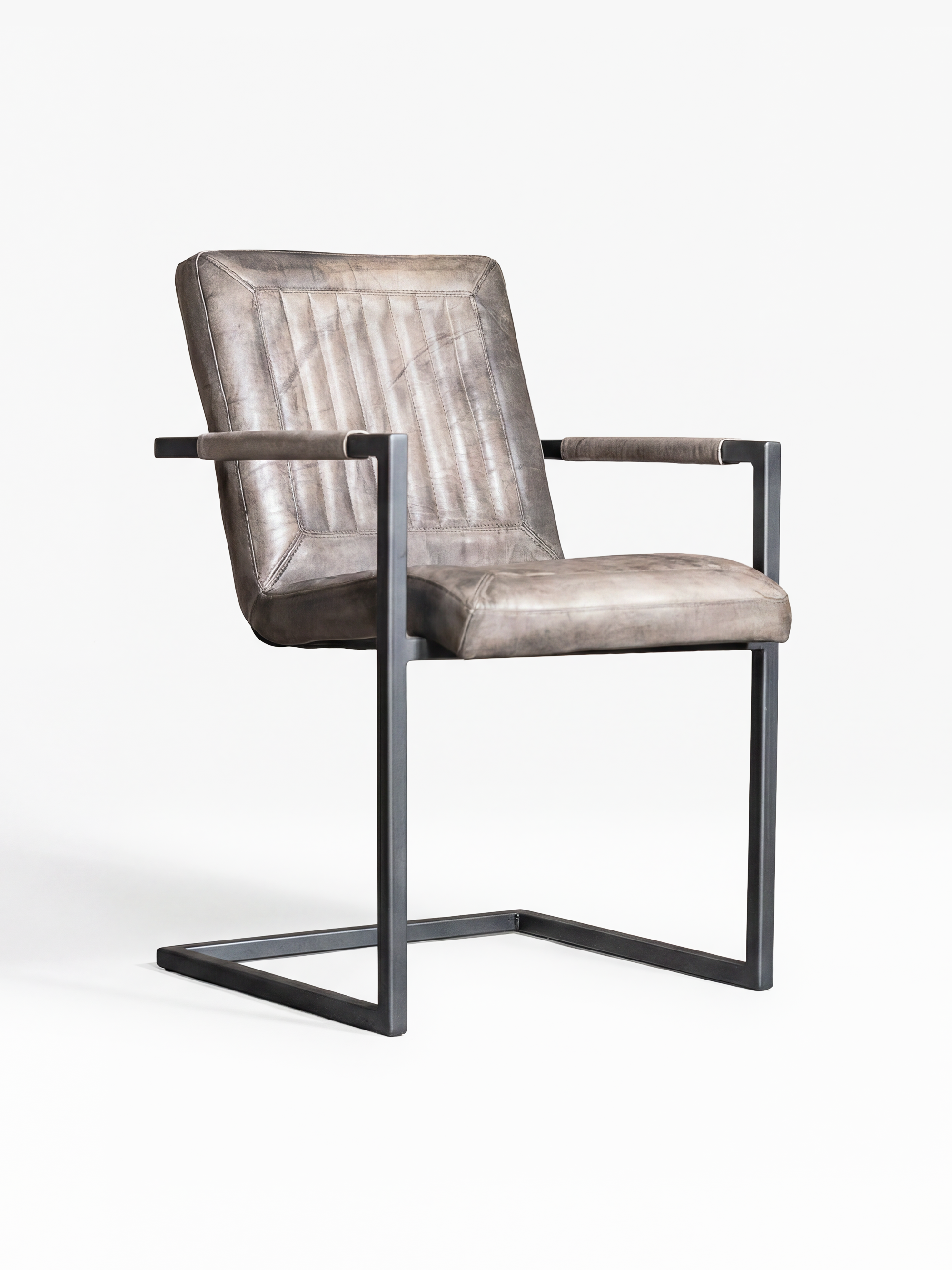
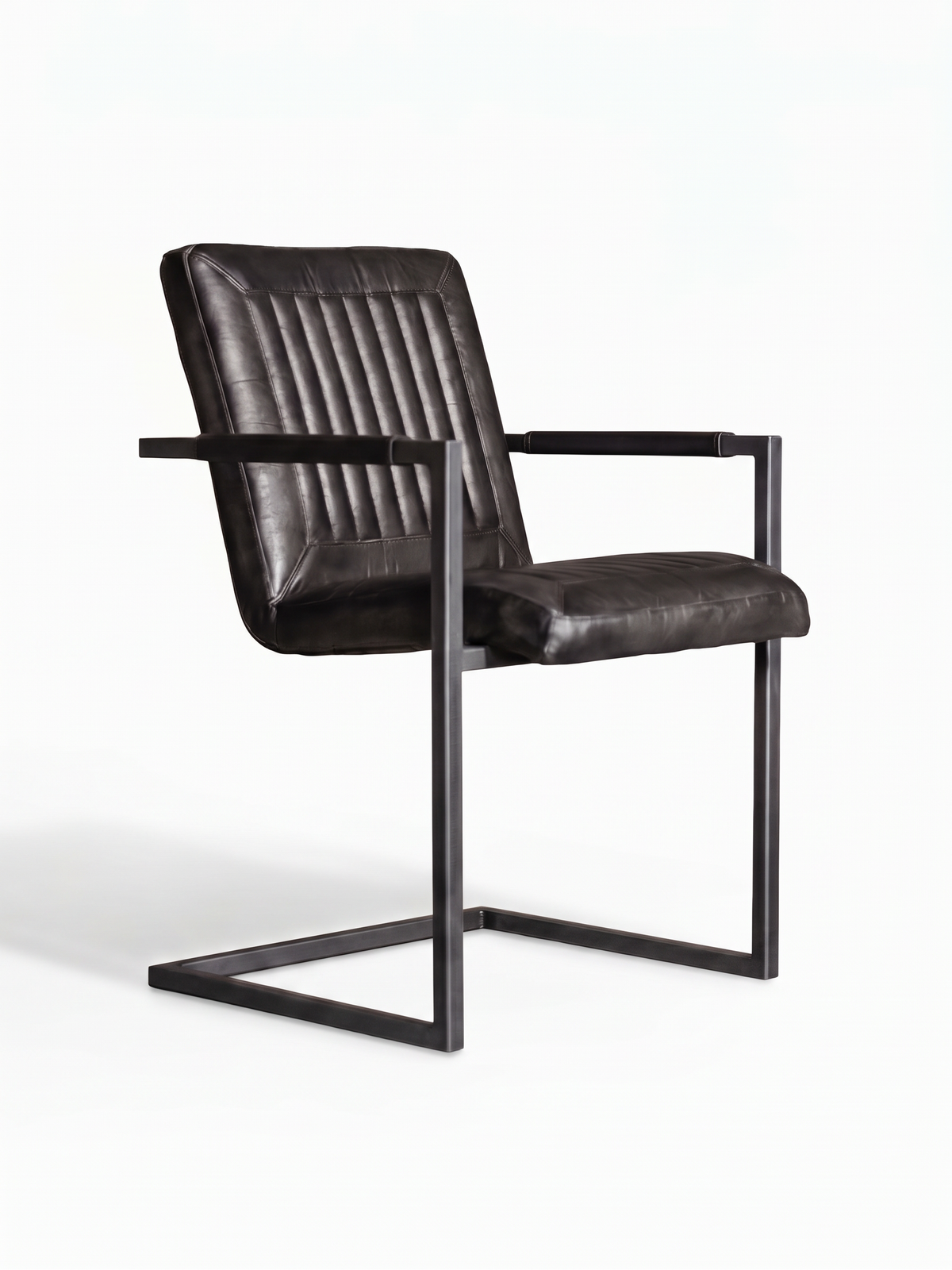
Industrial-Style Cantilever Chair—Buffalo Leather, Metal, and Loft-Style Aesthetic
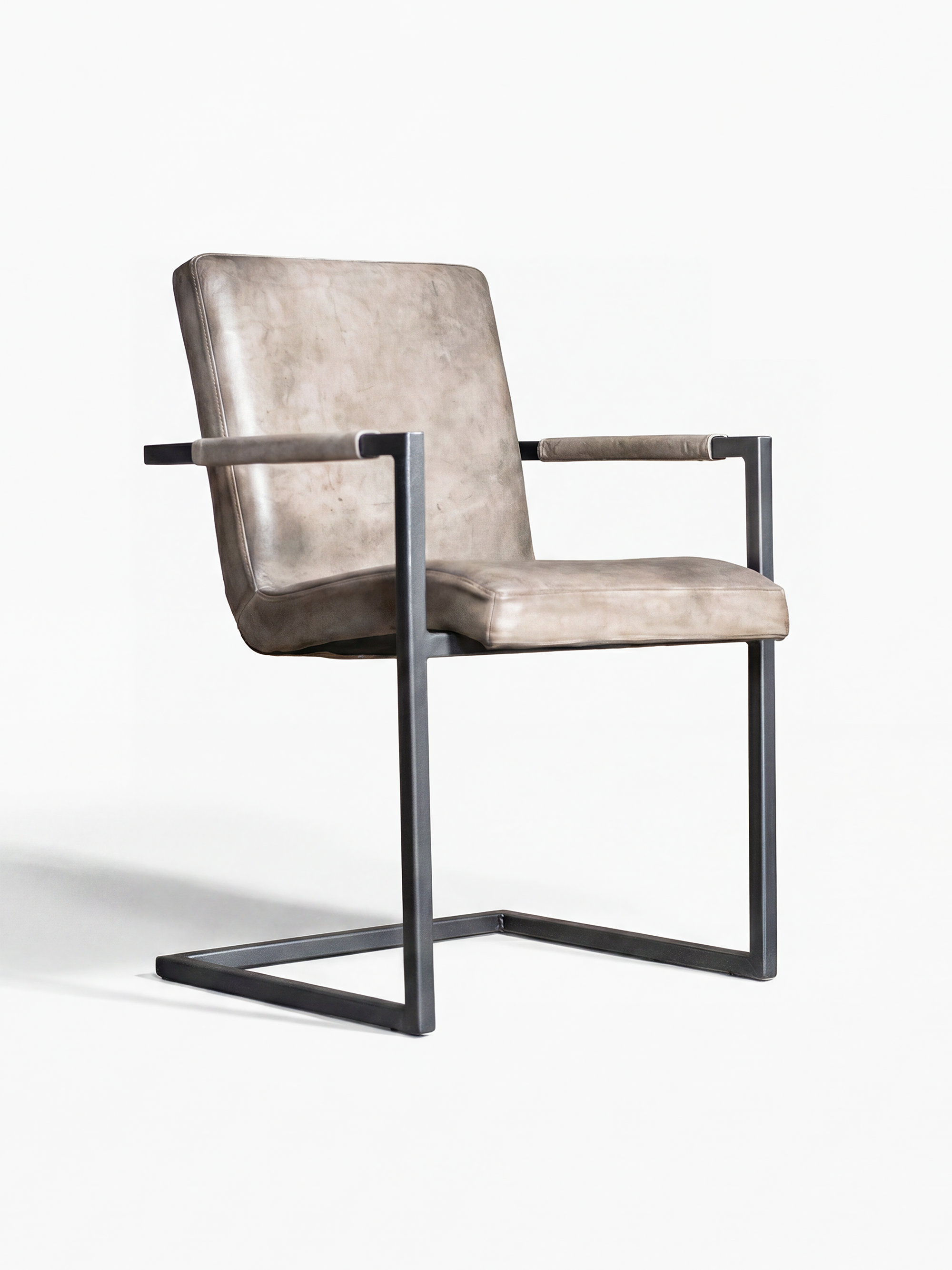
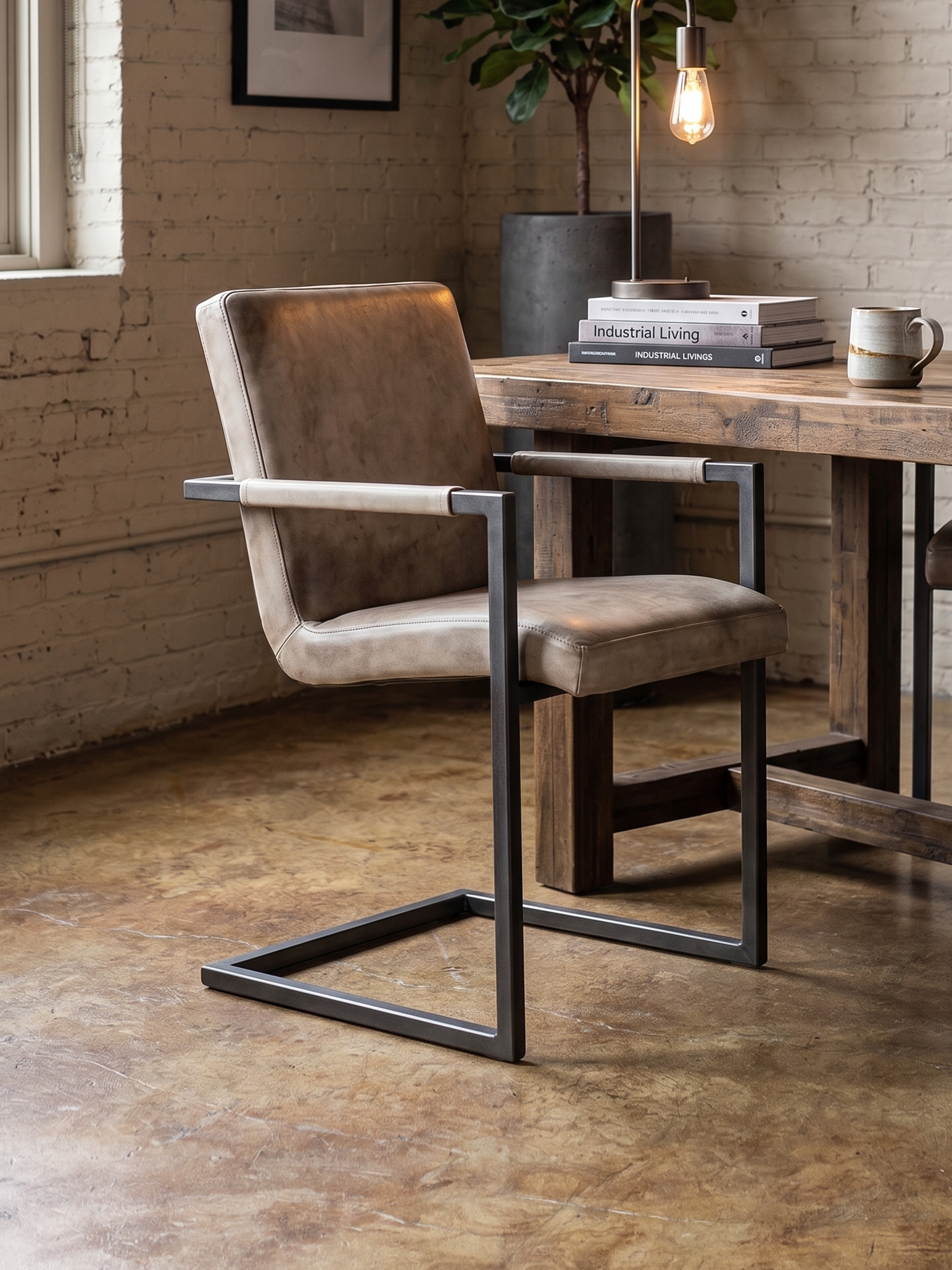
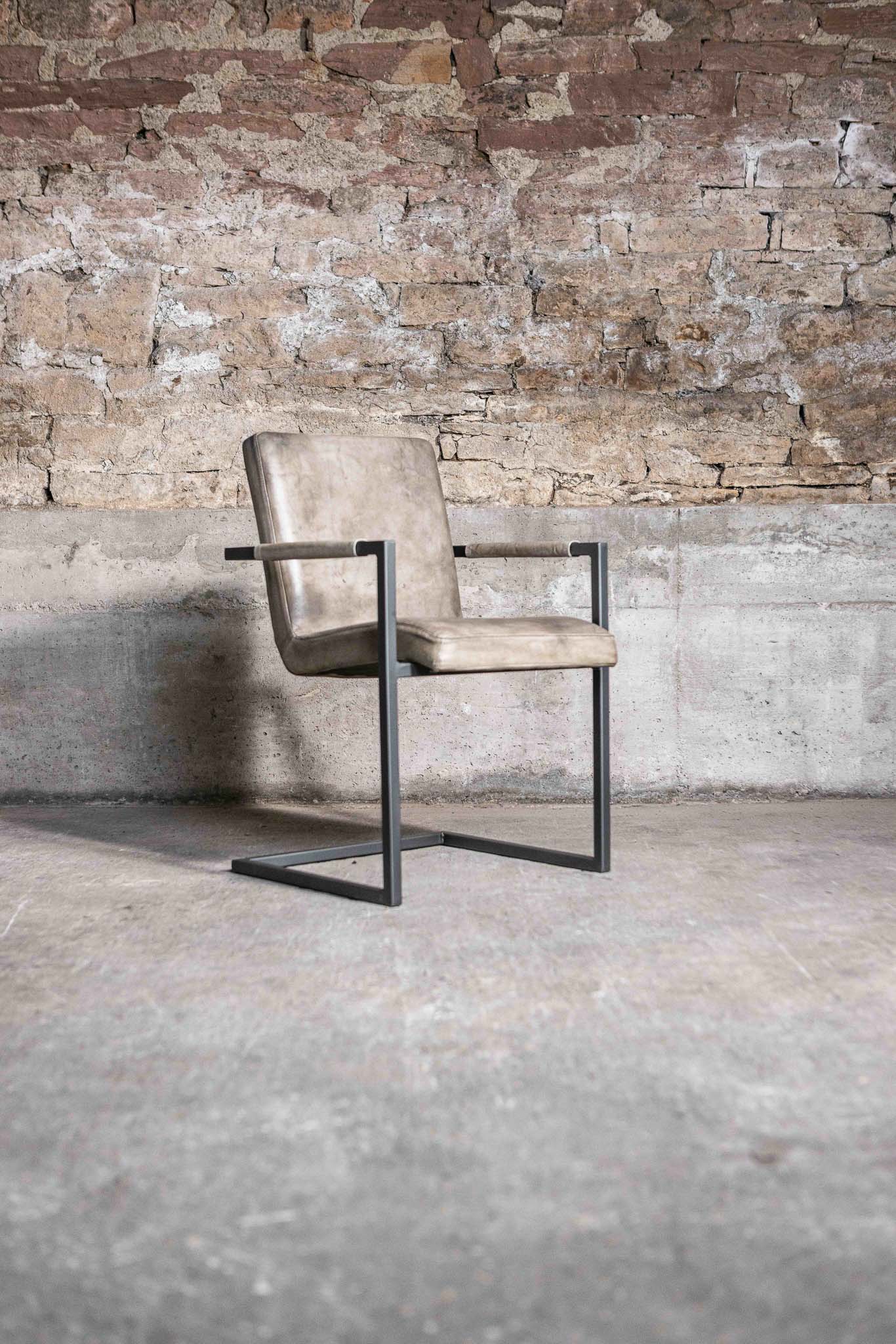
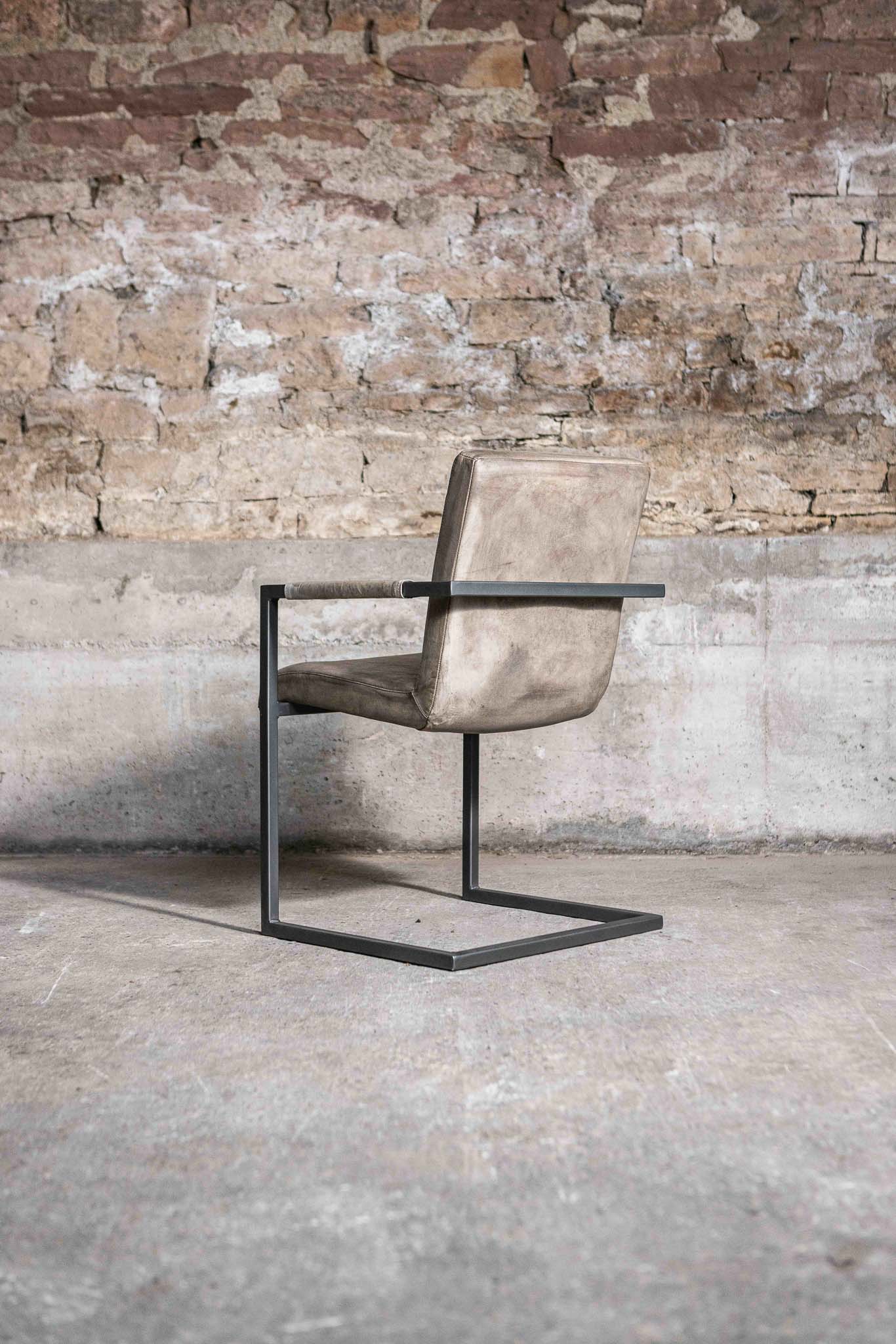
Anyone looking for an industrial-style cantilever chair wants more than just a chair. They want a piece of furniture that makes a statement: raw materials, honest craftsmanship, no frills. A black metal frame that supports weight without being flashy. Leather that gets better with age instead of worse. The Industrial Cantilever Chair isn’t a trendy piece—it’s an archetype.
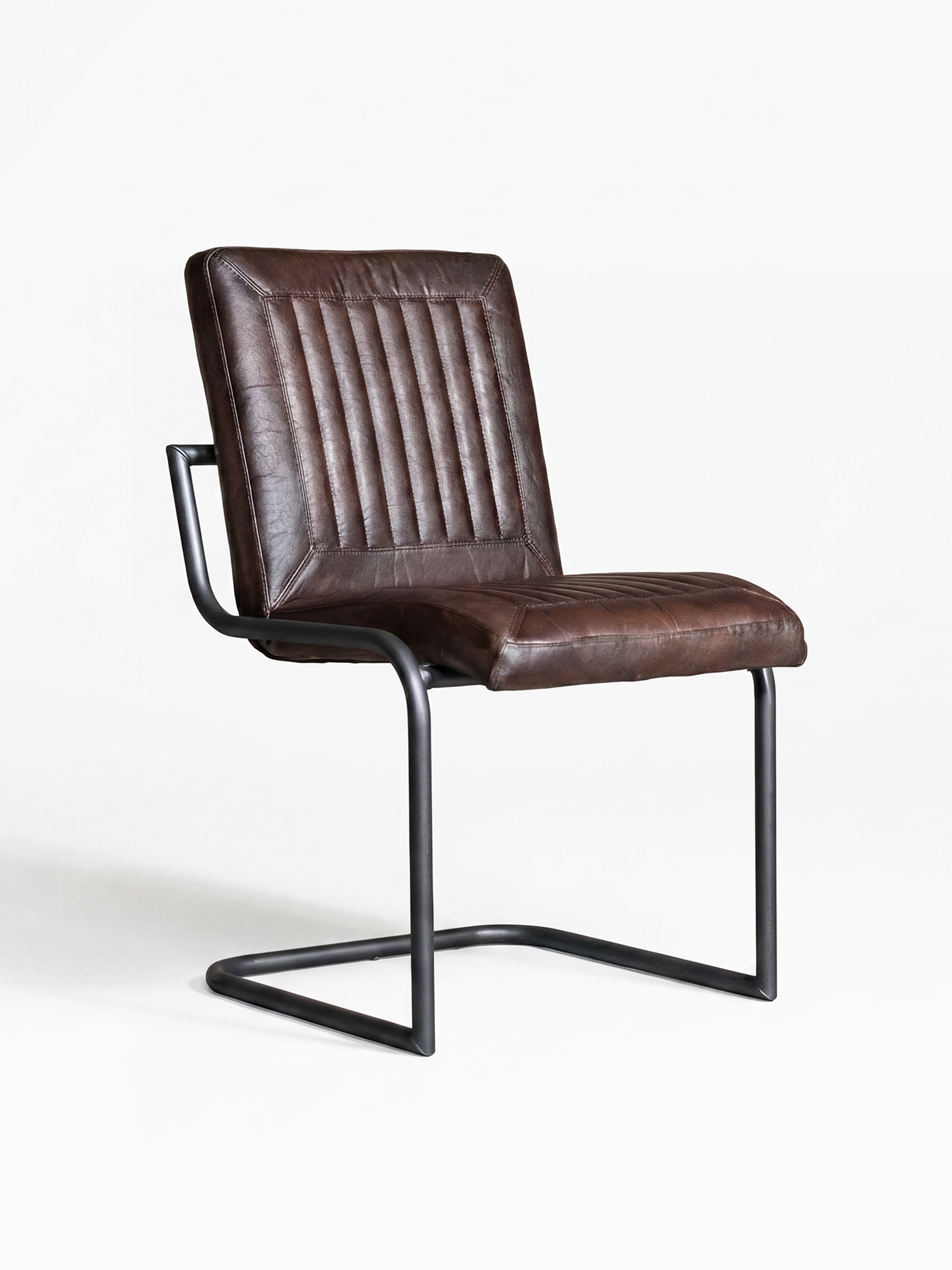
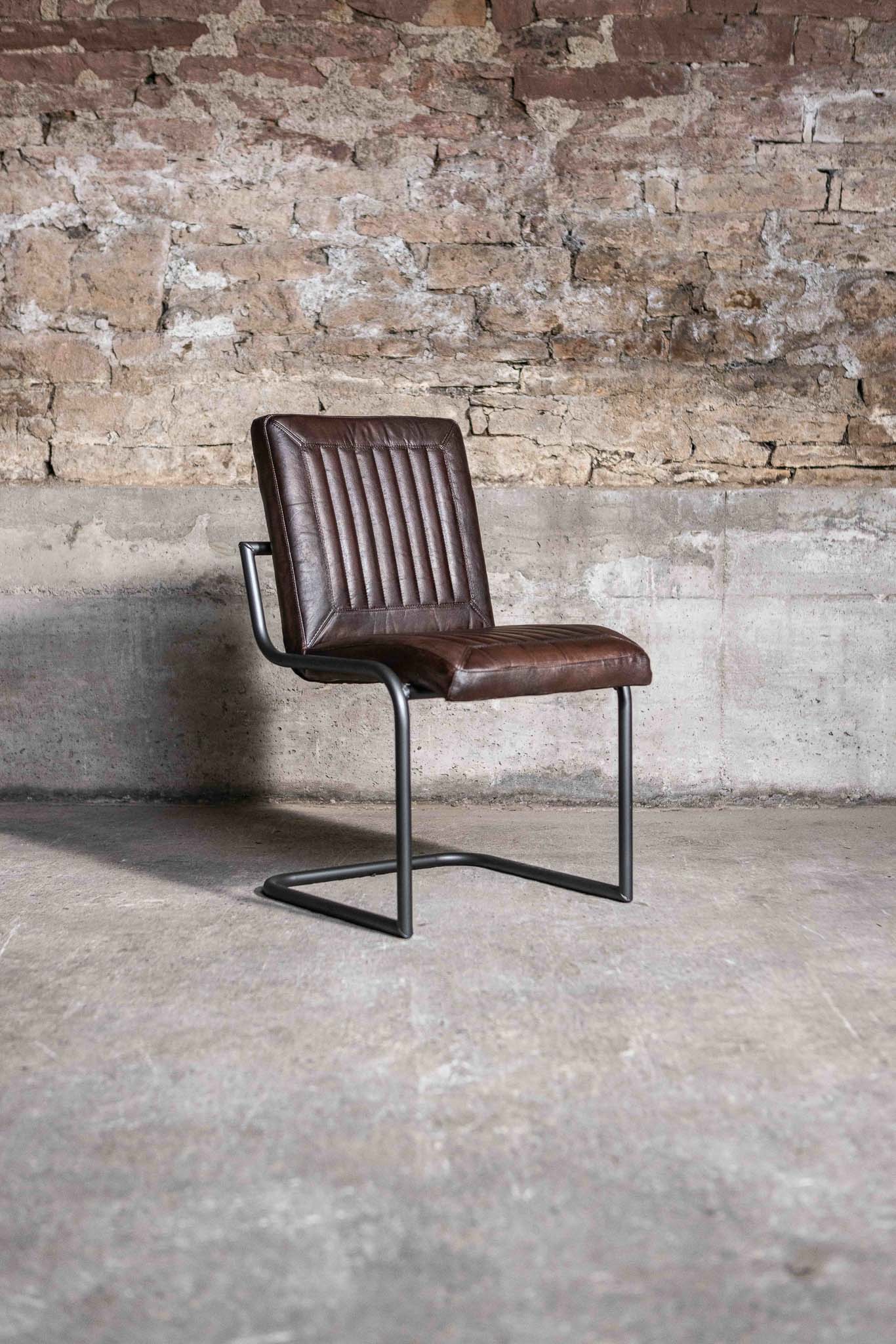
At LIVIOR, every model is made of genuine buffalo leather (3–4 mm thick) and a powder-coated black metal frame, handcrafted in Germany. The result is a cantilever chair that doesn’t imitate industrial style—it embodies it—direct from the manufacturer, with no markup.
What Is an Industrial-Style Cantilever Chair?—Design, Origins, and Look
Industrial Design & Loft Style—From the Factory to the Living Room
The industrial style has its origins in the 19th-century Industrial Revolution. At that time, factory buildings made of steel, concrete, and raw wood sprang up in England and later throughout Europe—spaces designed for function, not aesthetics. It was precisely this unvarnished material honesty that, about a hundred years later, became the source of inspiration for a new way of living.
In the 1960s and 1970s, artists in New York and London discovered abandoned factory buildings and turned them into living spaces and studios. These lofts—large, rugged, and flooded with light—became iconic centers of a new lifestyle. Brick walls were left exposed, pipes hung from the ceiling, and furniture was placed in the rooms that matched this character: made of steel, wood, concrete, and leather.
This gave rise to the loft style, which is now just as at home in living rooms, dining rooms, and home offices. Not because you live in a former factory, but because this look conveys a certain philosophy: substance over surface, durability over trends, character over perfection.
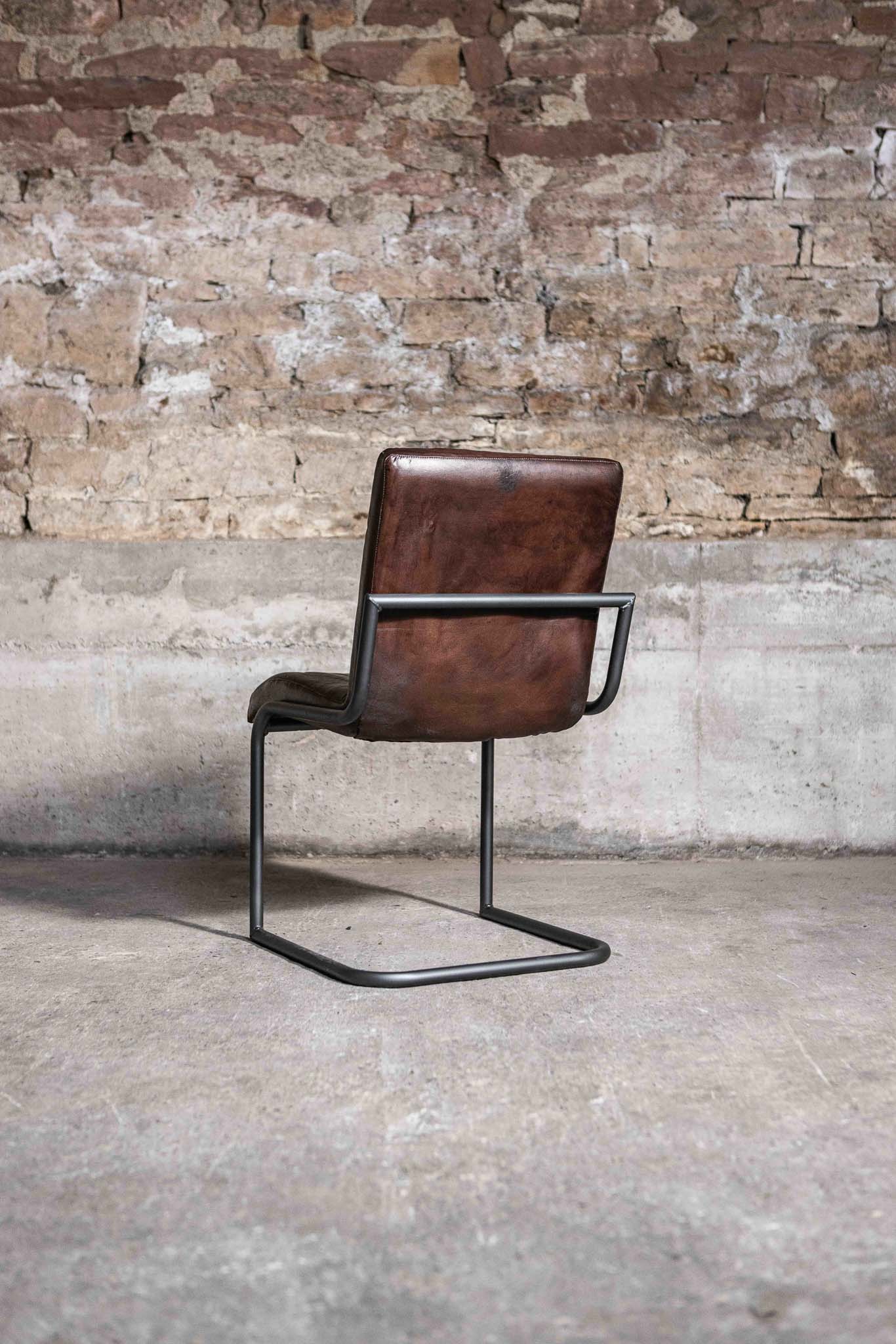
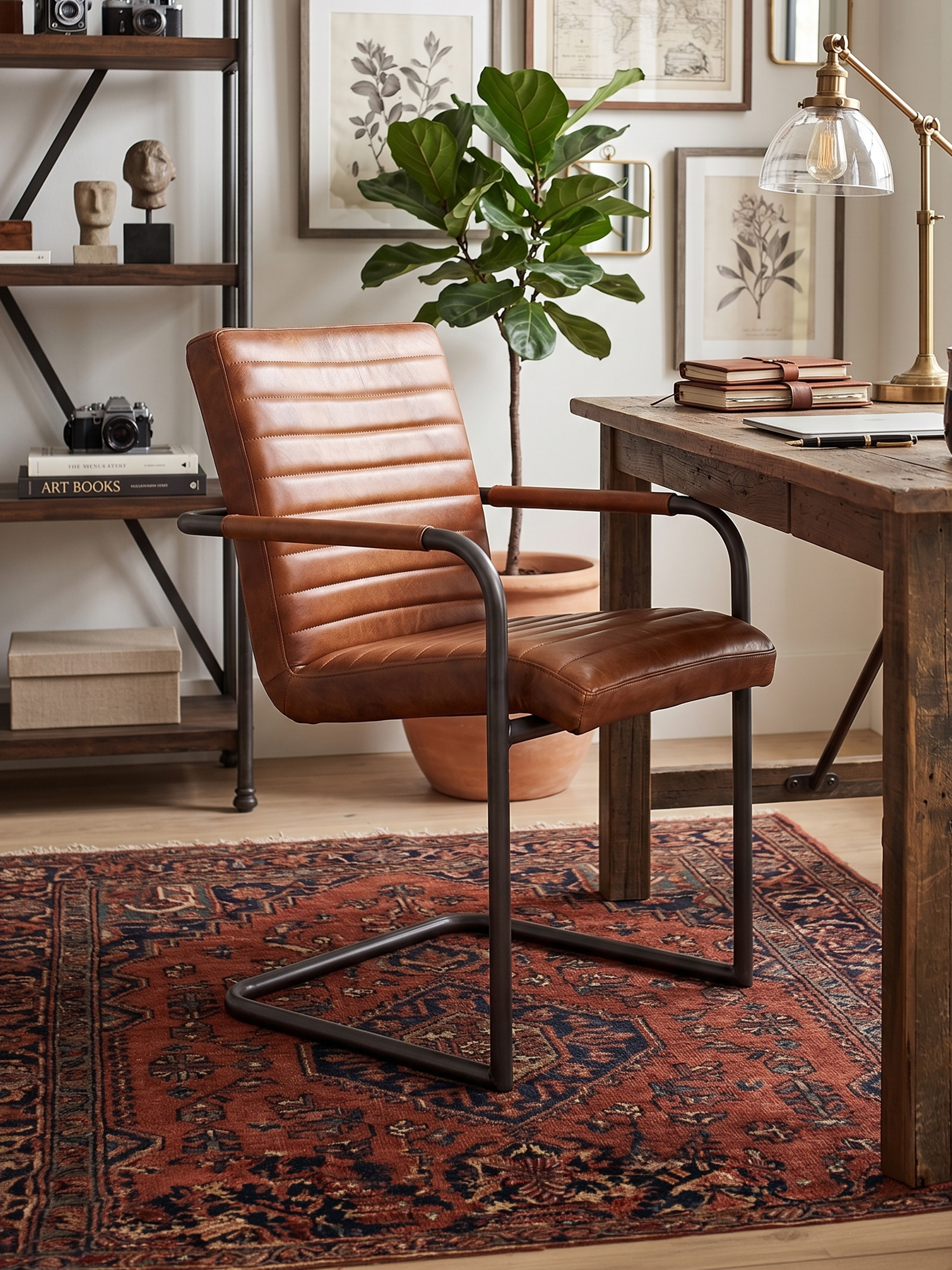
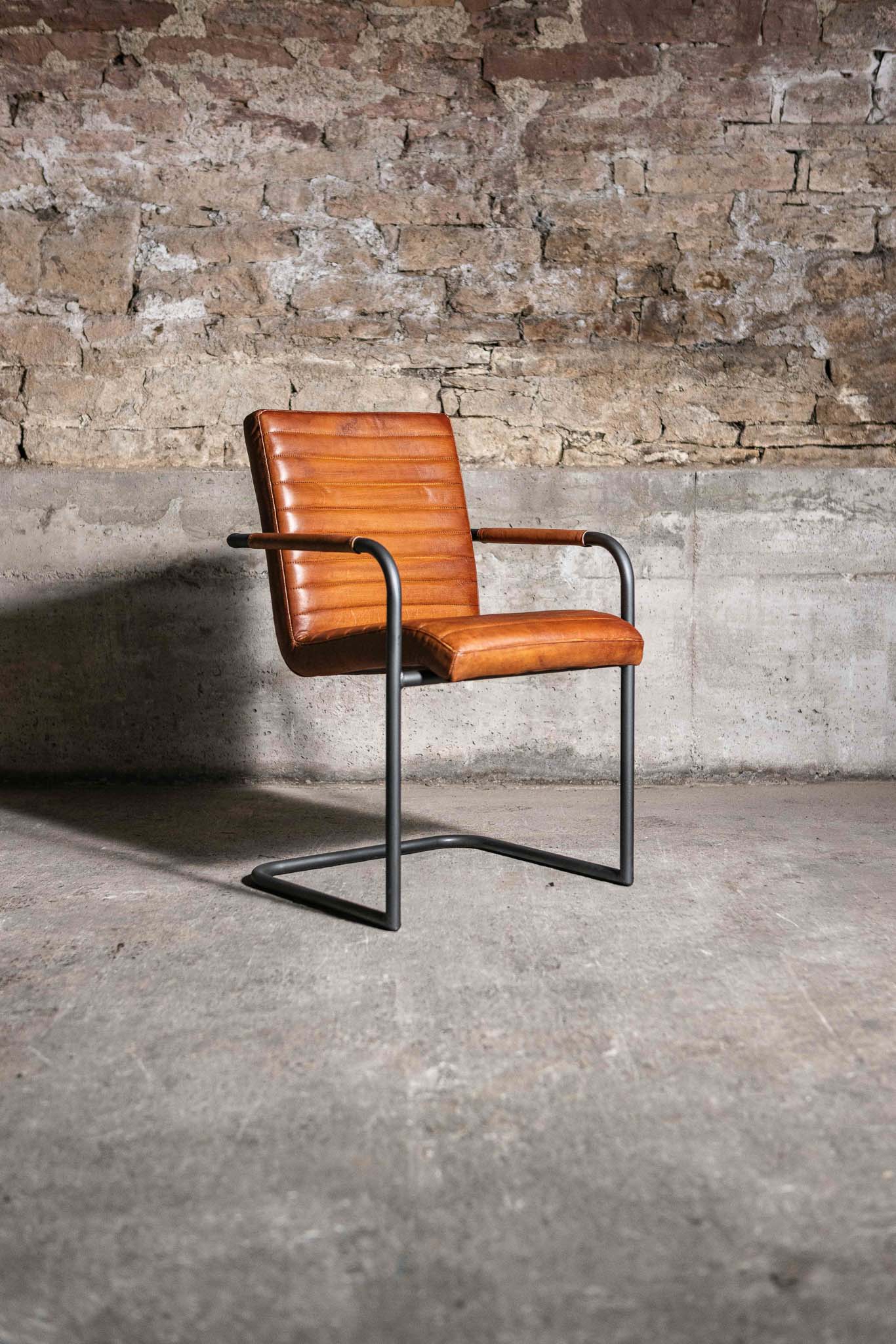
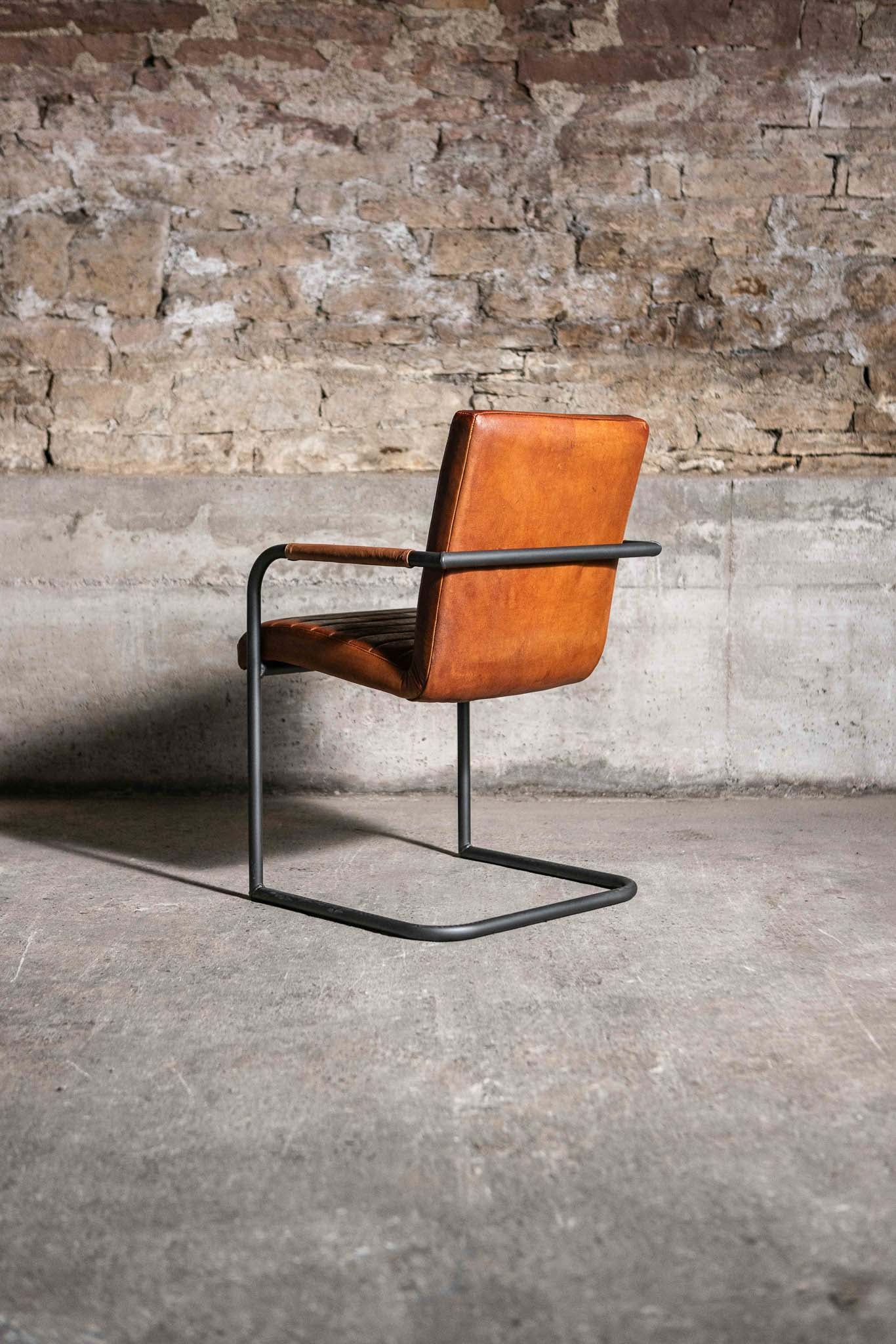
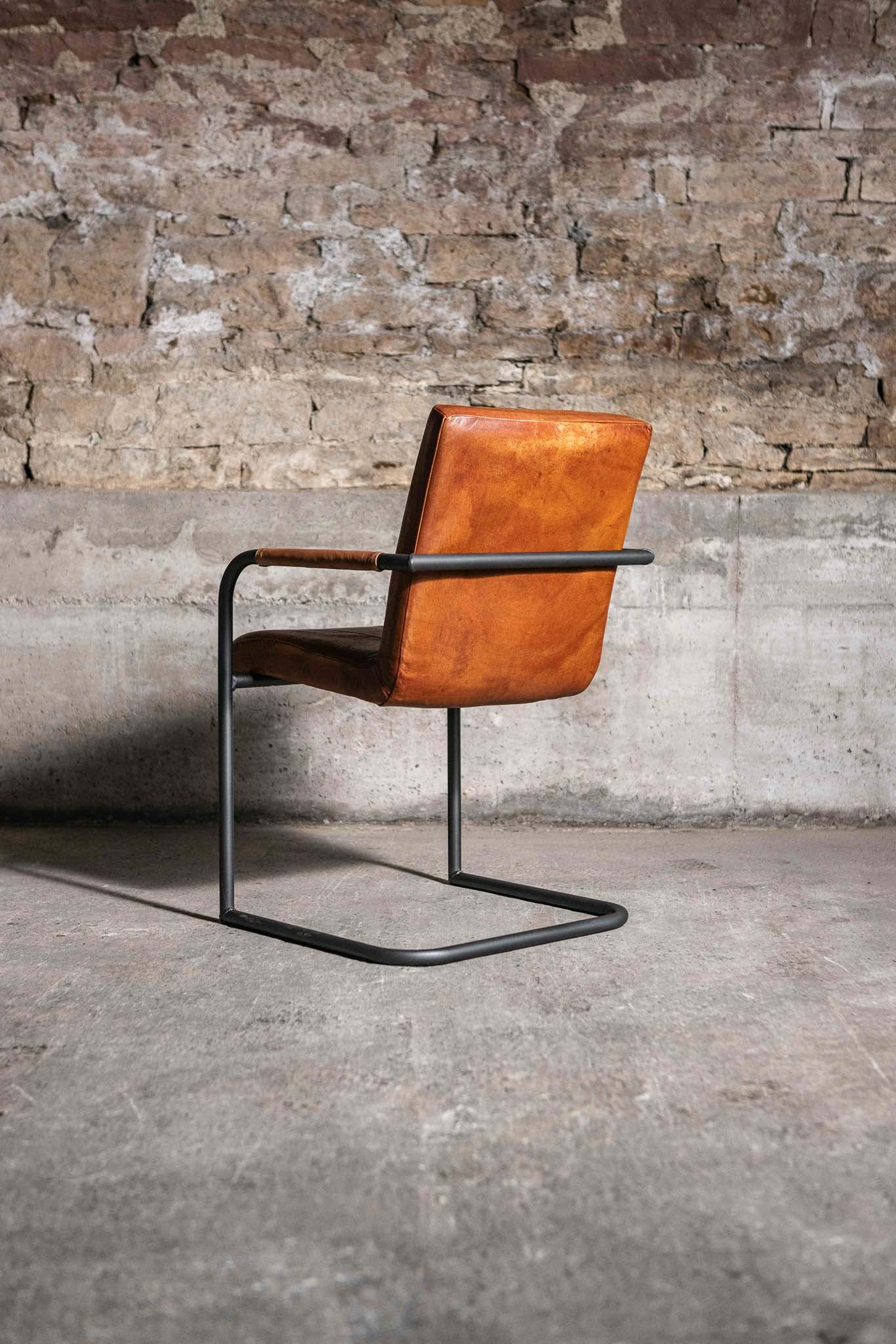
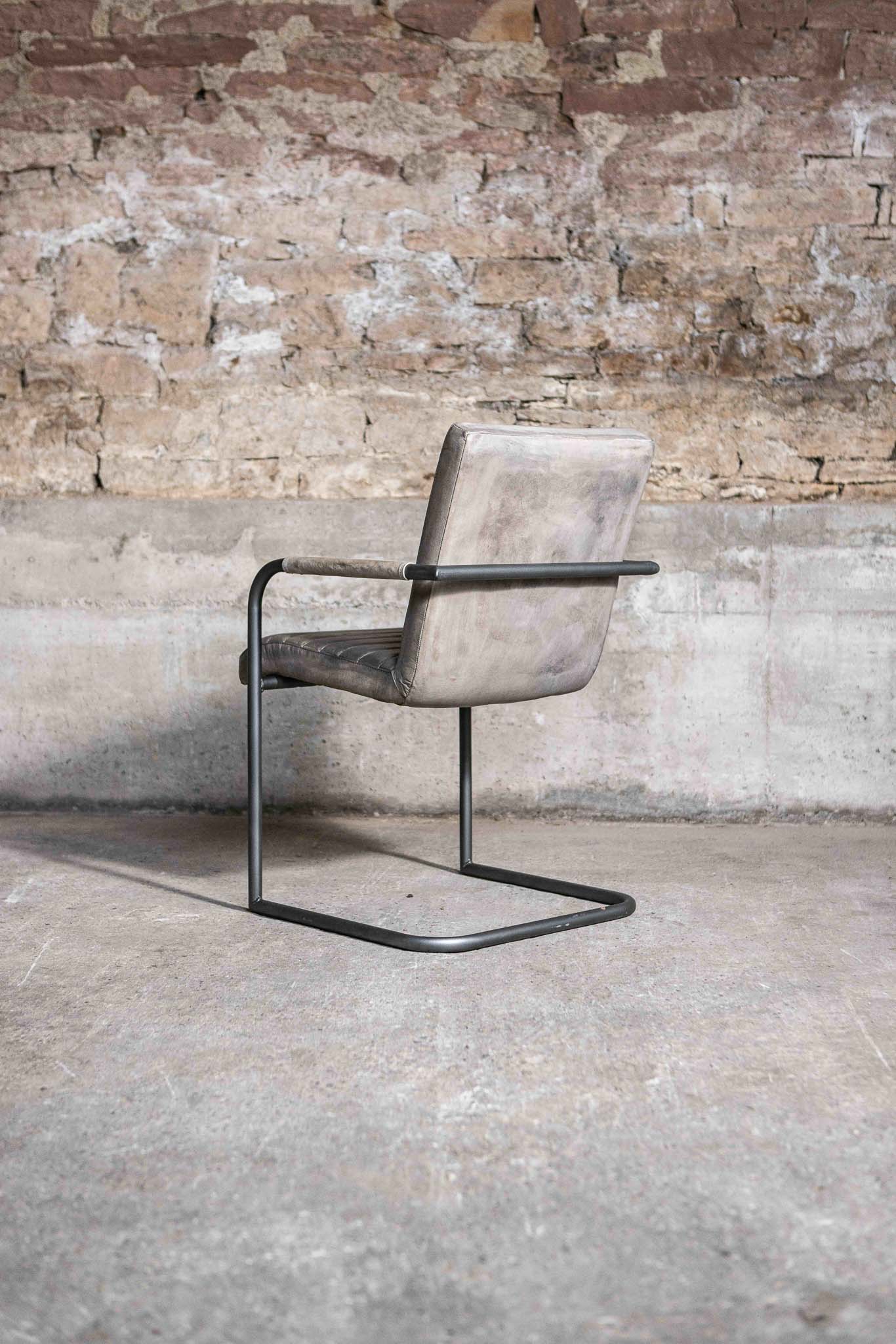
An industrial-style cantilever chair fits perfectly into this picture: a metal frame instead of wooden legs, genuine leather instead of upholstery fabric, and a sled base instead of a four-legged frame. The spring-loaded cantilever mechanism—a legacy of the Bauhaus since 1928—meets the raw material language of industrial design.
Industrial Cantilever Chair—the combination that defines the look
What makes a cantilever chair an “industrial” chair? Essentially three things:
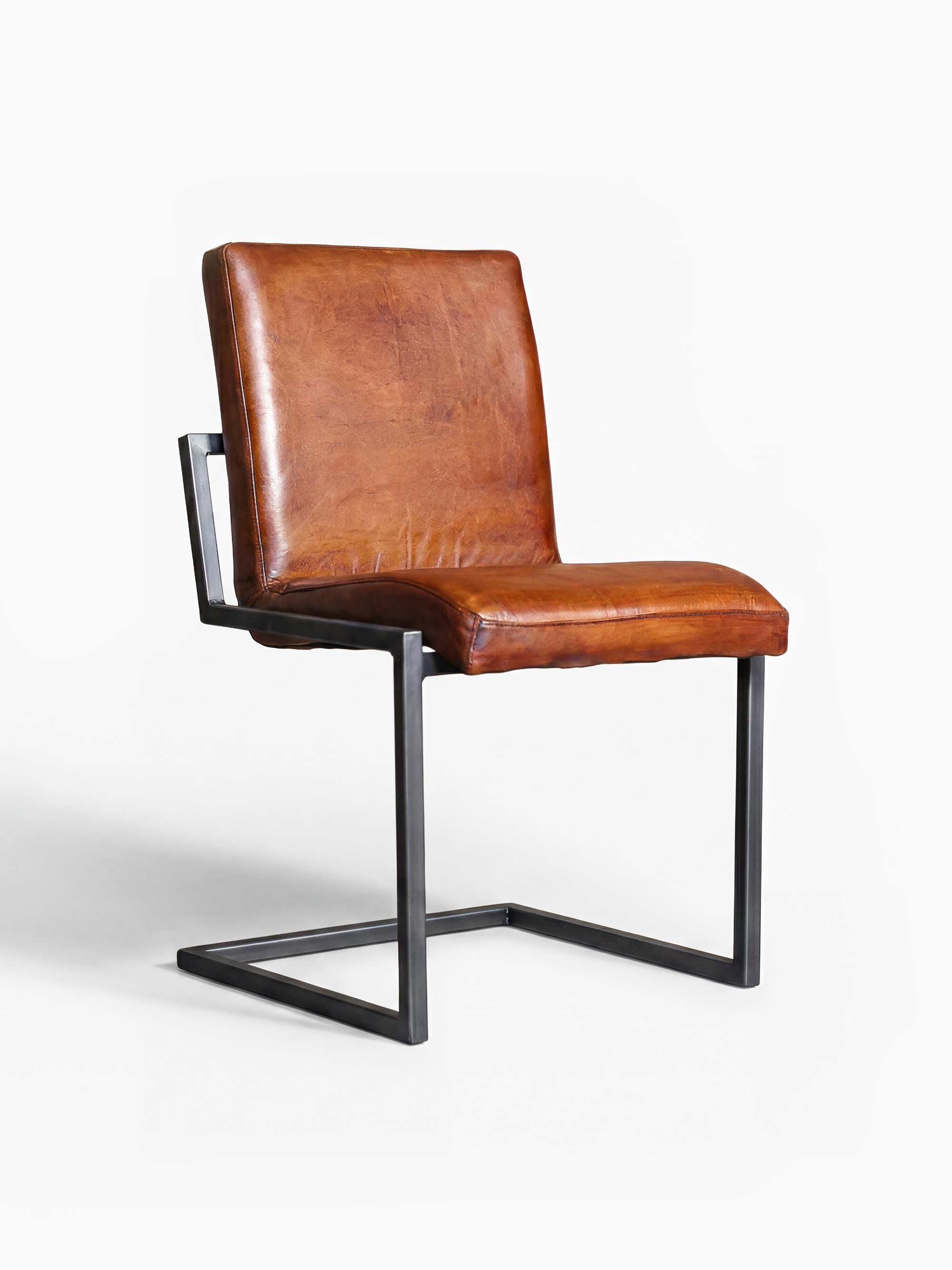
- The frame is made of metal, typically black, matte powder-coated steel tubing or square tubing. No chrome, no high-gloss finish. The matte surface evokes industrial machinery, not design galleries.
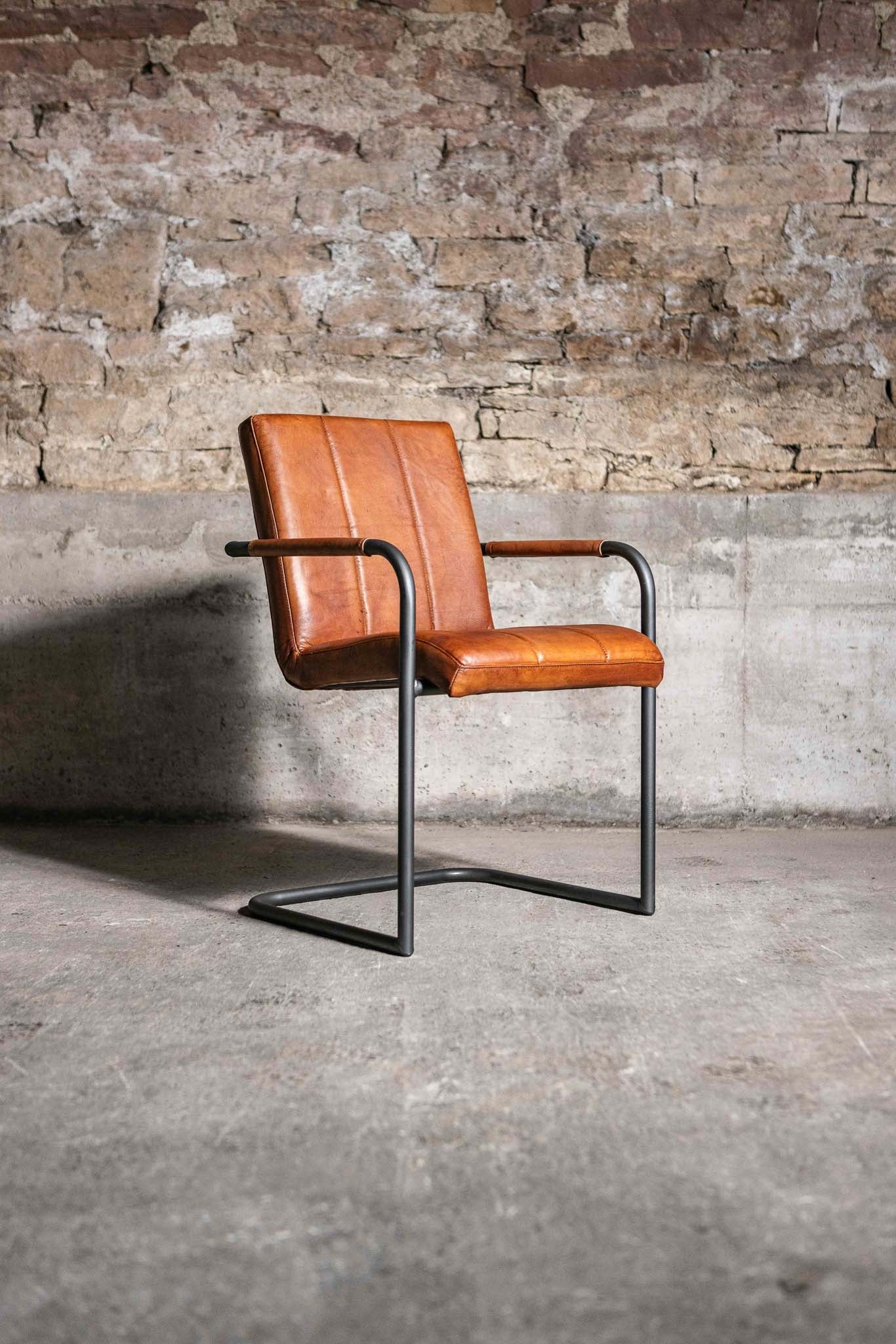
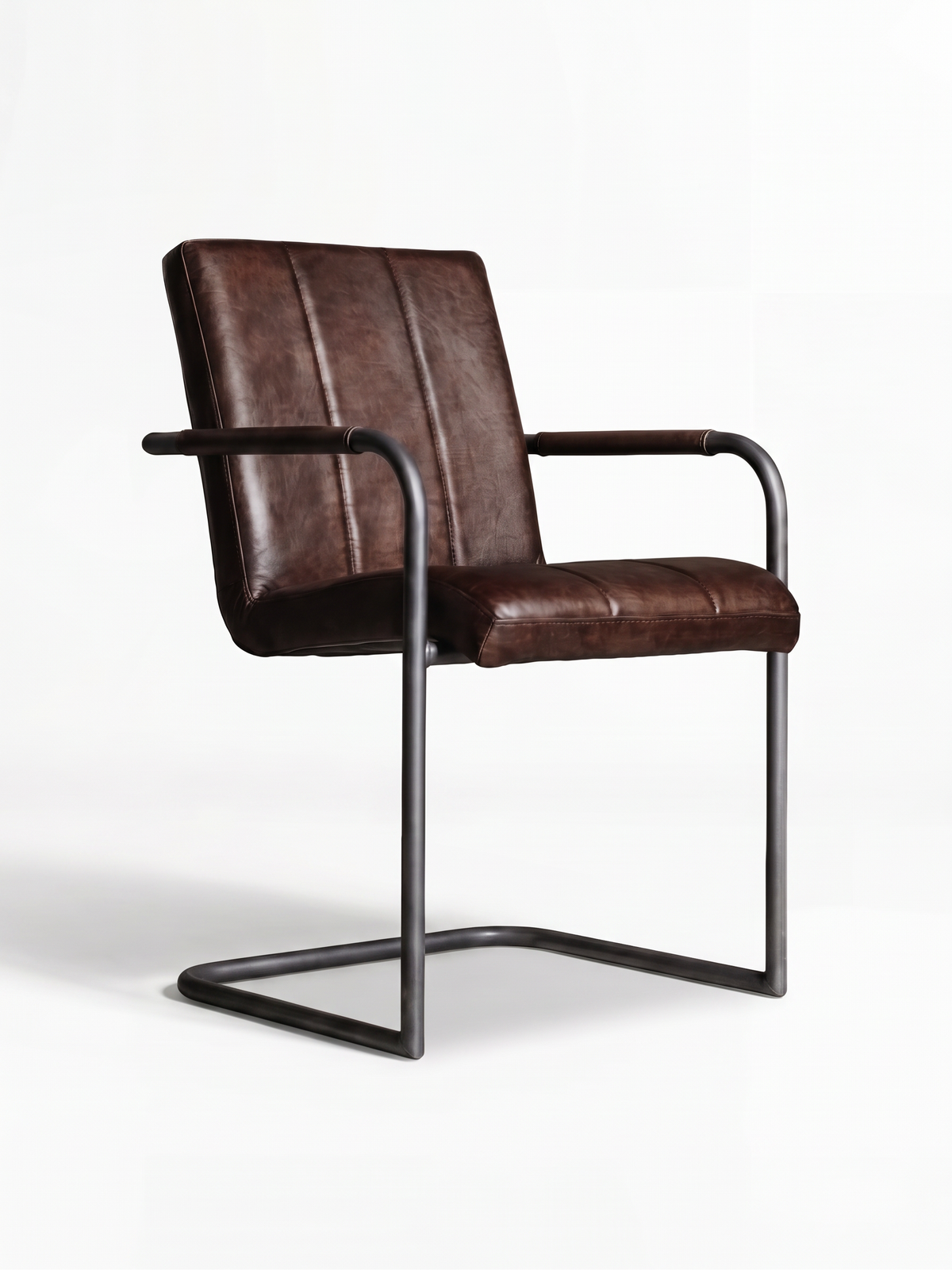
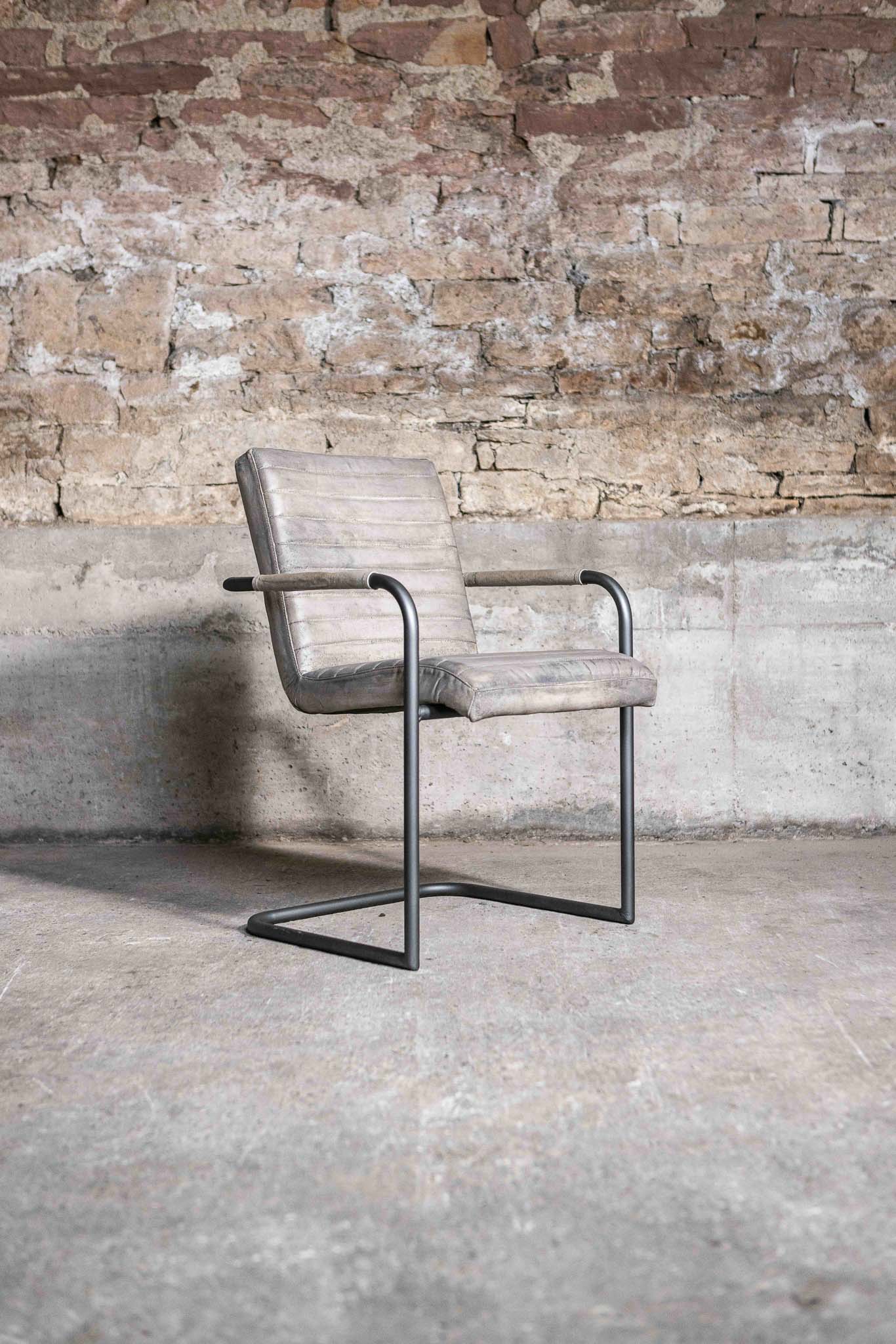
- The upholstery is made of leather or at least a leather-like material in muted earth tones. Cognac, brown, dark brown, anthracite—colors that evoke workshops, warehouses, and tools. Bright white or pastel shades would be a stylistic mismatch.
- Size matters. An industrial cantilever chair should make a statement. Wide armrests, visible upholstery, and a frame that isn’t hidden—but is part of the look.
Industrial Leather Cantilever Chair – Buffalo Leather as an Authentic Industrial Material
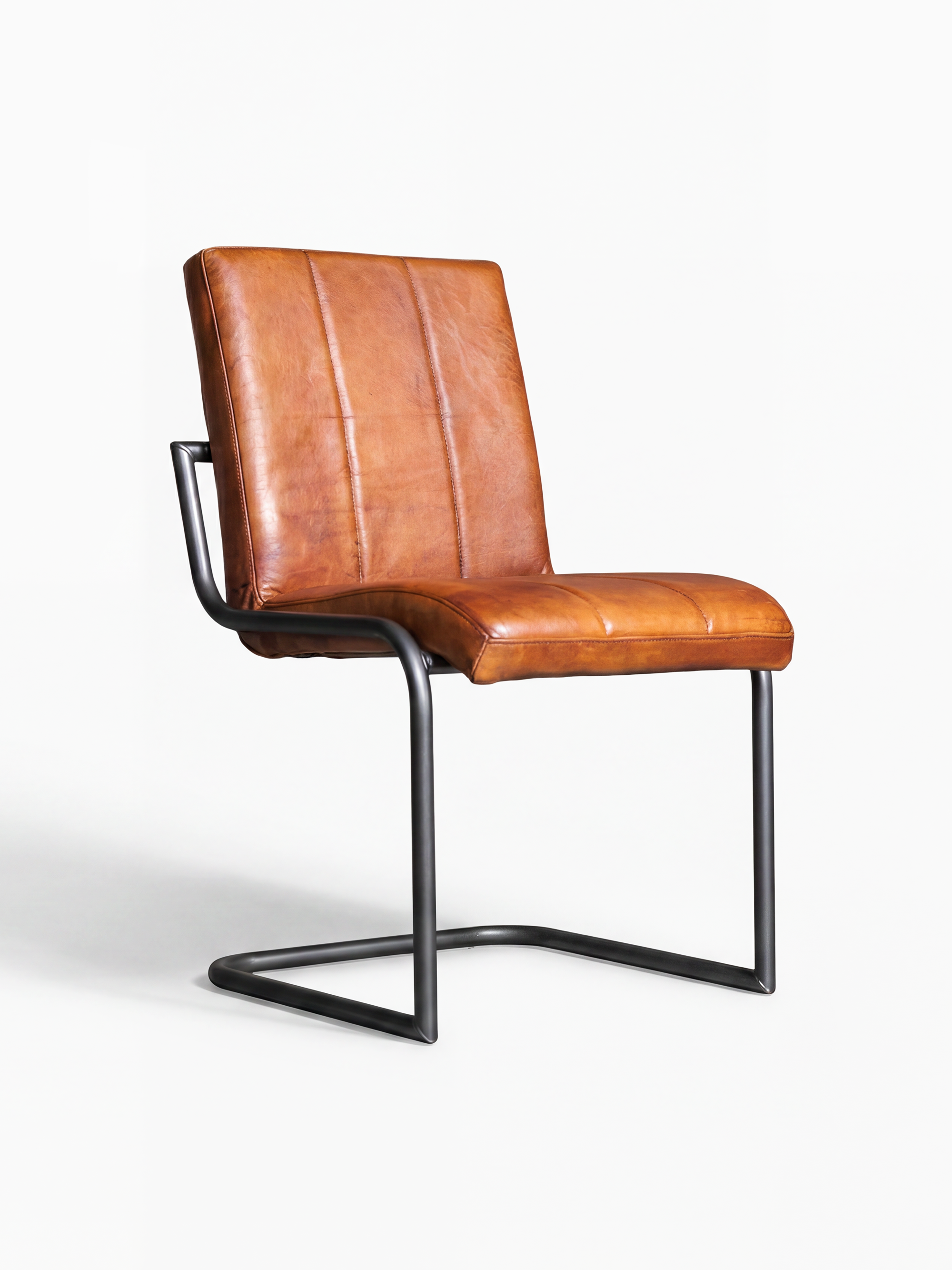
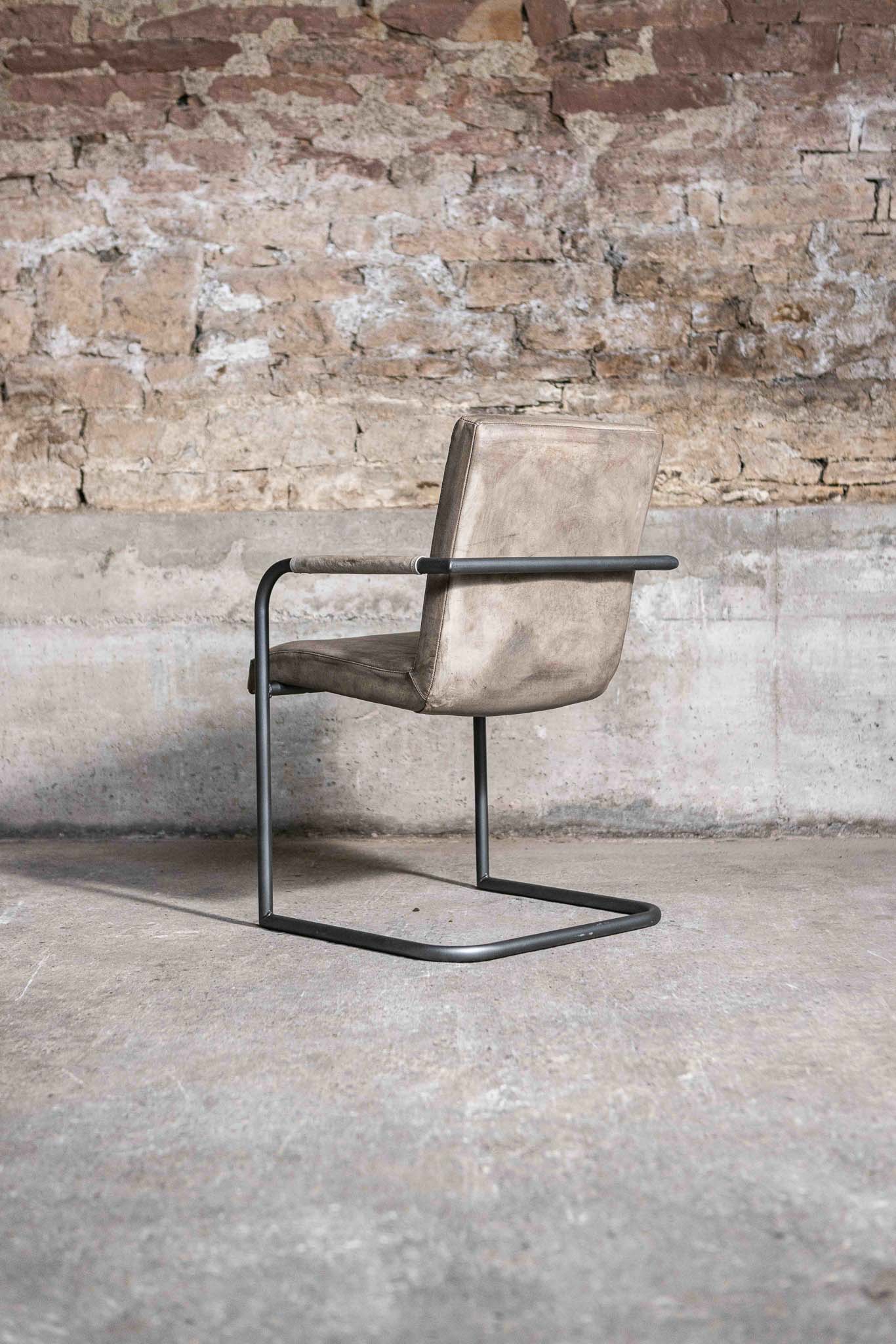
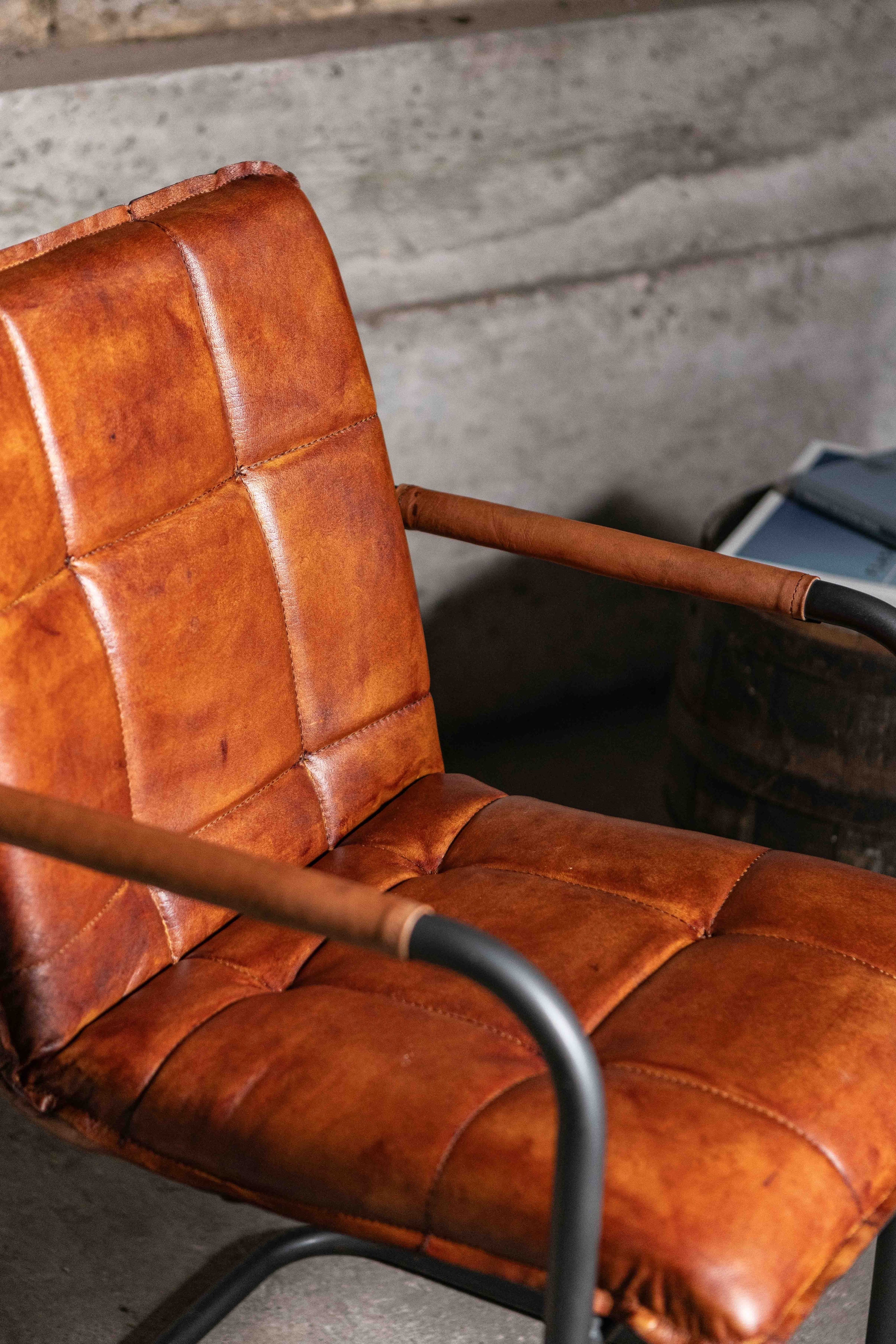
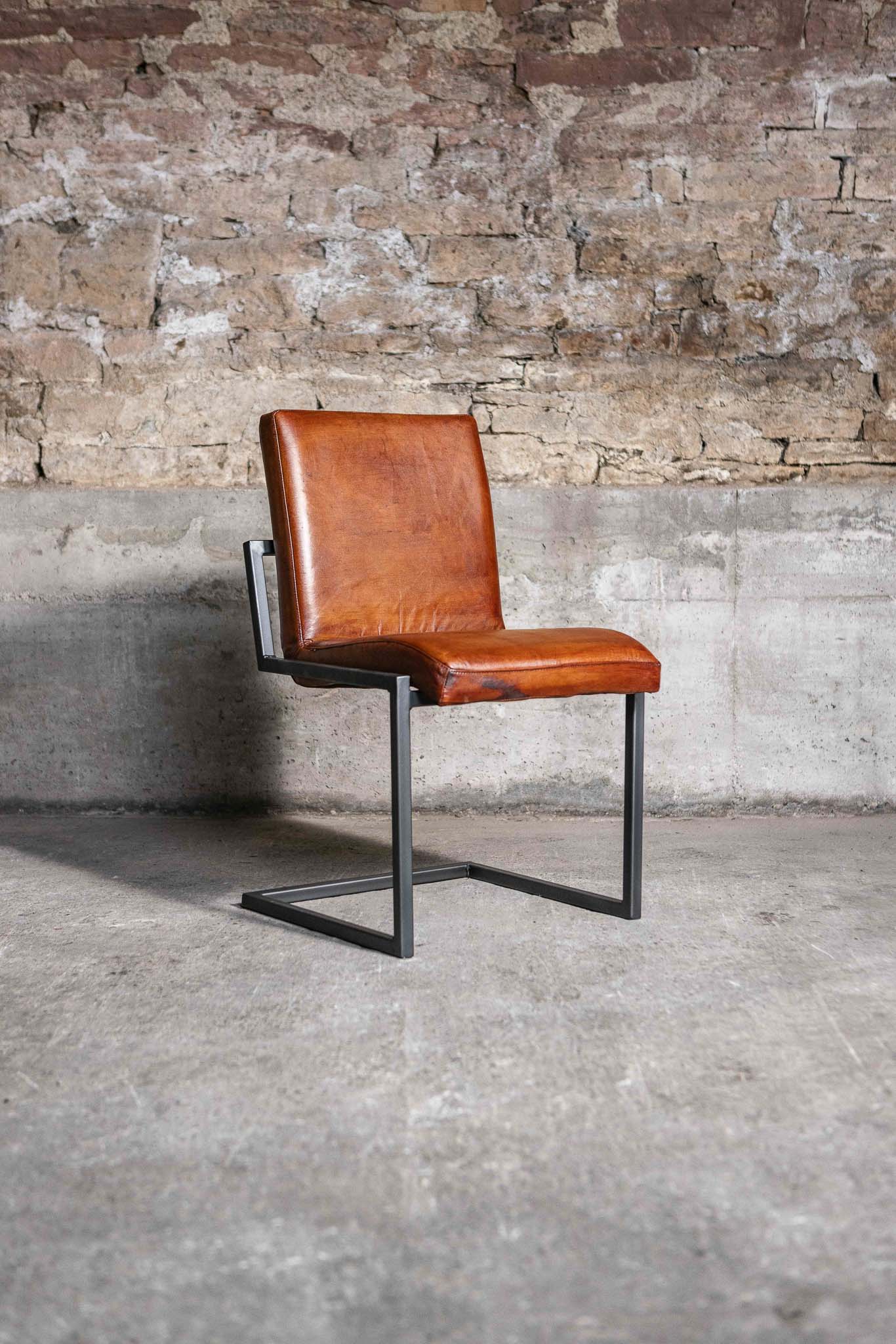
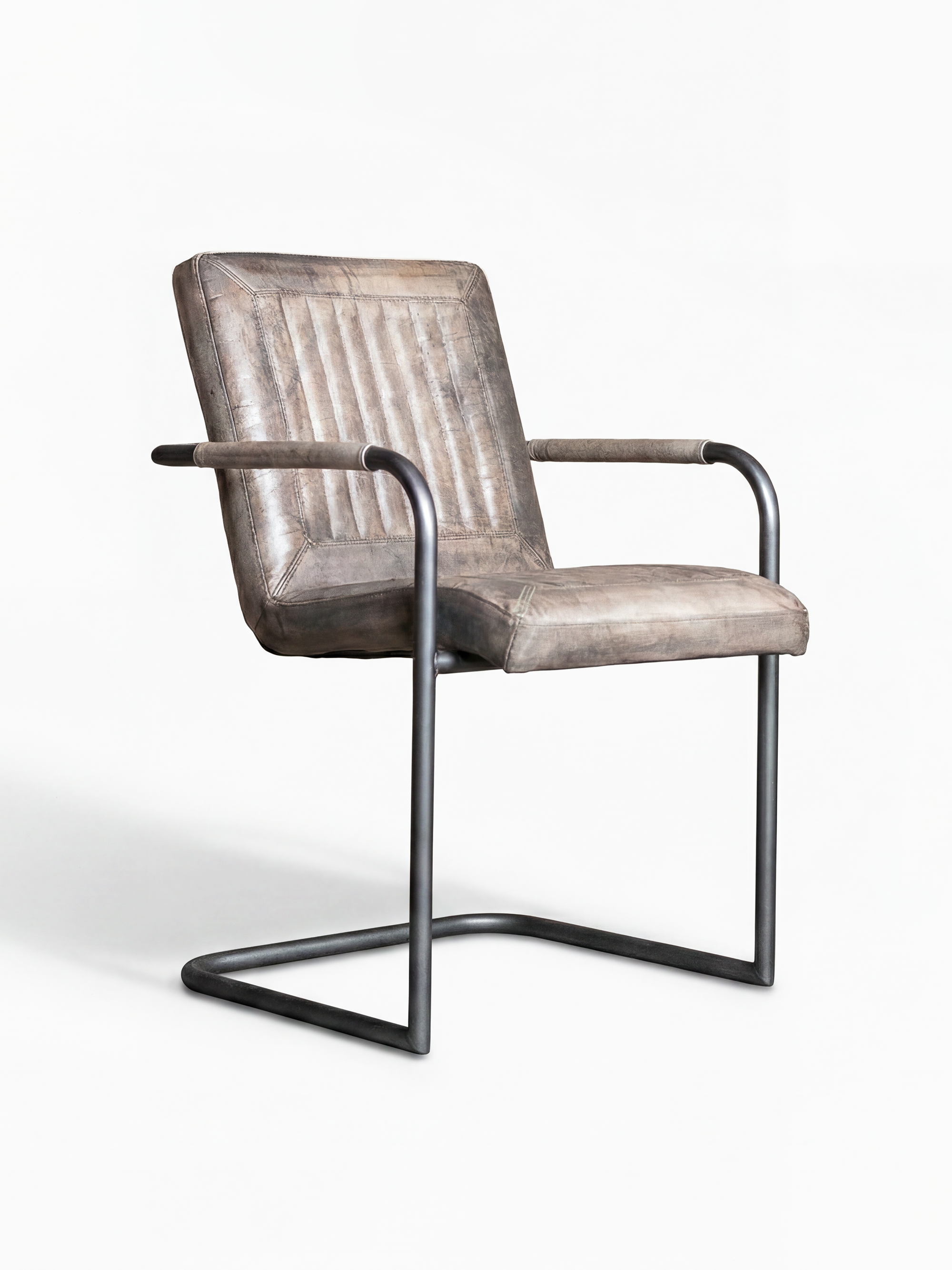
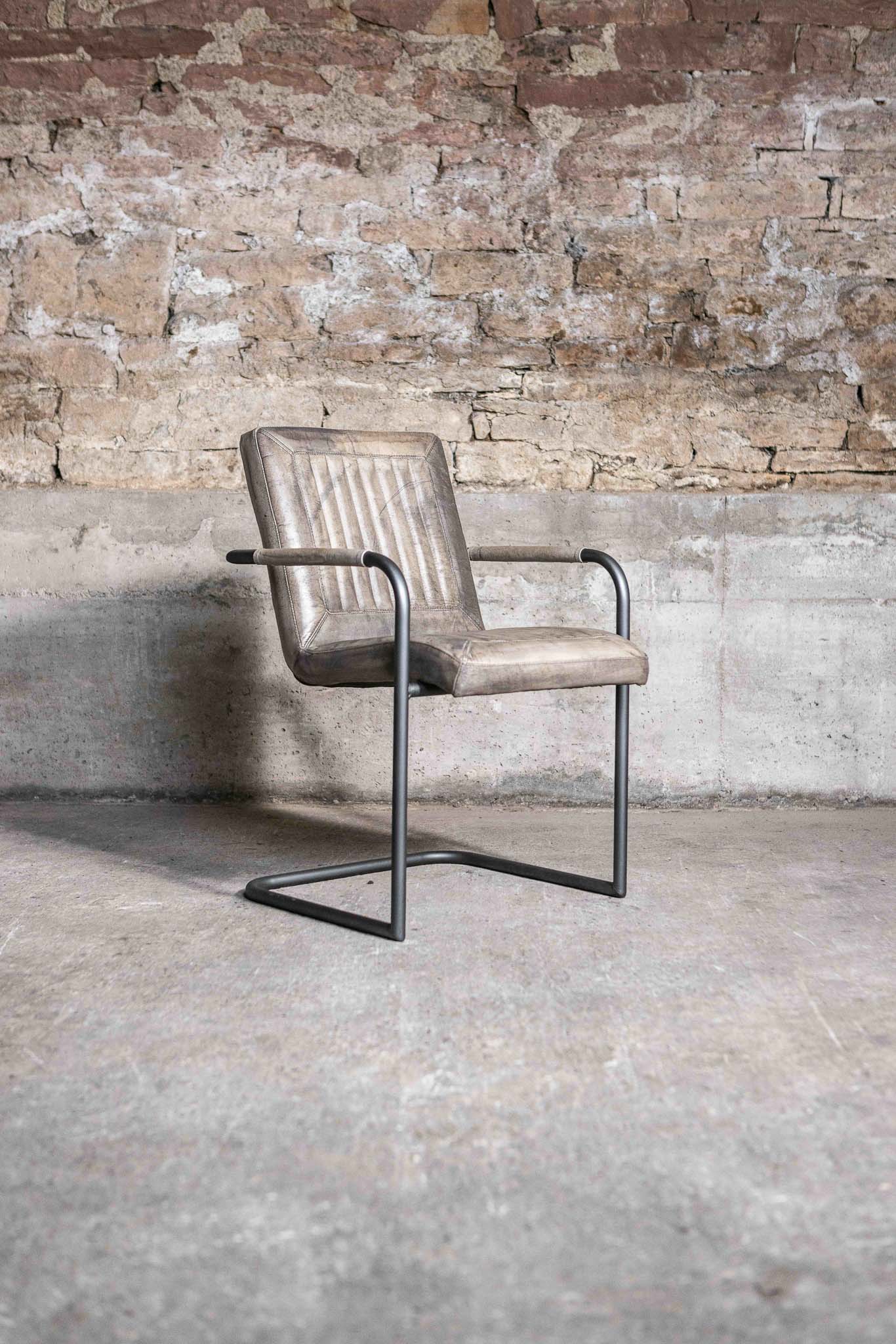
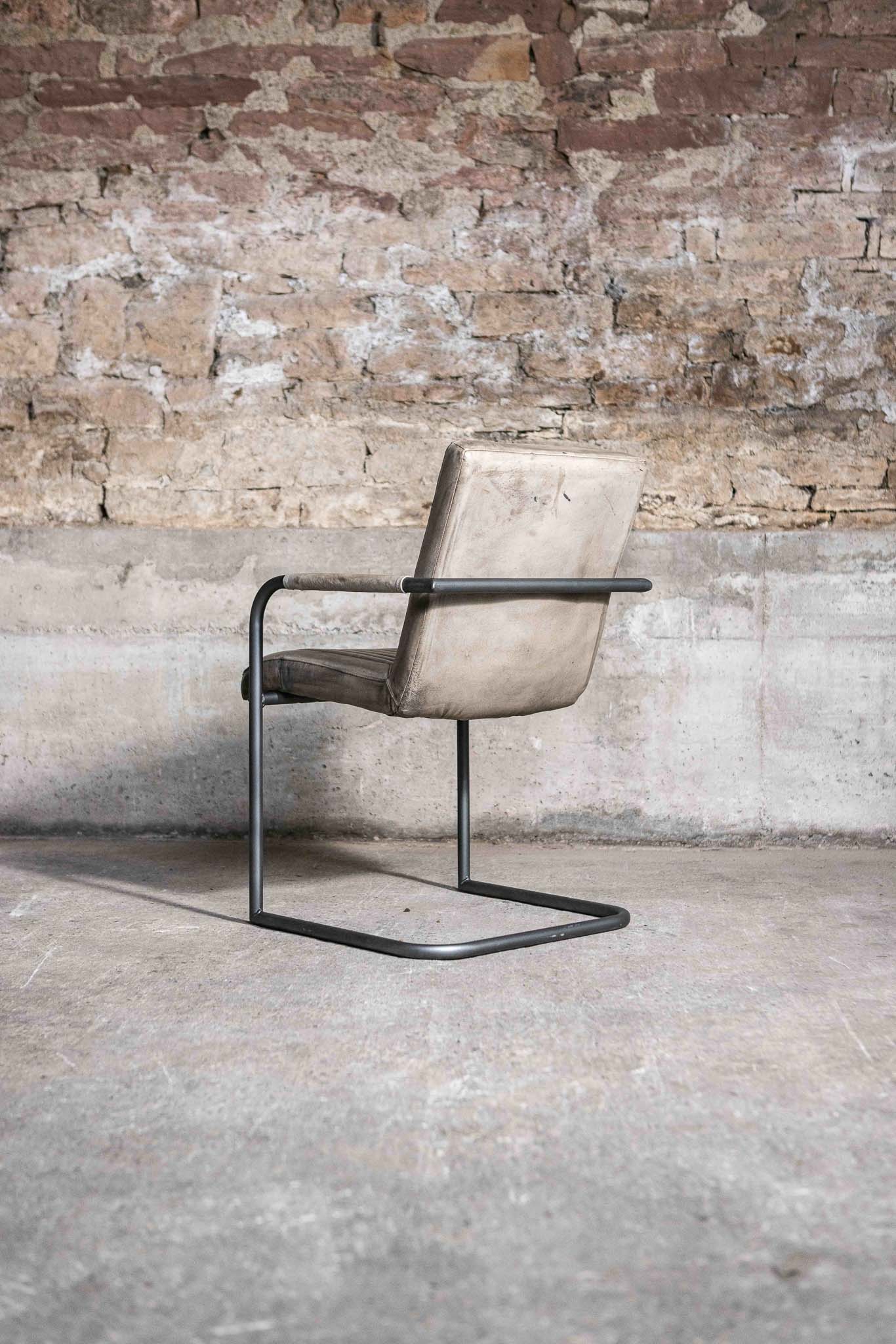
Vintage Leather Cantilever Chair made of buffalo leather
There’s a reason why buffalo leather and industrial style go so well together: buffalo leather does the same thing that good industrial furniture does—it gets better with age.
Buffalo leather is 3–4 mm thick, significantly thicker than the cowhide used in most furniture (which is typically 1.5–2 mm thick). This thickness isn’t an aesthetic choice, but a physical one: buffalo leather doesn’t warp or tear and retains its shape for decades. Its lifespan is 15–20 years—faux leather and inexpensive cowhide rarely last longer than 3–5 years.
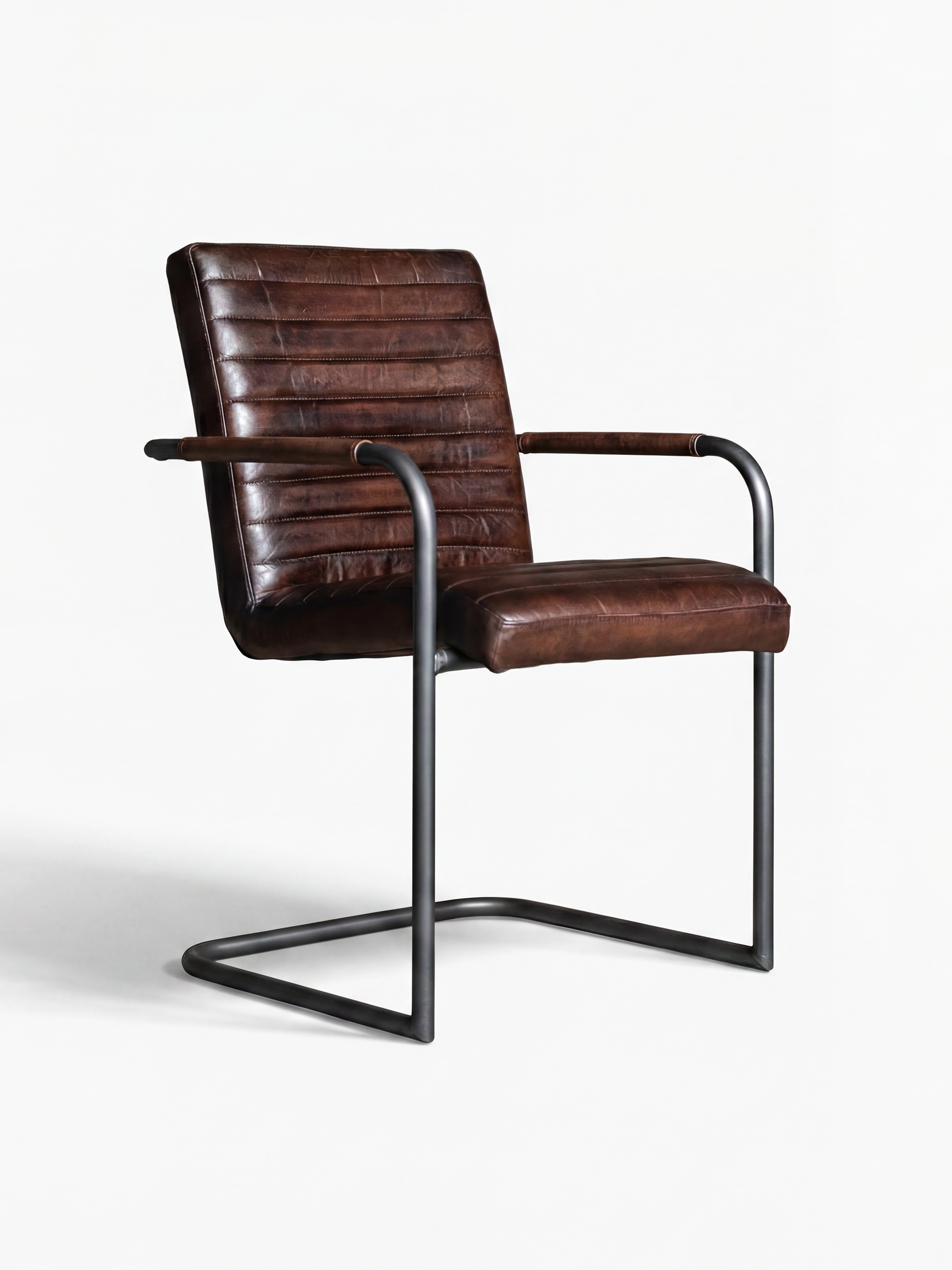
Then there’s the patina. Over time, buffalo leather absorbs oil, light, and friction, developing a unique surface—darker along the edges of the seat, softer in the center, with a matte sheen that no factory can replicate. This process is already familiar with genuine cowhide leather, but it is even more pronounced with buffalo leather: The natural, open-pored structure of buffalo leather absorbs external influences more readily and gives them a more pronounced expression.
This is vintage not as a matter of style, but as a property of the material. The “vintage cantilever leather” look develops naturally on LIVIOR chairs—after a few years of use, no chair looks the same as it did at the beginning. It looks better.
Genuine Leather vs. Faux Leather in Industrial Style—Why the Material Matters
Industrial design is a philosophy of material honesty. Visible weld seams, untreated wood, raw edges—all of this is part of the style because it doesn’t hide what an object is. Faux leather hides that.
Faux leather (PU leather, synthetic leather, eco-leather) looks like leather but is actually a plastic product. It peels, tears at the seams, and smells like chemicals. No material in the industrial style ages as unsightly as faux leather—because faux leather doesn’t age; it disintegrates.
Genuine leather—and buffalo leather in particular—does the opposite: it changes, but it doesn’t deteriorate in the process. That’s the difference between a piece of furniture you throw away and one you pass down through generations.
Industrial Dining Chairs & Cantilever Chairs—Uses in Loft-Style Interiors
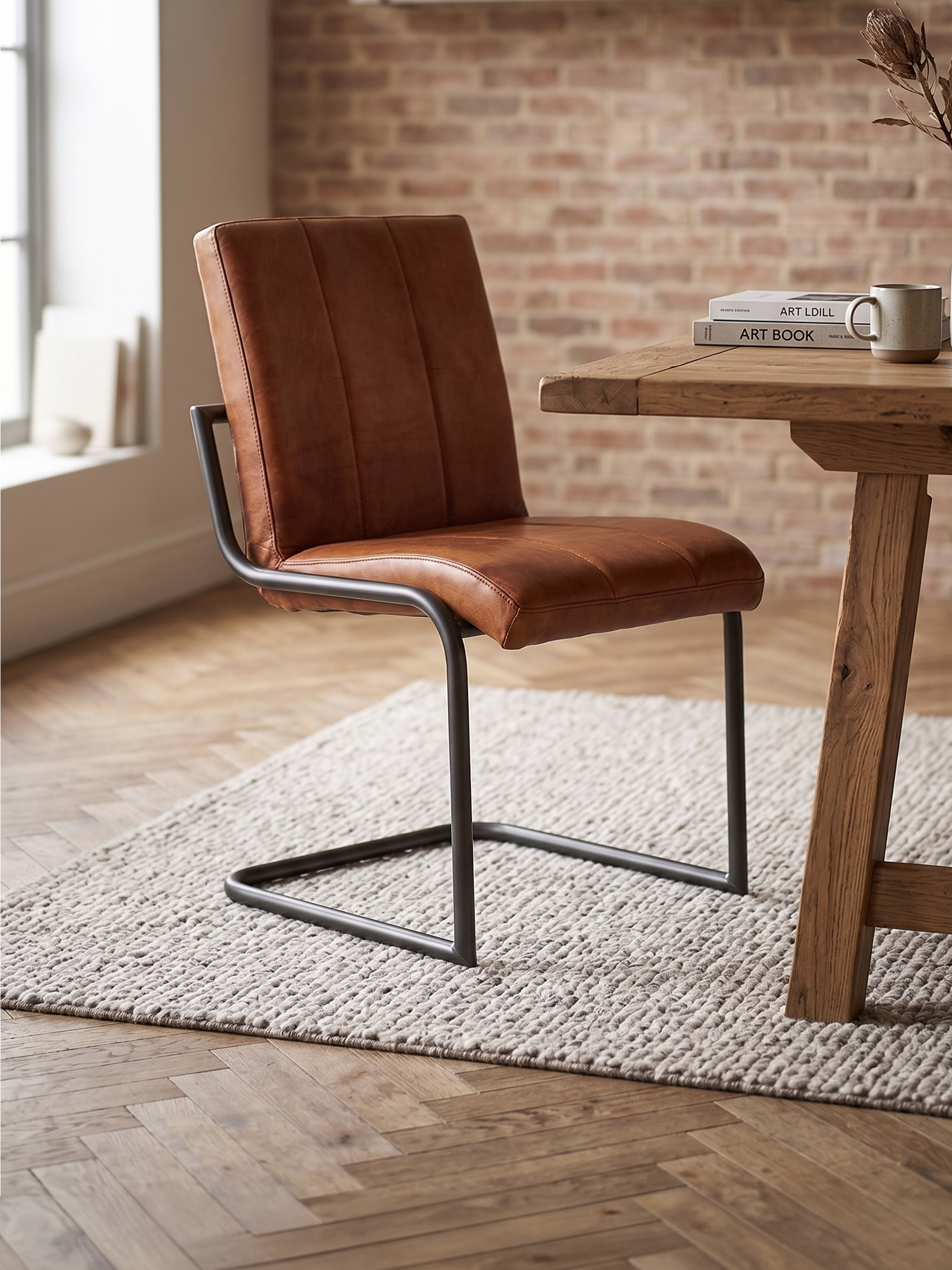
Industrial Dining Chair Cantilever – at a Wood or Metal Dining Table
The industrial style pairs particularly well with two types of dining tables: solid wood and black metal frames. Both work for the same reason—they’re materials that aren’t afraid of showing signs of wear.
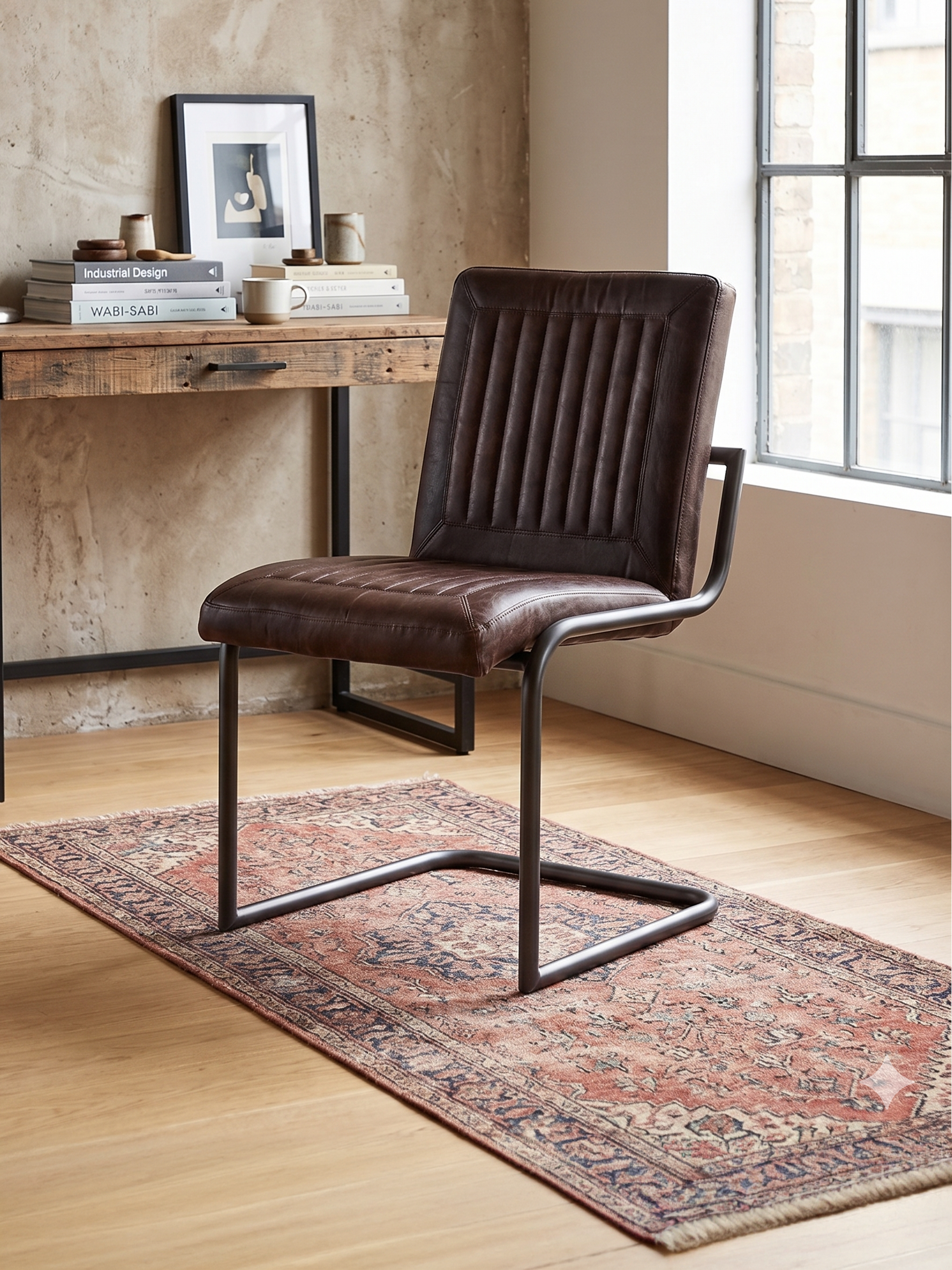
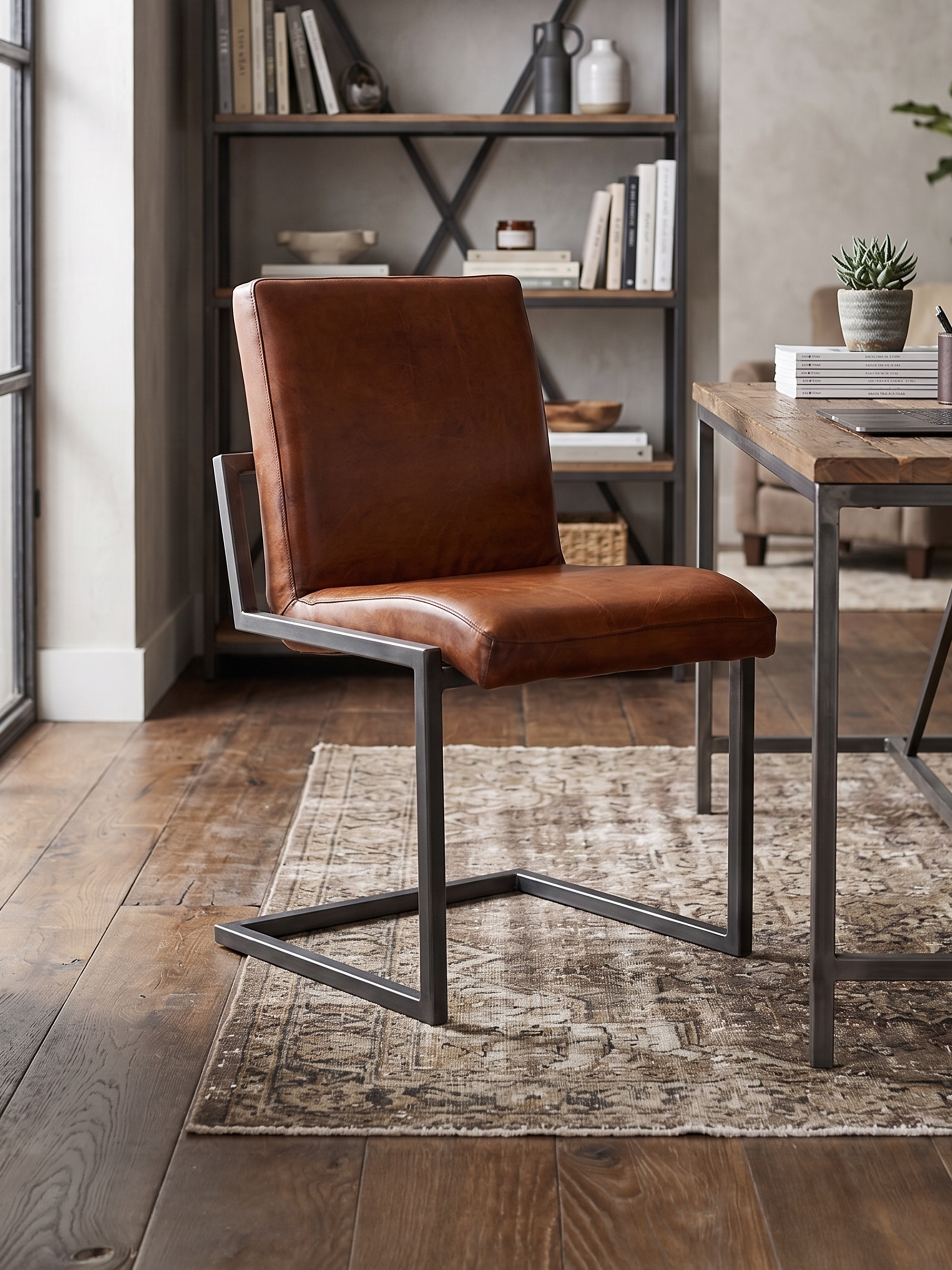
A solid wood table made of oak or walnut combined with LIVIOR cantilever chairs in buffalo leather creates a classic industrial look: warm, grounded, and durable. The contrast between the natural wood and the chair’s black metal frame creates exactly the tension that defines this style.
A dining table with a black metal frame—for example, with a concrete or raw wood top—intensifies the industrial character. LIVIOR models in brown or light gray work particularly well here, as they add warmth to the room without softening the overall raw impression.
Note: LIVIOR cantilever chairs have a seat height of 50 cm and are therefore suitable for dining tables with a height of 74 cm or more—the standard for dining tables in Germany.
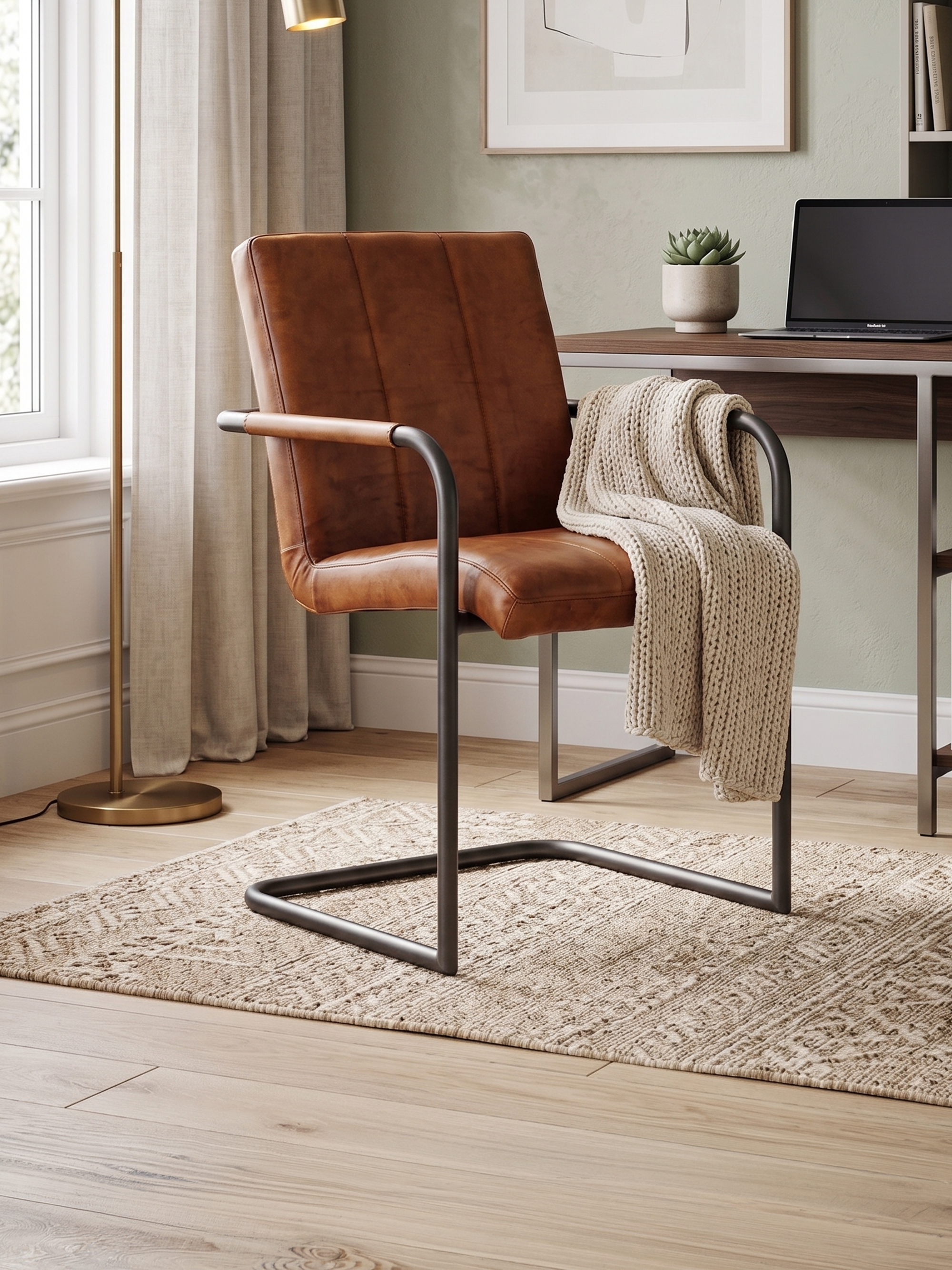
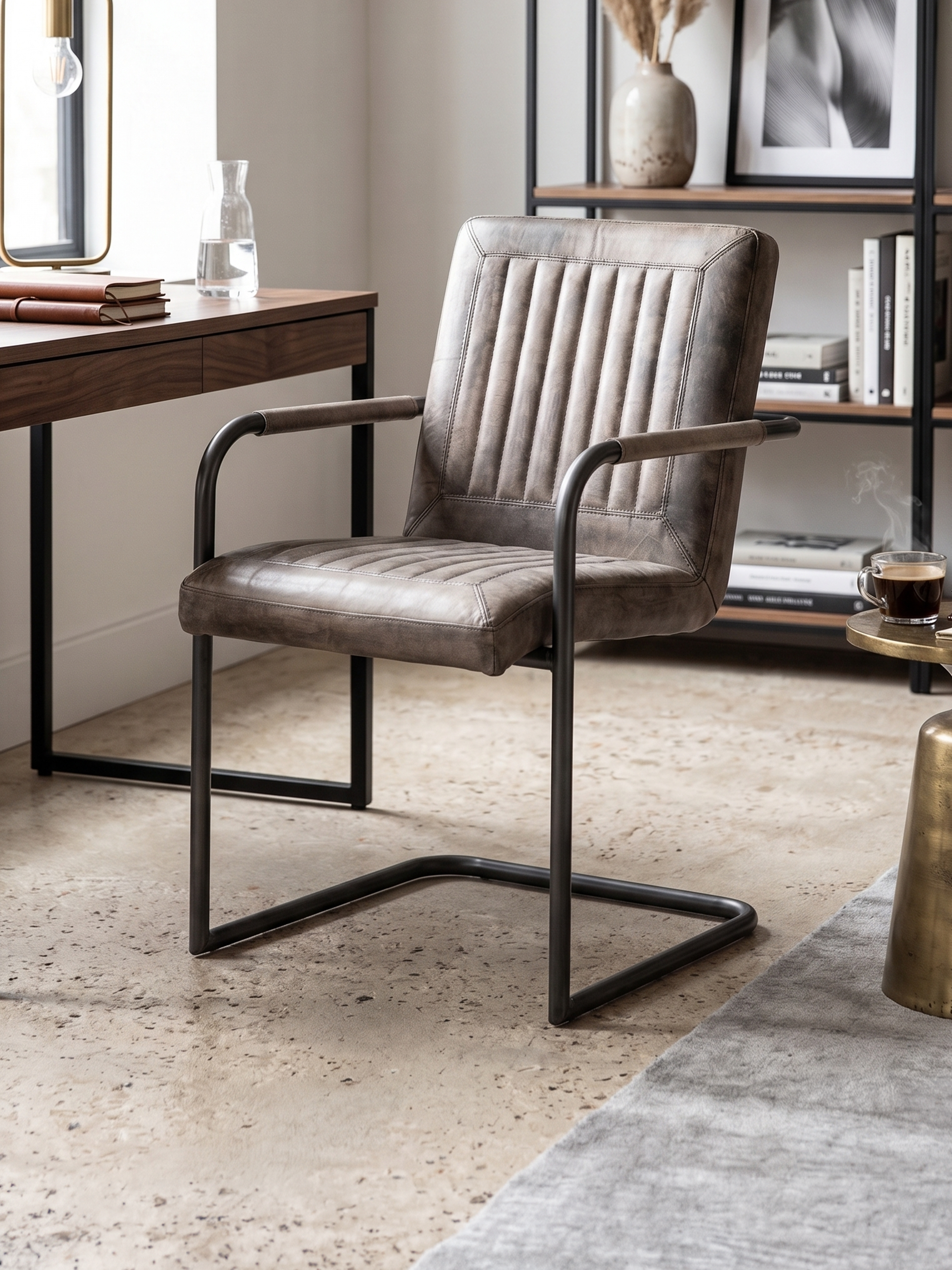
Industrial Cantilever Chairs in the Home Office and Creative Office
The loft style has long since made its way into the home office. Anyone who works in a space that exudes something—ideas, character, attitude—won’t opt for a black office chair with nylon casters. They’ll choose a cantilever chair.
The cantilever chair’s suspension mechanism—the springy sled base inherited from the Bauhaus tradition—makes it comfortable even during prolonged sitting: It yields slightly under body weight, cushions movements, and thus reduces static strain on the spine. For conference rooms, meeting areas, and creative work environments, this is a real advantage over a rigid chair.
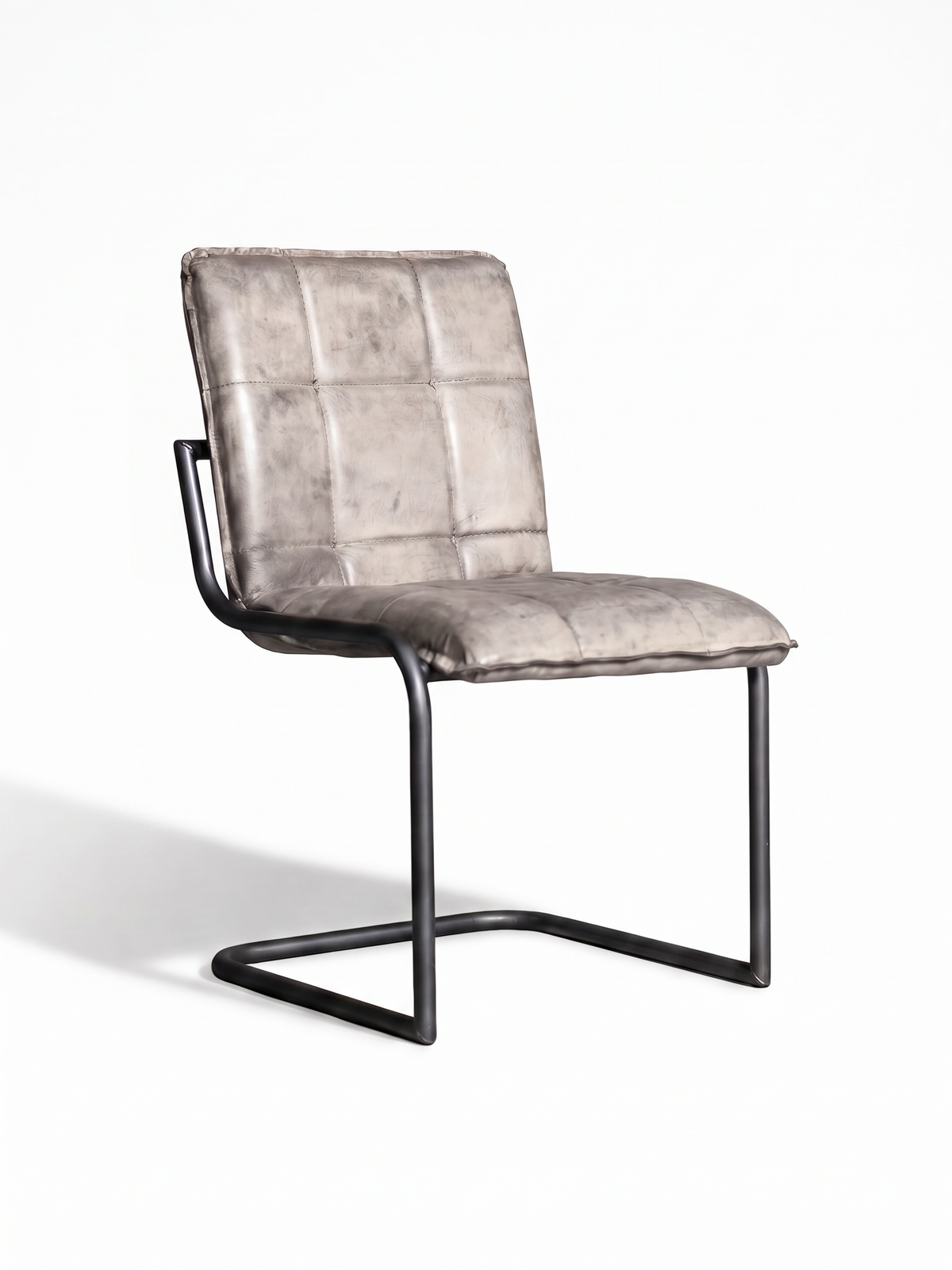
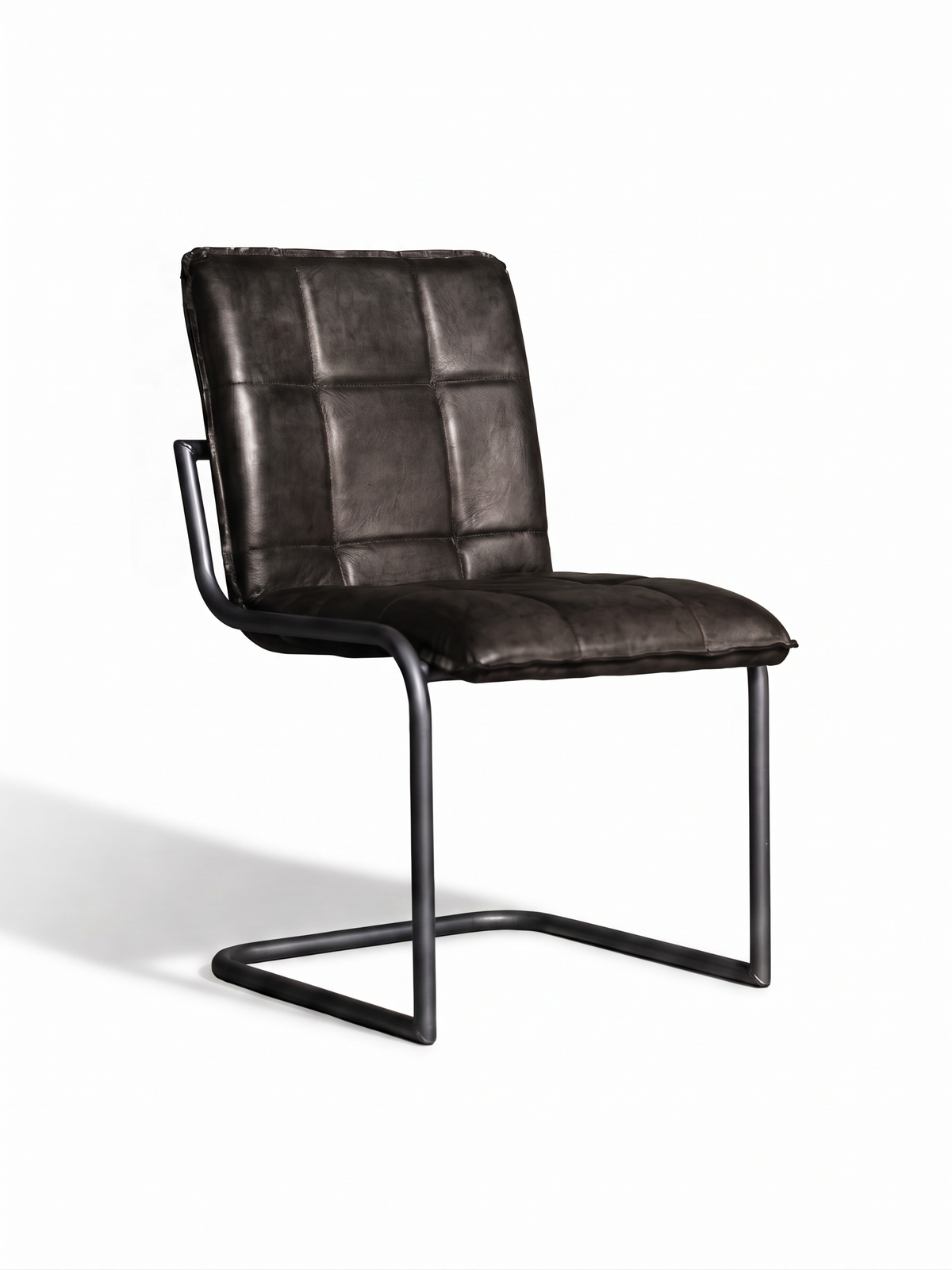
LIVIOR models with armrests (GOODMAN, FARGO, COOPER) are particularly well-suited for desk settings. Models without armrests (SINATRA, JASPAR, CADI) fit under lower tables and can be moved closer to the edge of the table.
Industrial Cantilever Chairs in the Hospitality Industry—Loft-Style Bars, Restaurants, and Cafés
Industrial furniture has been standard in the hospitality industry for years. Loft-style bars, cafés, and restaurants rely on raw materials, exposed fixtures, and authentic decor—and buffalo leather cantilever chairs fit this aesthetic better than almost any other type of chair.
Buffalo leather is not only an aesthetic choice but also a practical one. The surface is dense, easy to wipe clean, and resistant to moisture and everyday wear and tear. Apply a grease-based polish once a year—and the chair will still look great after five years. With synthetic leather, it would have peeled off after three years of use in a restaurant setting.
Buying Industrial Cantilever Chairs—Choosing the Right Frame, Material, and Color
Black metal frame vs. chrome—which frame suits the industrial style?
In the industrial style, black is the right frame color. Chrome or brushed stainless steel are materials associated with Bauhaus design and the mid-century style—clean, cool, elegant. That’s a different look.
Black metal—usually powder-coated steel tubing—looks heavier, more earthy, more industrial. The matte finish doesn’t reflect light; it absorbs it. This fits the industrial style, which deliberately avoids shine.
All LIVIOR models feature a black powder-coated steel frame. There is no chrome version, and that is a deliberate choice: LIVIOR cantilever chairs are meant to look industrial, not like design classics from the Bauhaus Museum.
Technically, powder-coated steel is also more durable than chrome: no tarnished spots, no shiny scratches. Moisture doesn’t damage it. That, too, is industrial: not a decorative surface, but one that lasts.
Industrial cantilever chairs with or without armrests—a difference in the industrial look
Both versions are possible in the industrial style—but they convey different messages.
With armrests, an industrial cantilever chair appears more solid, calmer, and more stately. It takes up more space and has a stronger presence. At the dining table, it creates distance between seats—which is an advantage with wide tables but impractical with narrow benches. In the office or in conference rooms, the armrests are a clear benefit in terms of comfort.
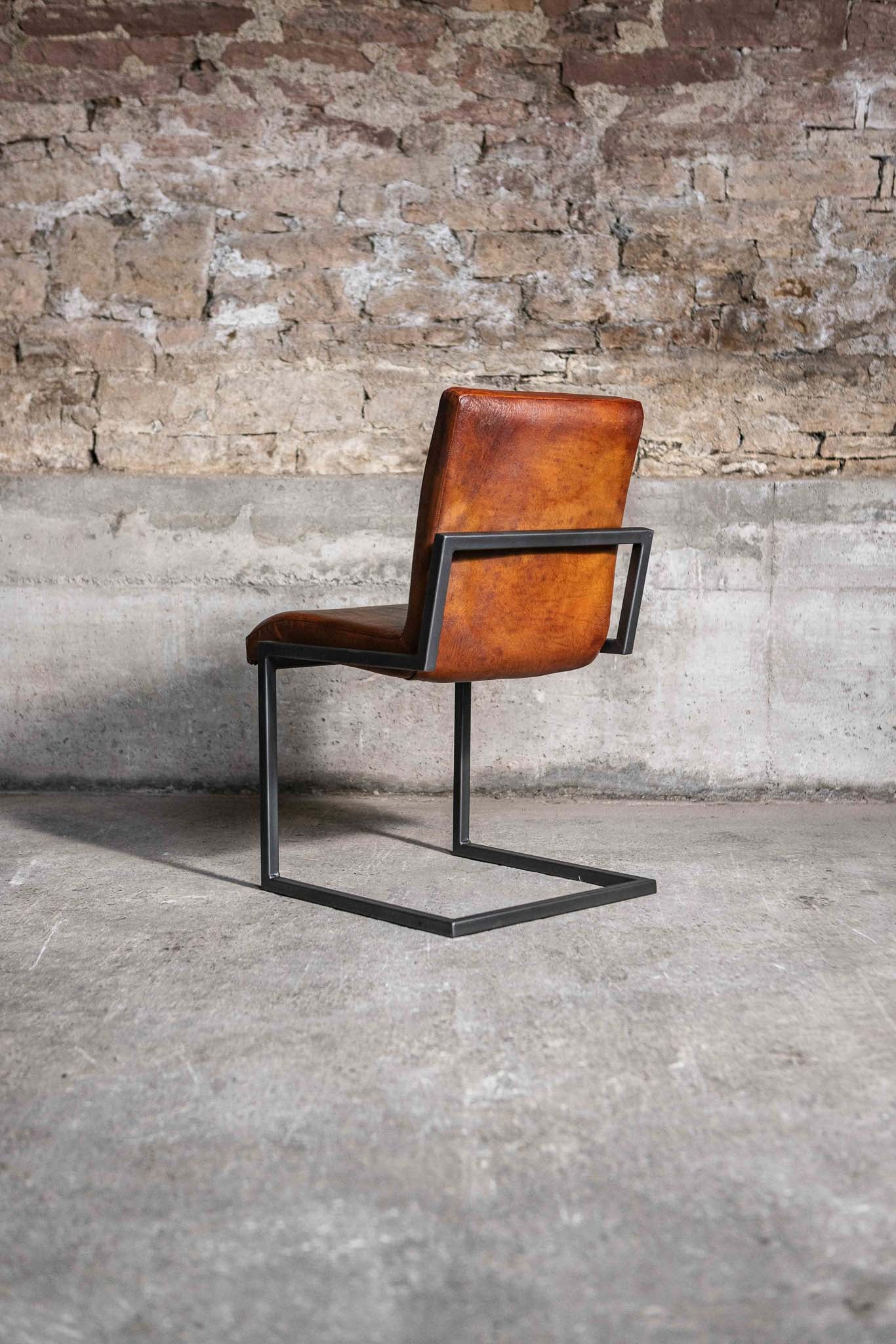
Without armrests, the industrial cantilever chair is sleeker, cleaner, and closer to the Bauhaus aesthetic. It fits at narrower tables, is easier to move, and appears lighter in the room—even though the materials (buffalo leather and metal) are heavy in and of themselves.
Colors in the Industrial Style—Cognac, Brown, Gray, and Black
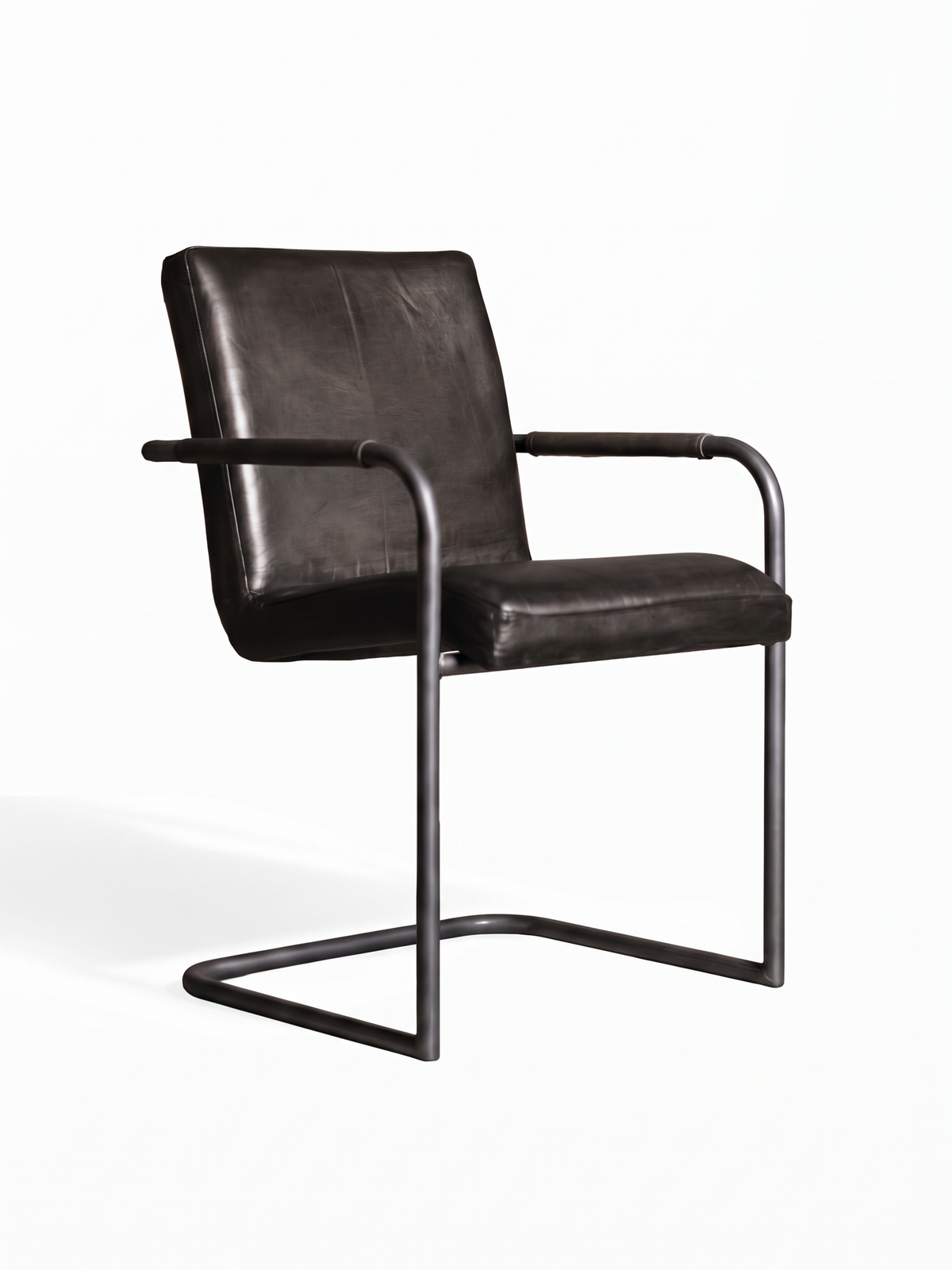
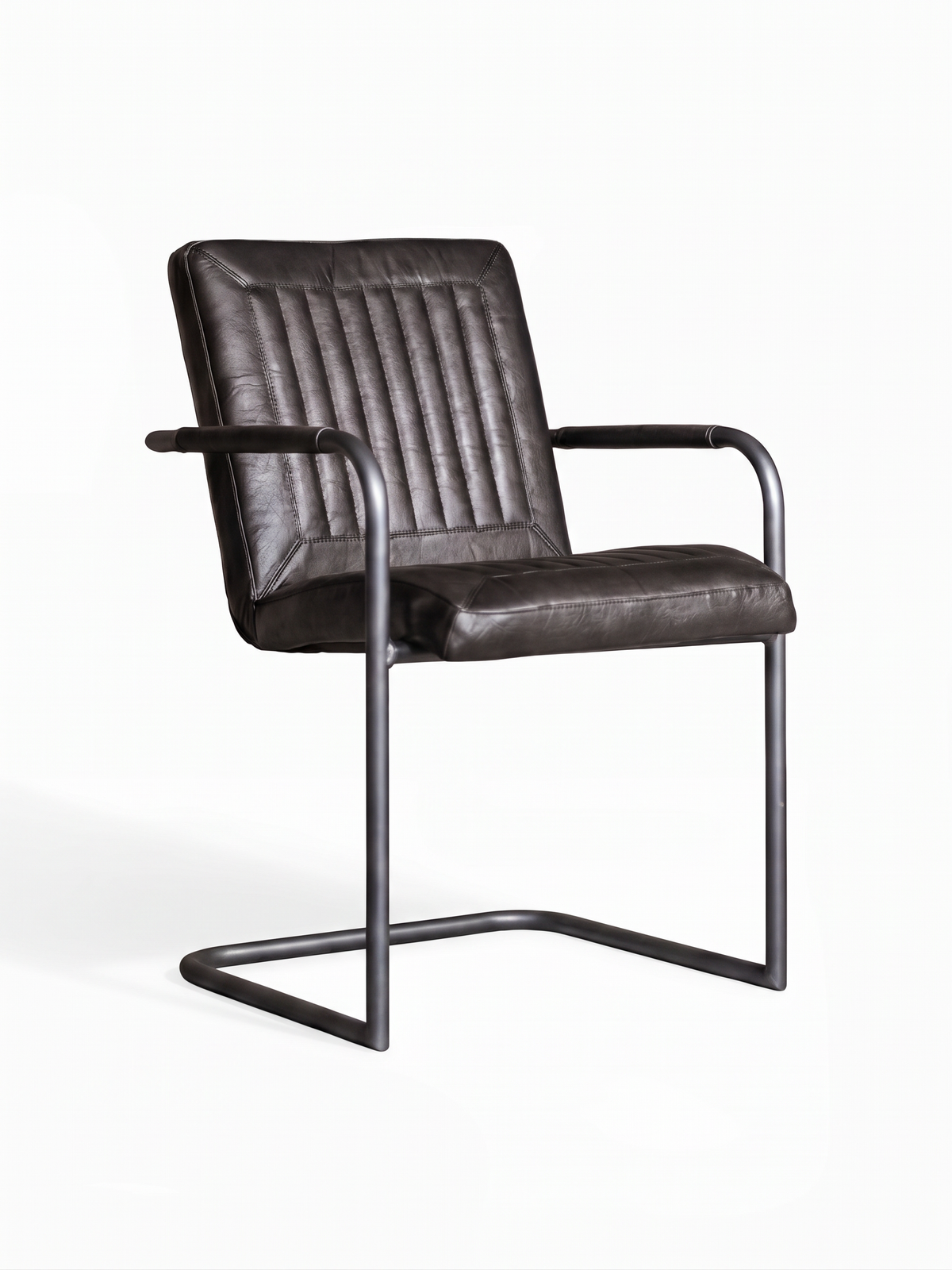
The typical industrial color palette is limited: black, gray, brown, cognac. No pastel shades, no primary colors, no white. The inspiration comes from the natural colors of steel, concrete, undyed leather, and dark wood.
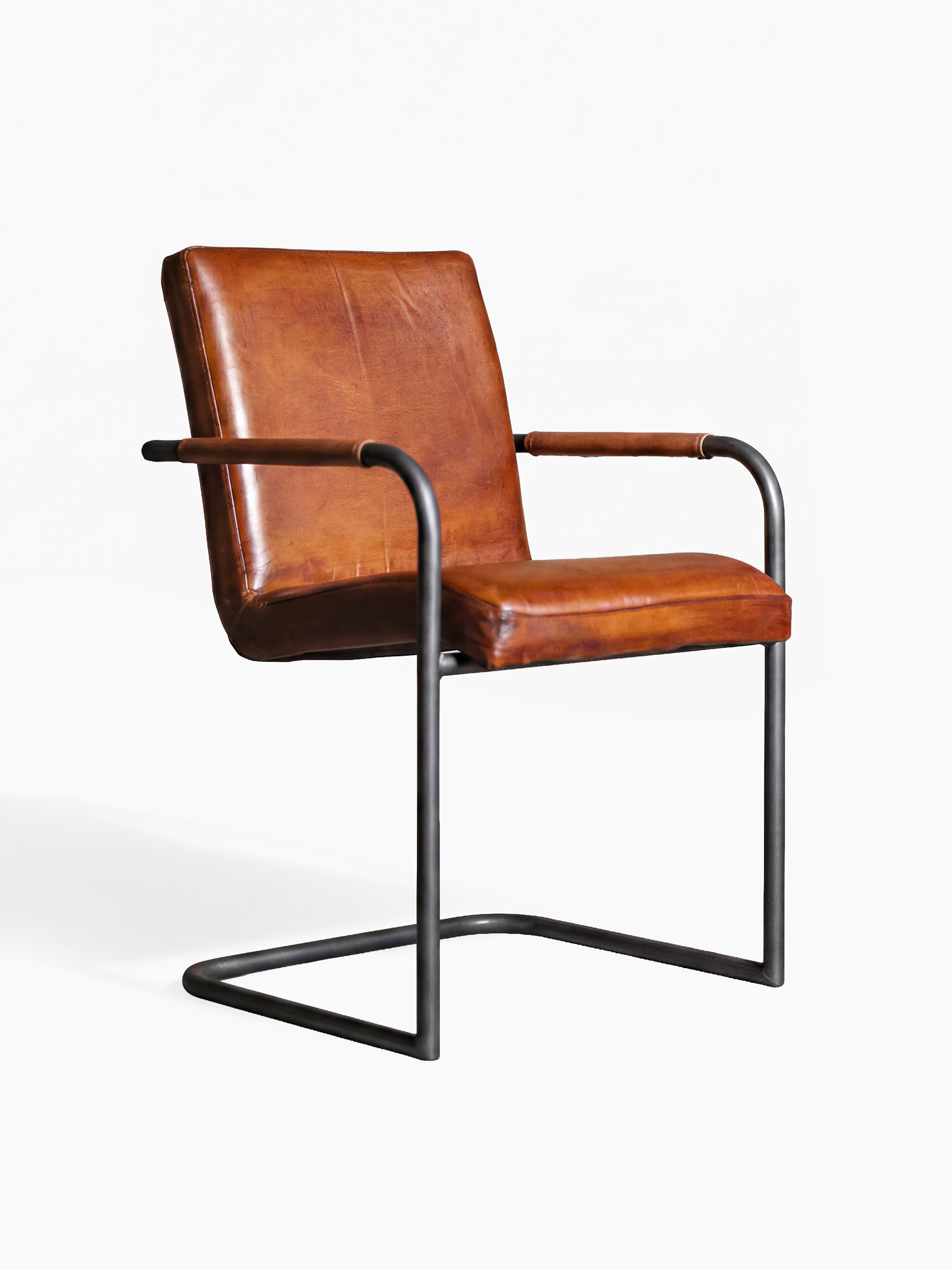
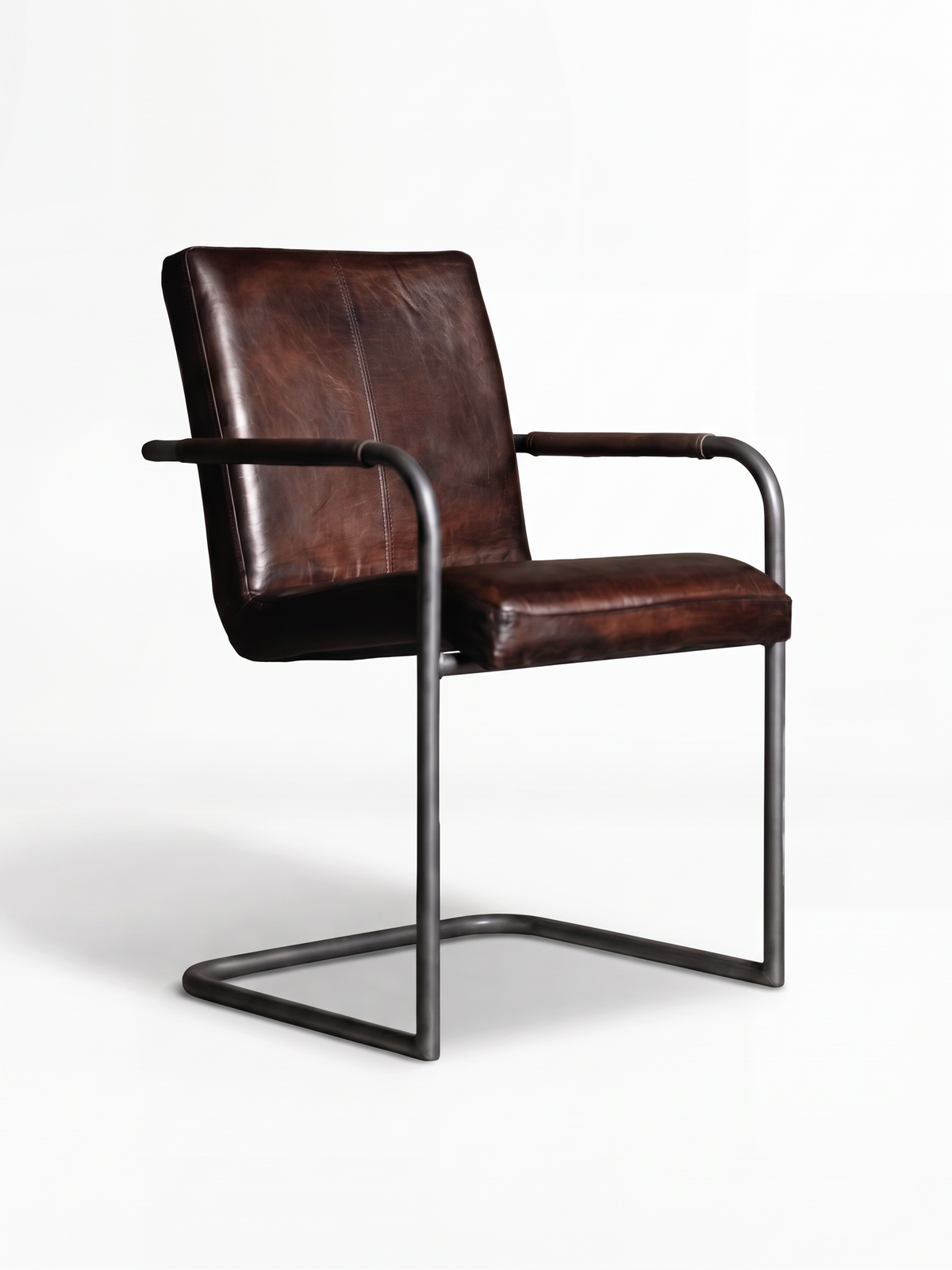
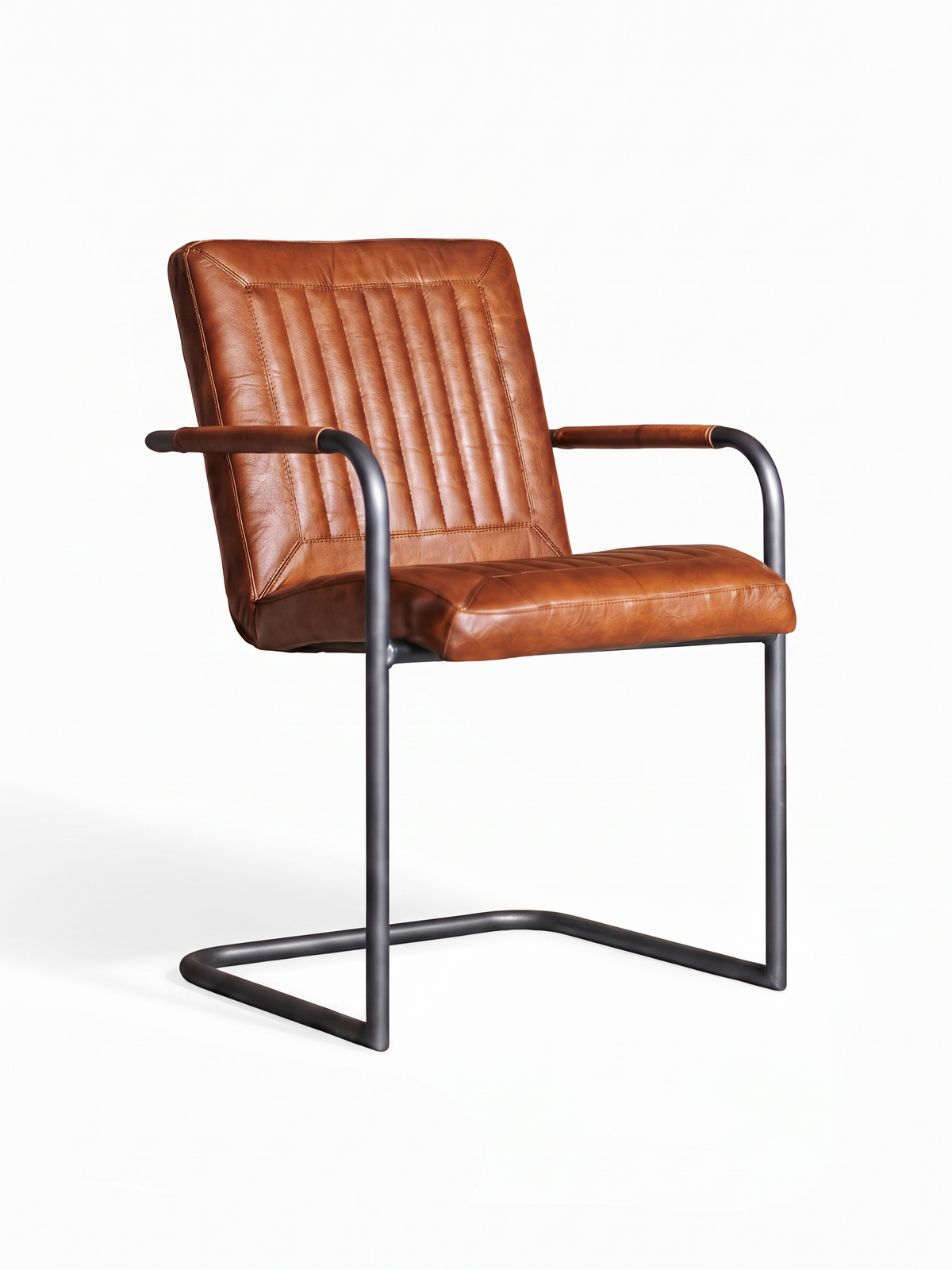
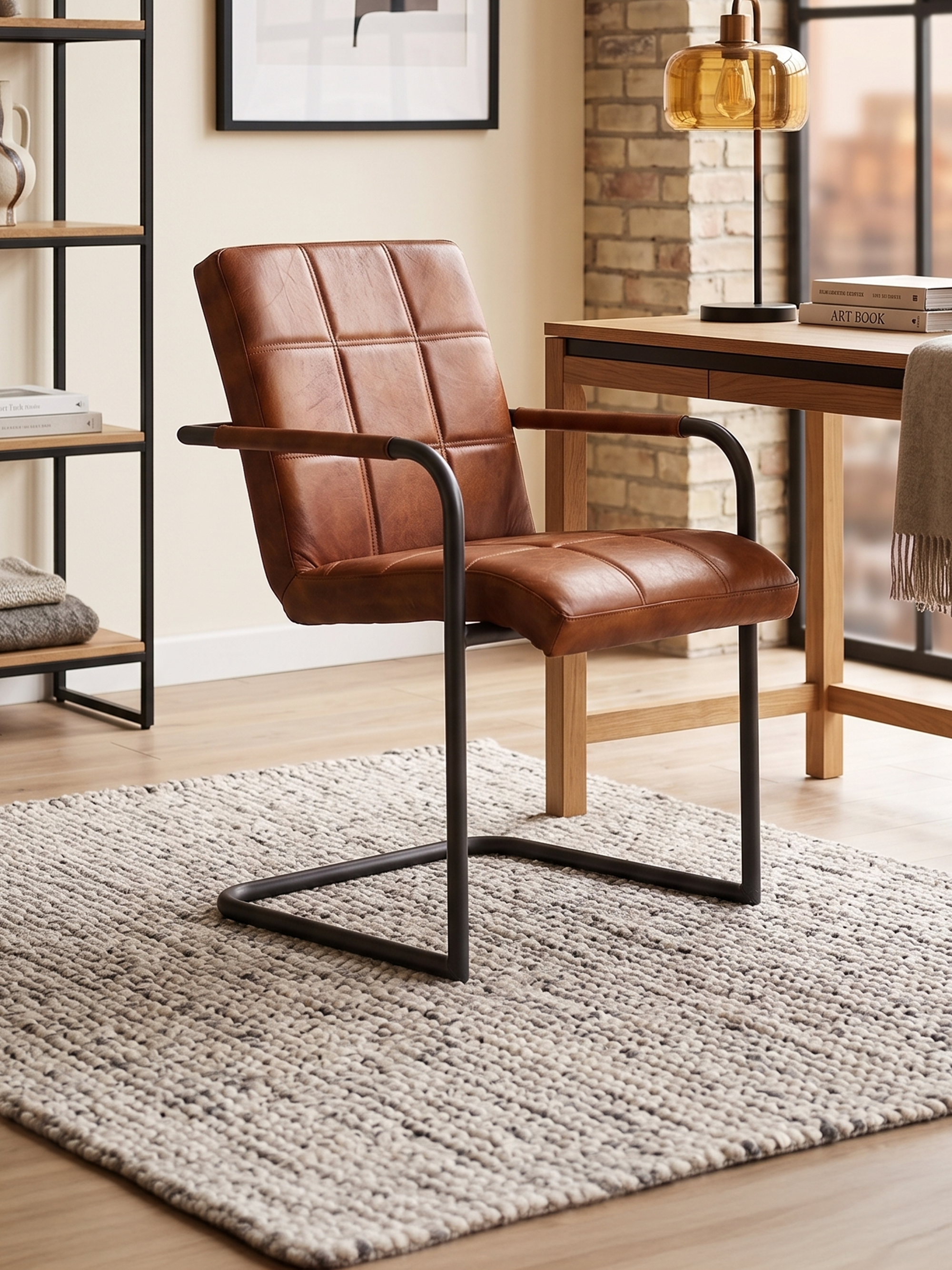
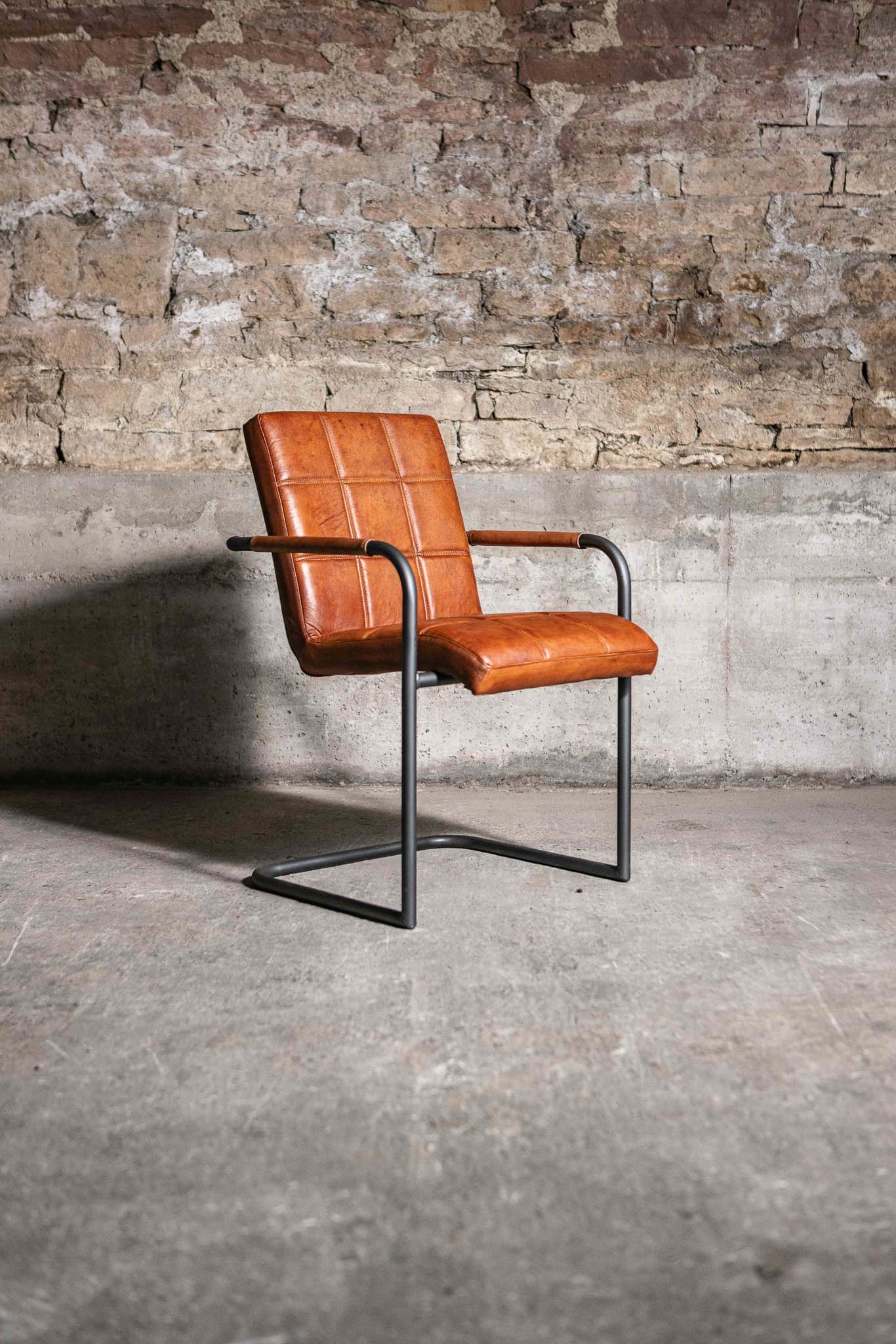
Cognac is the warmest option. A cantilever chair in cognac buffalo leather looks less raw than a brown or gray chair—it adds warmth to the room and creates a deliberate contrast to the black frame. Ideal for living rooms and dining rooms where the industrial style shouldn’t feel too harsh.
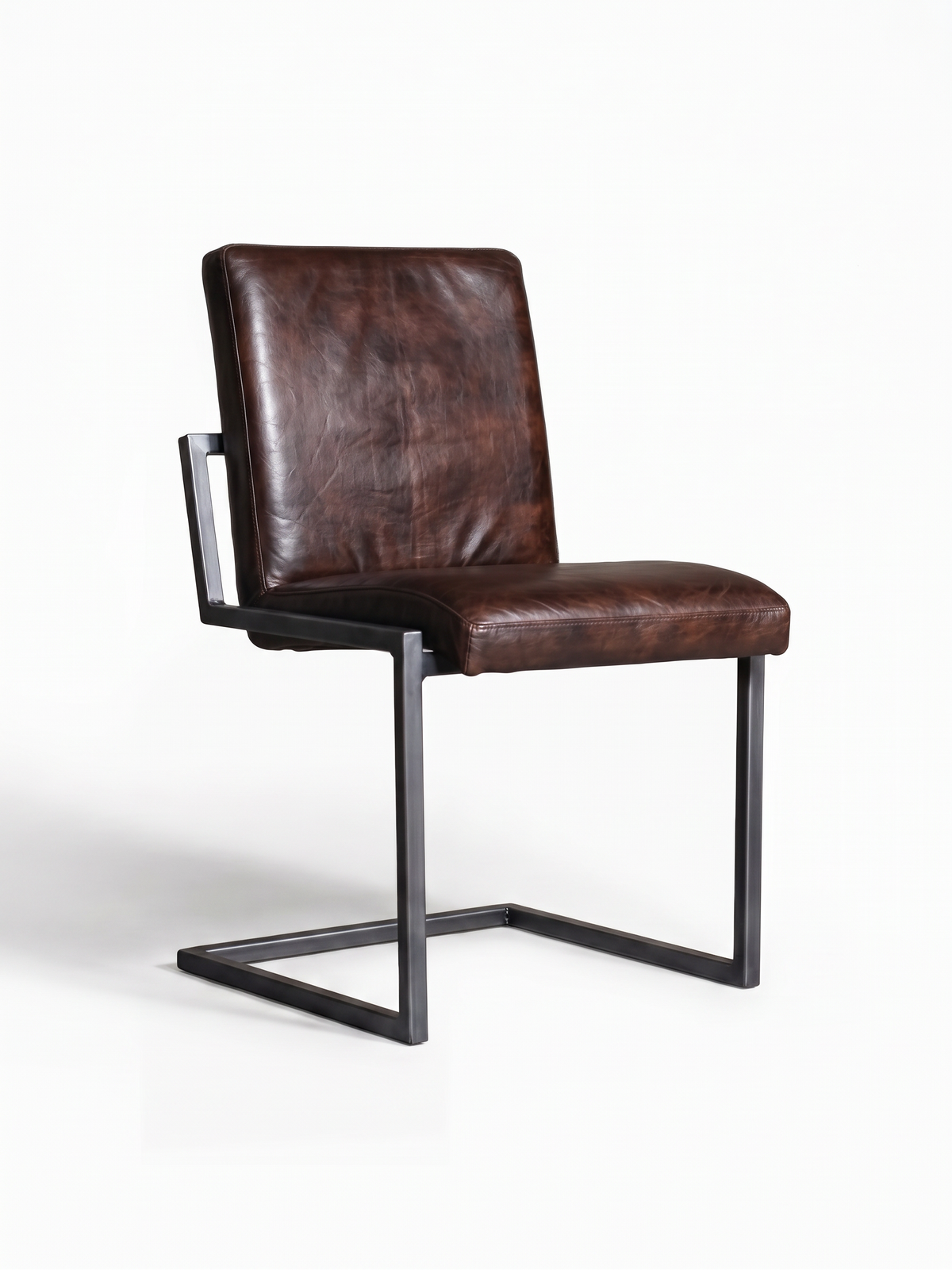
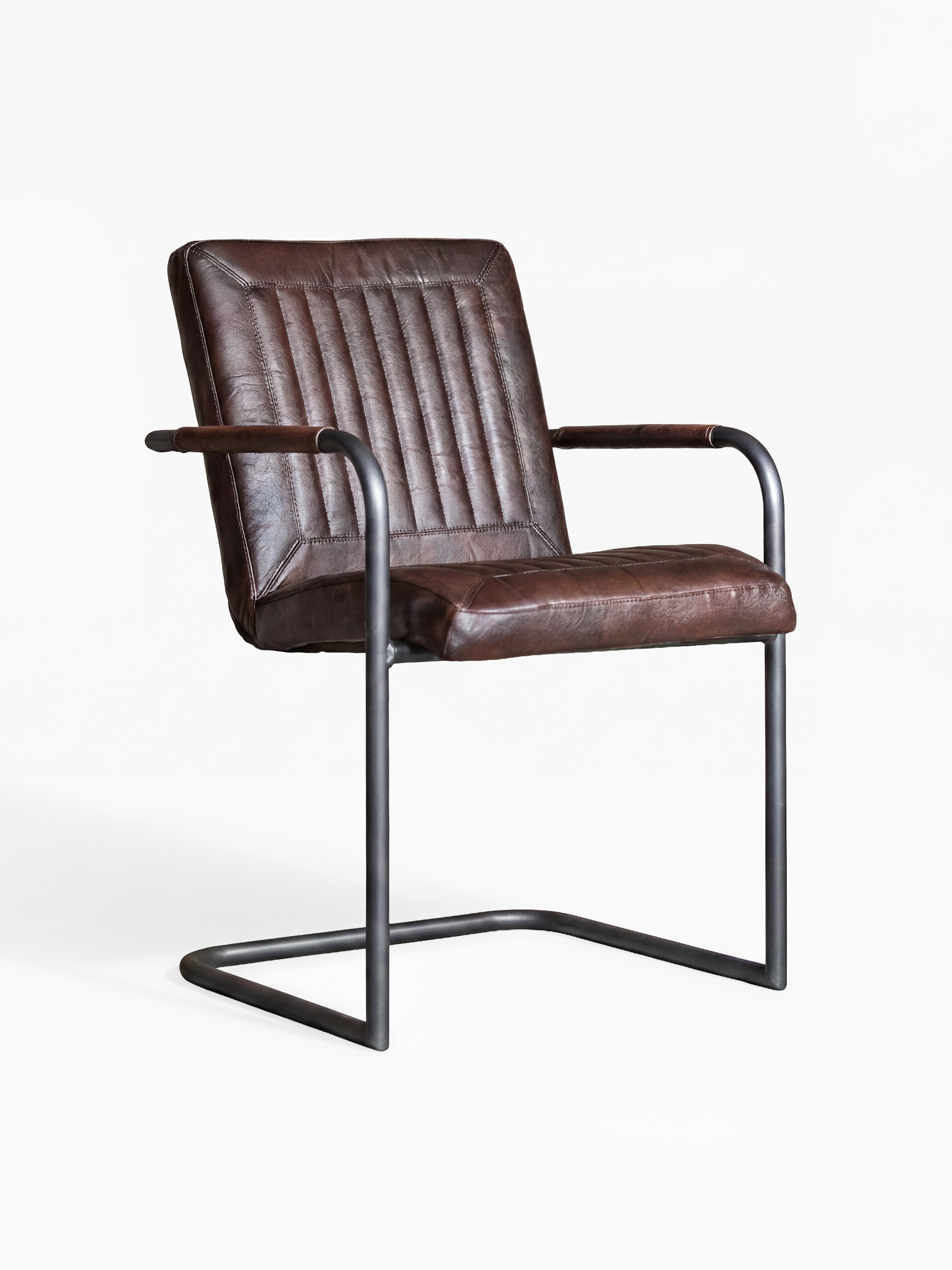
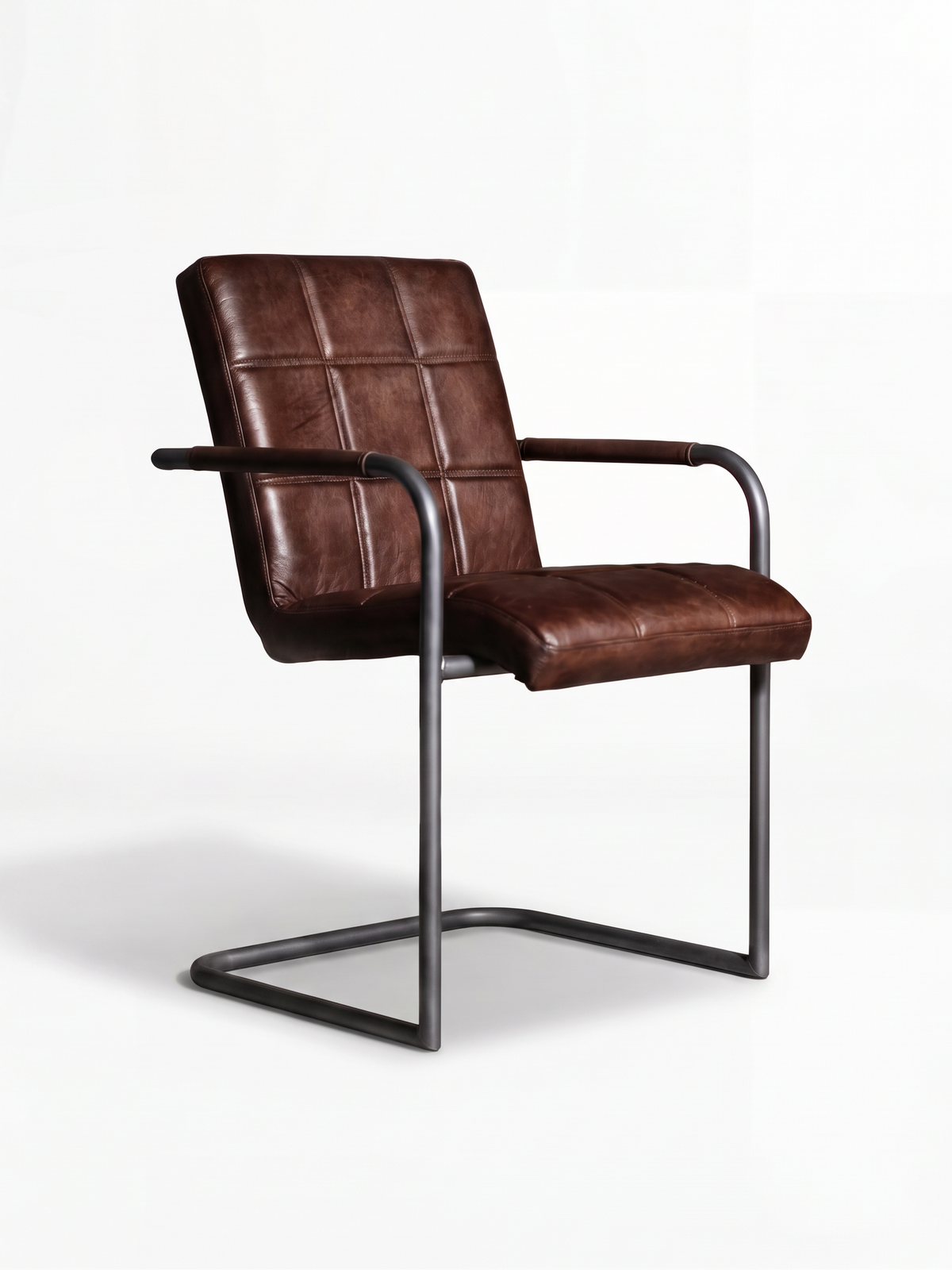
Brown is the classic choice. Dark brown buffalo leather on a black frame is the archetype of the industrial chair: no compromise, no compromise. This look fits well in loft-style spaces, bars, and offices with a strong industrial character.
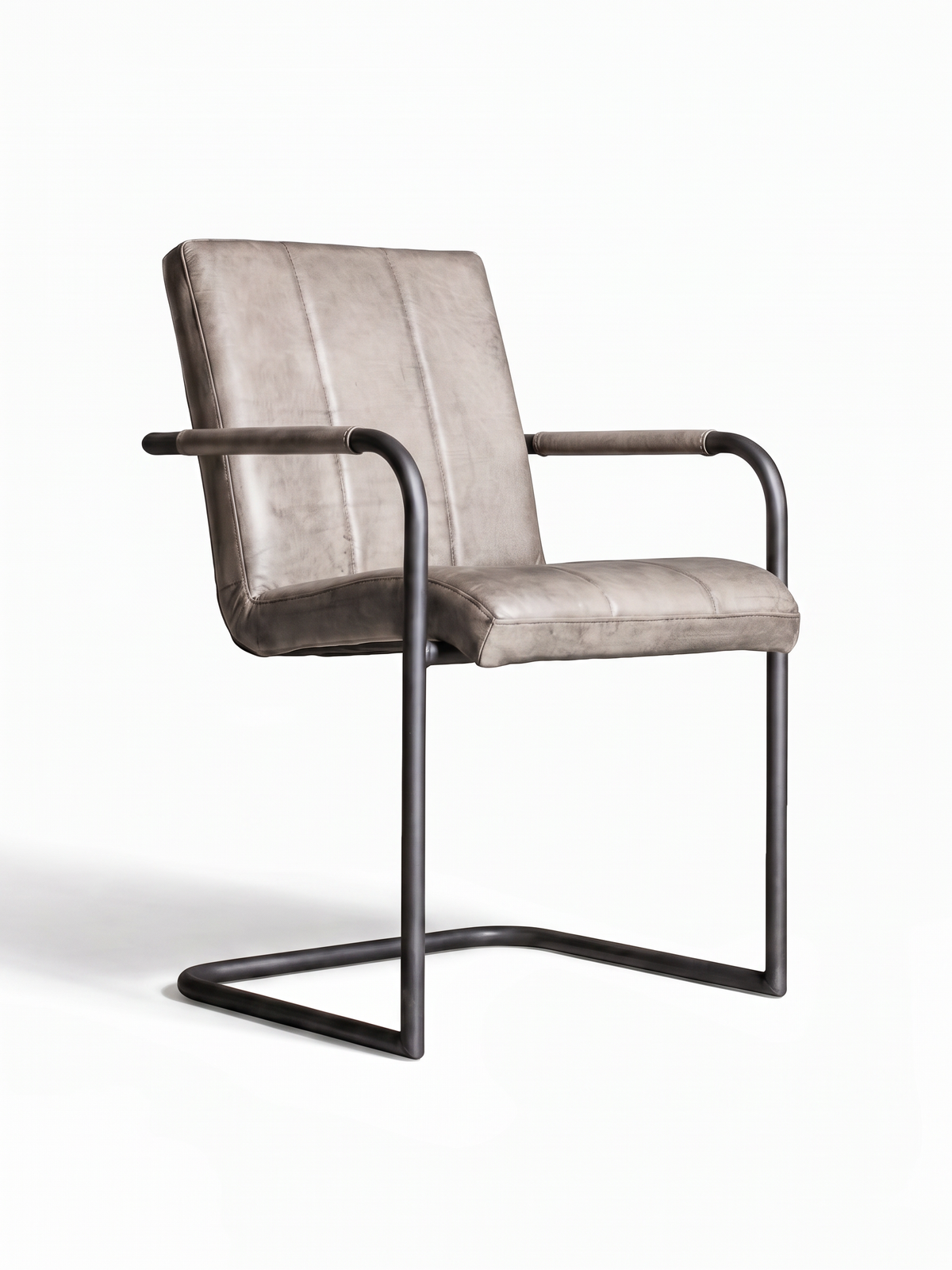
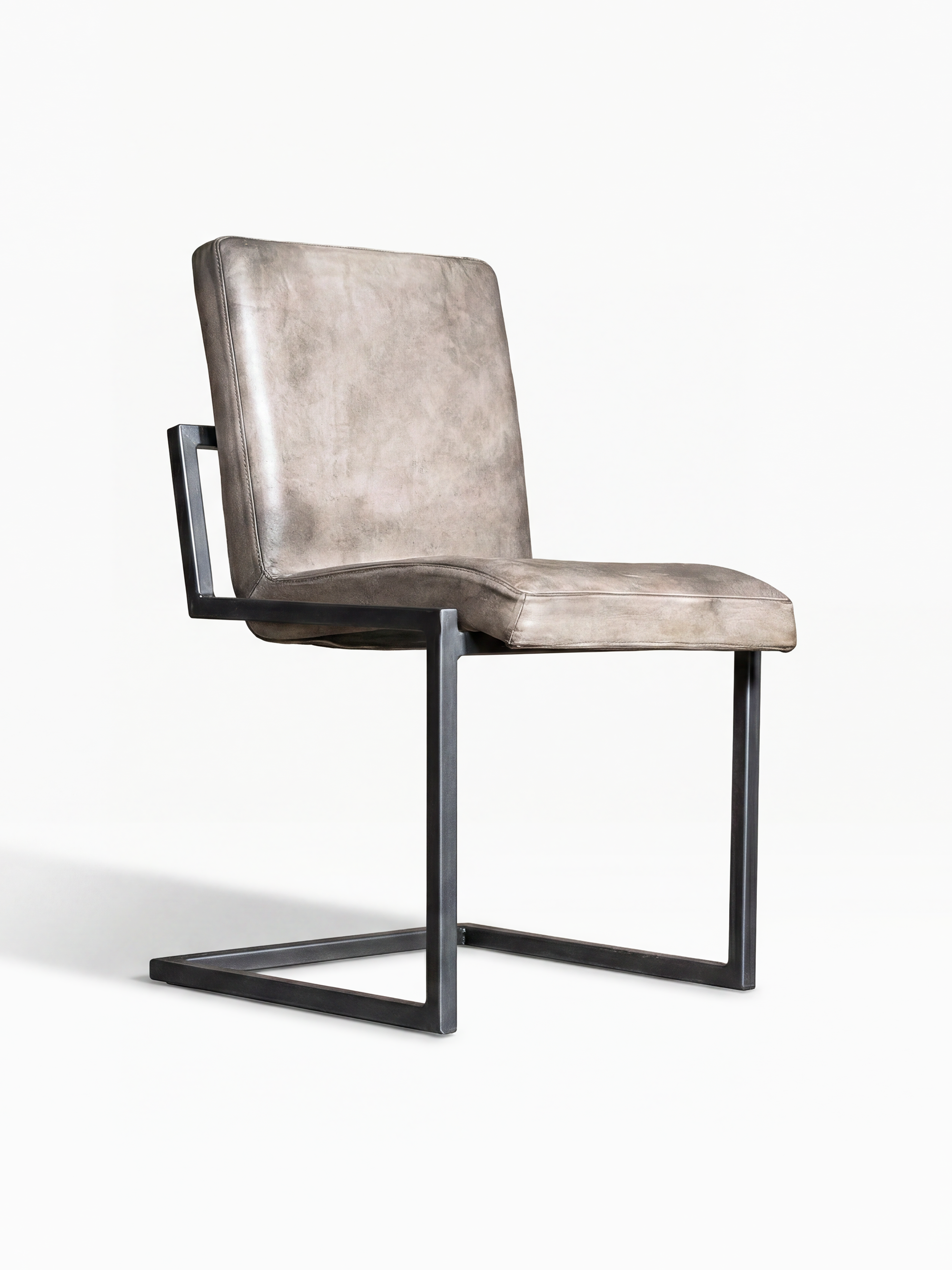
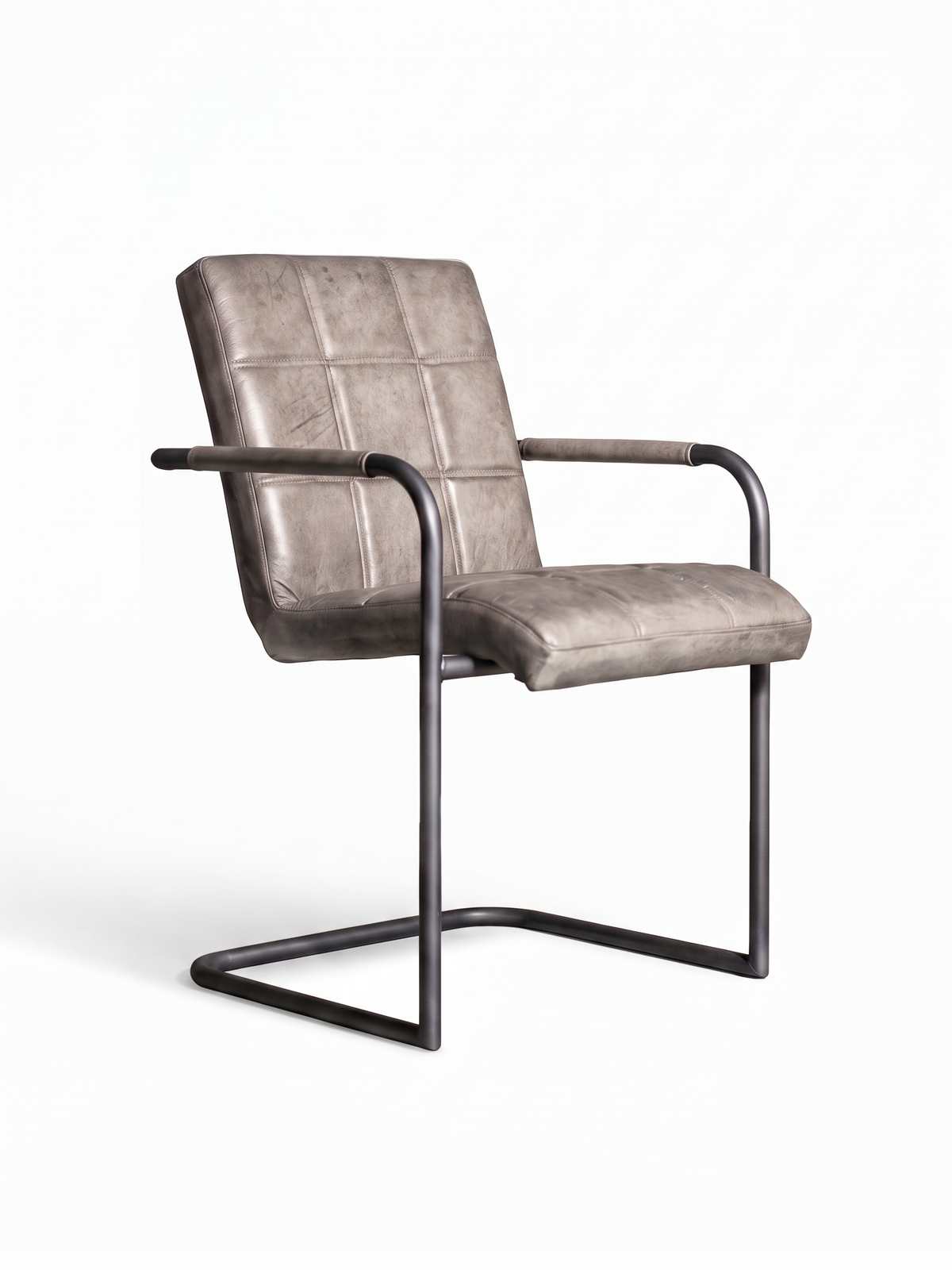
Light gray is the most modern variation. A cantilever chair in light gray combines the industrial look with a more minimalist, urban aesthetic—less “old factory,” more “modern loft.” It pairs well with concrete floors, white walls, and modern metal furniture.
Caring for Industrial Leather Cantilever Chairs
Buffalo leather is more durable than most other types of leather, but it still requires occasional care to keep it looking its best.
For everyday care, a slightly damp cloth is sufficient. It’s best to remove stains immediately—don’t let them dry. Do not use cleaning agents containing alcohol or solvents.
Once or twice a year, the leather should be treated with a high-quality leather care cream or fat-based polish. This replenishes the natural oils lost through use and exposure to air. The leather remains supple, and the surface protects itself more effectively.
Prolongedexposure to direct sunlight can alter the color of the leather. This process is slower with buffalo leather than with thinner cowhide, but it can still occur. For chairs in rooms with heavy sunlight, we recommend occasionally rearranging them or using a light UV shield.
The beauty of industrial-style buffalo leather: The small changes left by normal use—a lighter spot on the seat, darker edges, slight scratches—are not damage. They are part of the patina. A LIVIOR cantilever chair that’s been in use for ten years doesn’t look worn out. It looks well-loved.
Frequently Asked Questions About Industrial Cantilever Chairs
What is an industrial-style cantilever chair?
An industrial-style cantilever chair combines a black metal sled base with a seat made of genuine leather. The look draws inspiration from 19th-century factory aesthetics and the New York loft movement of the 1960s: raw, authentic, durable. Despite the sturdy materials, the cantilever mechanism makes it more comfortable than a classic metal chair.
What colors go well with an industrial-style chair?
In the industrial style, cognac, brown, and dark brown work best for the leather—paired with a black metal frame. Light gray works well for a more modern loft look. Light tones like white or pastel colors seem out of place in industrial design. The color palette remains deliberately earthy: material colors, not design colors.
Is buffalo leather suitable for industrial design?
Buffalo leather is the ideal material for industrial cantilever chairs. At 3–4 mm thick, it’s more robust than cowhide (1.5–2 mm) and develops a natural patina over time—exactly the aging process that defines the vintage industrial look. Buffalo leather from water buffalo is also easy to care for and extremely durable: a lifespan of 15–20 years is realistic.
Industrial cantilever chairs with or without armrests—which is better?
That depends on where it will be used. With armrests (e.g., GOODMAN, FARGO, COOPER), the chair looks more substantial and is better suited for offices and conference rooms. Without armrests (SINATRA, JASPAR, CADI), it is sleeker, fits under narrower tables, and is easier to maneuver at the dining table. Both versions have their place in the industrial style.
Where can I buy an industrial cantilever chair made of buffalo leather?
LIVIOR sells industrial cantilever chairs made of genuine buffalo leather directly from the manufacturer—with no retailer markup—for €399 per chair. All six models (SINATRA, JASPAR, CADI, GOODMAN, FARGO, COOPER) are available in cognac, brown, and light gray with a black metal frame. Delivery time: 8–12 weeks, free shipping, 30-day return policy.
How do I style an industrial cantilever chair at the dining table?
It pairs best with a solid wood table (oak, walnut, acacia) or a black metal-framed dining table. The seat height of the LIVIOR cantilever chairs is 50 cm—suitable for dining tables 74 cm or taller. Cognac leather creates a warmer look with a wooden table, while brown or gray pairs well with a metal-framed table.
How do I care for an industrial-style leather cantilever chair?
For everyday care, a slightly damp cloth is sufficient. Apply leather care cream or grease polish once or twice a year to preserve the natural oils. Do not use alcohol-based or solvent-based cleaners. The slight changes caused by use—patina, darker seat edges—are not defects, but rather part of the industrial character of buffalo leather.